
Zainab Hussain is a seasoned e-commerce strategist and retail expert with a profound understanding of how operational shifts and customer expectations drive global supply chains. With her background in operations management and customer engagement, she offers a unique perspective on how industrial-scale innovations in textile recycling are reshaping the fashion landscape from the factory floor to the final purchase. Her insights bridge the gap between high-level retail design and the gritty, sophisticated world of Asian manufacturing, providing a roadmap for a more sustainable future in apparel.
Scaling recycled pulp production to 70,000 tons annually requires intense industrial coordination. What specific technical shifts occur when a major filament producer swaps wood pulp for recycled textile pulp, and how do you ensure the resulting filament meets commercial standards for high-end apparel?
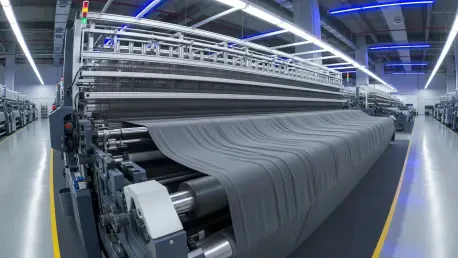
The transition from forest-sourced wood pulp to recycled textile pulp is a monumental technical pivot that requires re-engineering the very chemistry of fiber creation. When a producer like Xinxiang Bailu Chemical Fiber Co integrates recycled pulp into their workflow, they aren’t just changing an ingredient; they are recalibrating massive industrial machinery to handle a new molecular structure. To achieve an annual scale of 70,000 tons at a factory, engineers must ensure the dissolution and extrusion processes remain stable so the resulting viscose filament retains its signature luster and strength. There is a palpable tension in the factory when these new materials are first introduced, as the goal is to produce a “rayon” that feels identical to traditional fibers. We ensure these commercial standards are met through rigorous mechanical testing, ensuring the filament is strong enough to survive high-speed looms while maintaining the soft, fluid drape that luxury designers demand for their collections.
While consumers focus on brands like Reformation or C&A, the real transformation happens within massive, often-overlooked industrial plants in Asia. How does your “ready” network model bridge the gap between retail design and factory-level chemistry, and what metrics prove a partner can handle these new materials?
The “Circ Ready” network serves as a vital bridge, connecting the creative aspirations of iconic brands like Madewell with the “rubber meets the road” reality of sophisticated industrial companies in Asia. This model acknowledges that while the retail experience happens in a store or online, the environmental impact is decided in these massive, high-tech facilities that many consumers have never heard of. To qualify for this network, a partner must demonstrate a high degree of chemical precision and the ability to process recycled pulp without losing efficiency at an industrial scale. We look for metrics like fiber yield, tensile consistency, and the factory’s capacity to integrate these materials without a total overhaul of their existing infrastructure. It is about creating a plug-and-play ecosystem where the technical complexity of the supply chain becomes invisible to the designer, yet the final garment carries the full integrity of the circular process.
New extended producer responsibility (EPR) laws in California and Europe impose significant fees on brands that ignore circularity. How do these financial penalties reshape a company’s long-term sourcing strategy, and what specific data must brands provide to qualify for recycled-content rebates?
The introduction of EPR regulations is fundamentally changing the financial calculus for retail CFOs by introducing a clear “carrot and stick” dynamic. The “stick” is the immediate financial pressure of taxes—often just a few euro cents per garment—which can balloon into hundreds of millions of dollars in additional fees for a large global brand. To avoid these penalties and claim the “carrot”—the rebates from funds dedicated to recycling infrastructure—brands must provide granular data on their material sourcing and the percentage of recycled content in every SKU. This shift is moving sustainability from the marketing department directly into the core of sourcing strategy, as companies can no longer afford to ignore the cost of waste. We are seeing a surge in interest because these regulations provide the economic motivation needed to justify the switch to recycled viscose and other circular materials.
Transitioning from forest-sourced materials to textile-to-textile recycling is a complex phase for the fashion industry. Can you walk us through the step-by-step sampling process brands undergo before committing to recycled viscose, and how do these trials typically influence the final product’s durability and texture?
The journey from a sample to a full commercial commitment is a cautious and highly tactile process where brands must convince themselves that recycled fiber is a viable replacement. It begins with “bench-top” trials where small swatches of fabric are tested for color absorption and hand-feel, ensuring the recycled viscose doesn’t feel “crunchy” or look dull. From there, it moves to small-batch production runs where the material is put through the same stress tests as traditional forest-sourced rayon to measure its durability after multiple wash cycles. These trials are often the most anxious moments for designers, as they wait to see if the fabric will pill or lose its shape under pressure. Success in these trials ultimately gives brands the confidence to commit to large-scale orders, proving that the technology has finally reached a phase where it can support the quality and sensory expectations of the modern consumer.
What is your forecast for the viscose supply chain?
I forecast a radical decoupling of the viscose industry from forest-based resources as textile-to-textile recycling becomes the global industrial standard. Within the next decade, the “sophisticated industrial companies” in Asia will transition from testing phases to full-scale adoption, fueled by the 70,000 tons of capacity being developed in new facilities like the one in France. We will see a supply chain where waste is the primary feedstock, and the financial incentives provided by EPR laws will make recycled content the most cost-competitive option on the market. Ultimately, the very definition of “rayon” will change in the consumer’s mind, evolving from a wood-based product to a high-tech, circular fiber that symbolizes the next era of industrial fashion.