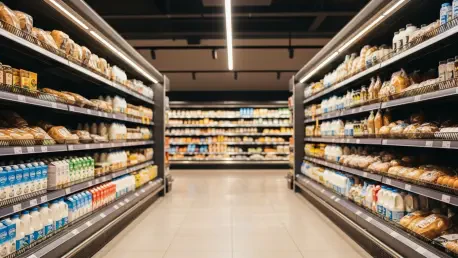

The sheer magnitude of household budget strain across the United Kingdom has reached a critical threshold where the average family now spends a disproportionate amount of their income on basic nutritional necessities. While inflation figures have shown some movement toward stabilization from 2026 to 2027, the price of staples such as milk, bread, and eggs remains at historically high levels, forcing the government to explore unconventional interventions in the private market. Treasury officials have recently entered into high-stakes negotiations with major grocery retailers to propose a voluntary cap on essential food items, aiming to shield the most vulnerable citizens from further economic shocks. This strategic move is intended to function as a temporary safety net, yet it has sparked a fierce debate between policymakers focused on social welfare and industry leaders who manage the complex logistics of global supply chains. The tension highlights a fundamental disagreement over whether the government should have a seat at the table when pricing commercial goods during times of national financial distress.
The Retail Industry Resistance and Economic Viability
Retail executives have voiced significant opposition to the proposed price caps, citing an environment already characterized by razor-thin profit margins and rising operational costs. Leaders from major chains like Marks & Spencer have been particularly vocal, describing the concept of government-influenced pricing as fundamentally detached from the realities of modern commerce. From the perspective of these retailers, the primary drivers of food inflation are not corporate greed but a “perfect storm” of increased energy costs, higher statutory wages, and logistical complications that have persisted into the current year. They argue that supermarkets already operate in a fiercely competitive landscape where price wars are a standard business practice, making additional government intervention redundant and potentially harmful to long-term investment. If the government insists on capping specific items, retailers warn that they may be forced to increase the prices of non-capped goods to maintain their financial viability, effectively shifting the burden rather than eliminating it.
Beyond immediate profit concerns, the British Retail Consortium has warned that price controls could inadvertently lead to product shortages and a decline in supply chain reliability. History suggests that when prices are artificially suppressed, the incentive for producers to supply those specific goods diminishes, which can result in empty shelves and a thriving secondary market. This economic distortion is a primary fear for distributors who rely on predictable market signals to manage inventory and international shipping schedules. Furthermore, the retail sector is currently navigating a high-tax and high-regulation environment that leaves little room for additional compliance burdens. Executives emphasize that the best way to lower prices is to address the underlying causes of inflation, such as energy volatility and trade barriers, rather than treating the symptoms through price manipulation. By focusing on the end-user price point, the government may be ignoring the structural vulnerabilities that make the food system fragile in the first place.
Regulatory Oversight and Market Competition Dynamics
The UK government has maintained a careful public stance, insisting that the discussions regarding price caps are strictly voluntary and designed to foster a spirit of corporate social responsibility. However, this soft approach is accompanied by a more aggressive exploration of enhanced enforcement powers for the Competition and Markets Authority. This dual-track strategy suggests that while the government prefers a handshake agreement, it is prepared to use regulatory muscle to investigate potential price gouging if voluntary measures fail to produce results. This has created a palpable sense of unease within the private sector, as businesses fear that today’s voluntary guidelines could easily morph into tomorrow’s mandatory regulations. The threat of formal investigations serves as a powerful motivator, yet it also risks damaging the relationship between the state and the private enterprises that are responsible for feeding the population. Such a move could redefine the boundaries of market interference for years to come.
From an analytical standpoint, the effectiveness of these measures remains highly questionable because food inflation is tied to global variables that fall outside of national jurisdiction. Fluctuations in oil prices and fertilizer costs are determined by geopolitical events and international trade policies, meaning that local retailers have limited control over the total cost of production. Even if a voluntary cap is implemented, the risk of external shocks remains a constant threat to price stability from 2026 to 2028. Analysts suggest that the government’s focus on retail prices might be a political necessity to satisfy an anxious public, but it fails to provide a sustainable solution to the cost-of-living crisis. Instead of rigid caps, some experts advocate for more targeted support systems, such as direct subsidies for low-income households or tax incentives for grocery stores that maintain affordable pricing tiers. This would preserve market competition while ensuring that aid reaches those who need it most without distorting the price signals that keep the global supply chain moving.
Strategic Alternatives and Future Market Considerations
A more sustainable approach to food security involves strengthening the resilience of domestic agriculture and diversifying supply sources to mitigate the impact of international price volatility. Rather than focusing on capping the final retail price, the government could prioritize investments in agricultural technology and sustainable farming practices that reduce the reliance on expensive imported fertilizers and energy-intensive logistics. By lowering the cost of production at the source, the natural competitive forces of the retail market would likely drive down consumer prices without the need for controversial state intervention. This strategy requires a long-term commitment that extends beyond the immediate political cycle, but it offers a more robust defense against the inflationary pressures that have defined the early part of this decade. Supporting local producers also enhances national food security, making the entire system less susceptible to the whims of global commodity markets and ensuring a more stable supply of staples.
Moving forward, the relationship between the public and private sectors must evolve from a confrontational stance to one of collaborative problem-solving. Retailers should be encouraged to enhance transparency regarding their supply chain costs, while the government provides the infrastructure and policy stability needed to reduce operational overhead. Actionable steps could include a temporary reduction in business rates for essential service providers or the creation of a national food resilience fund to support retailers during periods of extreme market turbulence. These measures would address the financial pressures on businesses while protecting consumers from the most aggressive price hikes. Ultimately, the resolution of the cost-of-living crisis will not be found in a single policy like price caps, but in a comprehensive strategy that balances social welfare with the operational realities of a global economy. Stakeholders must move toward a model where market efficiency and social responsibility are viewed as complementary goals rather than opposing forces in a zero-sum game.