
The global snack industry is currently witnessing a profound transformation where the long-standing conflict between high-profit margins and meaningful social responsibility is being resolved by innovative business models. For many years, environmental and social initiatives were viewed by executive boards as secondary luxuries or public relations exercises, often the first items to be slashed when economic margins tightened. However, the rise of a more conscious consumer base and the increasing unpredictability of global supply chains have forced a reassessment of what constitutes a resilient business model. Little Moons, a prominent player in the premium confectionery space, is currently at the forefront of this transformation, arguing that a brand’s commercial success is now inextricably linked to its social and environmental performance. By integrating these previously siloed objectives, the company seeks to demonstrate that purpose-driven decision-making is not merely a moral choice but a fundamental requirement for long-term viability in an increasingly volatile international landscape. This approach necessitates a move away from performative gestures, focusing instead on deep-rooted systemic changes that account for the broader impact of every operational choice made across the entire corporate structure.
Transforming the Global Supply Chain
Direct Sourcing: Empowering Primary Producers
The brand’s comprehensive overhaul of its mango supply chain serves as a primary example of how direct-sourcing models can improve both ethical standards and product quality. By bypassing complex networks of intermediaries and working directly with a collective of 42 farmers in Southern India, Little Moons has implemented rigorous welfare and environmental standards that were previously difficult to monitor. This direct engagement ensures that farmers receive higher pay while adhering to the Sustainable Agriculture Initiative’s Farm Sustainability Assessment (FSA) Silver standard. The transition away from third-party brokers has allowed the company to gain full visibility into the daily operations of its partners, ensuring that fair labor practices are not just promised but actively practiced on the ground. This level of transparency is essential for building a resilient supply chain that can withstand scrutiny from both regulators and consumers who demand accountability in every bite of their food.
Furthermore, this direct relationship fosters a culture of mutual growth and stability, providing farmers with the financial security needed to invest in their own sustainable practices. By securing long-term contracts and providing clear expectations, the company helps these agricultural communities transition away from volatile spot markets. This stability is particularly important in regions where climate change is already impacting harvest yields and traditional farming methods are becoming less viable. The commitment to the FSA Silver standard ensures that soil health and water conservation are prioritized, which in turn protects the long-term productivity of the land. Ultimately, this model proves that when a company takes direct responsibility for its raw materials, it can create a virtuous cycle that benefits the environment, the local economy, and the final quality of the ingredient itself, creating a superior product that justifies its premium position.
Logistical Efficiency: Optimizing Environmental Impact
This transition also demonstrates that green initiatives can lead to significant logistical improvements and substantial cost reductions over time. By switching from shipping frozen fruit in small tubs to transporting ambient fruit in large drums, the company simplified its handling processes and significantly lowered its carbon footprint. The move to ambient shipping reduces the immense energy requirements traditionally associated with maintaining sub-zero temperatures throughout a transcontinental journey. Internal testing revealed that this more efficient shipping format actually preserved a superior flavor profile, proving that sustainability and product excellence often go hand in hand. The reduction in packaging waste associated with larger drums further streamlines the production line, as workers spend less time opening and disposing of smaller containers, which speeds up the manufacturing process and reduces labor costs.
Beyond the immediate carbon savings, these logistical shifts represent a broader trend of operational optimization where environmental goals drive technical innovation. The reduction in shipping volume and weight allows for more efficient container utilization, meaning fewer shipments are required to move the same amount of product. This efficiency is a critical hedge against rising fuel costs and supply chain disruptions that have plagued the global food industry in the current era. By rethinking the physical state in which ingredients are transported, the brand has found a way to decouple business growth from proportional increases in carbon emissions. This pragmatic approach to logistics shows that when a company looks at its operations through a sustainability lens, it often discovers hidden efficiencies that a traditional, profit-only mindset would have overlooked, leading to a more streamlined and cost-effective enterprise.
Pioneering Ecological and Industry Standards
Establishing Benchmarks: Creating Standards for Specialty Ingredients
In cases where established sustainability certifications did not exist for specific specialty ingredients, Little Moons took the initiative to build them from the ground up to ensure consistency. This proactive approach is evident in their work with Colombian cocoa and Thai mochi rice, where the brand collaborated with local growers to create the world’s first FSA-verified supply chains for these specific crops. Rather than waiting for the industry to change or for a third-party body to develop a framework, the company is actively defining the high standards it expects its suppliers to meet. This leadership role is vital because it sets a precedent for other players in the sector, showing that it is possible to verify the ethics of niche ingredients that are often ignored by larger, more generalized certification schemes. By doing the heavy lifting of establishing these benchmarks, the brand secures its own supply of high-quality, ethical materials while elevating the entire category.
The process of creating these supply chains involves deep collaboration with agricultural experts and local community leaders to ensure the standards are both rigorous and achievable. For the mochi rice growers in Thailand, this meant implementing new tracking systems and soil management techniques that align with international sustainability goals. The result is a supply chain that is not only ethical but also more technologically advanced and data-driven than its traditional counterparts. This level of detail allows the brand to speak with absolute confidence about the origins of its ingredients, providing a level of brand integrity that is increasingly rare in the global marketplace. As consumers become more sophisticated in their understanding of supply chain ethics, the ability to point to a proprietary, verified standard becomes a significant competitive advantage that protects the brand’s reputation and justifies its market share.
Regenerative Farming: Moving Beyond Carbon Metrics
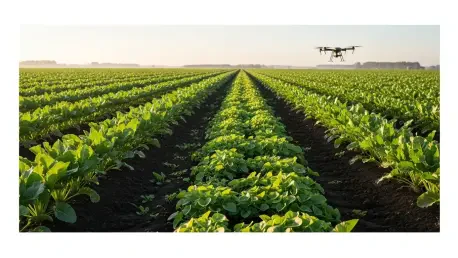
To avoid the phenomenon known as carbon tunnel vision, which is a narrow focus on emissions that ignores other vital ecological factors, the brand is investing heavily in regenerative agriculture. Through recent trials in its sugar beet supply, the company is prioritizing soil health and biodiversity to create a more resilient and sustainable food source. Regenerative practices go beyond simply reducing harm; they seek to actively restore the ecosystems that produce our food by using techniques like cover cropping, reduced tillage, and natural pest management. While these methods may involve a transition period with lower yields compared to intensive industrial farming, the long-term goal is to establish drought-resistant, healthy farming systems that can withstand the challenges of climate change. This focus on soil biology ensures that the land remains fertile for future generations, preventing the desertification and nutrient depletion that threaten global food security.
The shift toward regenerative agriculture also serves as a critical risk management strategy for the company. Healthy soil holds more water and is more resilient to extreme weather events, which are becoming increasingly common and unpredictable. By investing in these practices now, the brand is essentially purchasing insurance against future crop failures and supply shocks. This approach recognizes that the economy is a subsidiary of the environment, and a business cannot thrive on a dying planet. Furthermore, regenerative farming often reduces the need for expensive chemical inputs, which can help stabilize production costs in the long run. By championing these methods, the brand is helping to lead a move toward a more holistic version of sustainability that values the complex web of life required to produce high-quality food. This vision of agriculture is essential for building a food system that is truly sustainable in the literal sense of the word.
Aligning Business Operations with Social Responsibility
Procurement and Finance: Finding Strategic Synergy
A common misconception in the corporate world is that high sustainability standards inevitably lead to higher retail prices, but Little Moons has found that this is not always the case. By aligning the goals of the procurement and sustainability teams, the company identifies cost-neutral efficiencies, such as reducing the need for expensive synthetic fertilizers through better soil management. This integrated approach ensures that the procurement function is tasked with delivering financial targets alongside social and environmental improvements, rather than seeing them as conflicting mandates. When sustainability is treated as a core procurement metric, it encourages buyers to look for long-term value rather than just the lowest immediate price. This shift in perspective often reveals that the most sustainable option is also the most economically sensible one when all factors, such as waste reduction and brand loyalty, are considered.
The collaboration between finance and sustainability departments allows the company to make more informed investment decisions that account for the total cost of ownership. For instance, while a more sustainable ingredient might have a higher upfront cost, it may result in lower processing waste or higher consumer demand, offsetting the initial expense. This sophisticated financial modeling helps to demystify the “green premium” and shows that ethical choices can be made without sacrificing the company’s bottom line. By embedding these values into the financial heart of the business, the organization ensures that its commitment to the planet is not dependent on the whims of a single department but is a foundational part of its economic strategy. This alignment is what allows the brand to maintain its ethical stance even during periods of market volatility, as the business case for sustainability has already been clearly established.
Corporate Accountability: Progress Through Strategic Incrementalism
The company’s approach to packaging focuses on strategic incrementalism, favoring data-driven, practical improvements over grand but unfeasible bans that can lead to unintended consequences. By reducing the weight of its plastic trays and increasing recycled content from 30% to 80%, the brand has significantly lowered its packaging footprint without compromising food safety or structural integrity. These consistent, small-scale changes reflect a philosophy of progress over perfection, where measurable impact is the primary goal in every update. The organization recognized that waiting for a perfect, plastic-free solution would result in years of unnecessary waste, so it chose to implement the best available technology today while continuing to research more radical alternatives for tomorrow. This pragmatic stance ensures that the company is always moving forward, making real-world improvements that add up to a substantial overall reduction in environmental impact.
The leadership team also prioritized systemic legislative changes by advocating for initiatives such as the Better Business Act, which aimed to amend corporate law to ensure directors were legally responsible for balancing shareholder interests with the welfare of society and the environment. These efforts demonstrated a commitment to changing the broader business landscape, rather than just optimizing their own internal operations. The brand successfully prepared for a rigorous B Corp recertification process, which required a level of transparency that acknowledged imperfections while maintaining a clear path toward total operational sustainability. By engaging with both policy and practice, the organization established a blueprint for how a modern food brand can operate with integrity. These actions proved that a focus on the triple bottom line—people, planet, and profit—was not only possible but was the most effective way to build a brand that resonated with the values of a changing world.