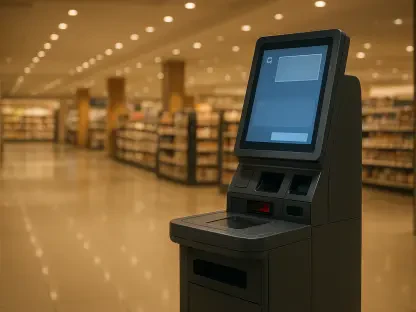

The seamless convergence of digital treasury management and physical retail hardware represents the final bridge for companies attempting to conquer the friction of the globalized marketplace. Airwallex has officially signaled a transformative shift in its business model by launching a unified Point-of-Sale system. This move marks a pivot from the company established dominance in digital cross-border payments into the competitive arena of brick-and-mortar retail. By introducing a platform that allows businesses to accept in-person payments across multiple countries through a single, integrated interface, the technology positions itself as a primary challenger to industry incumbents. This review explores how the architecture of global commerce is being redefined by eliminating the friction inherent in international physical transactions.
Evolution of Airwallex: From Digital Transfers to Physical Infrastructure
Airwallex emerged as a disruptor in the fintech space by simplifying the labyrinthine world of foreign exchange and international business banking. However, the pivot into physical infrastructure signals an ambitious attempt to unify the entire payment stack for modern enterprises. By merging virtual accounts with tangible card terminals, the platform addresses a critical gap where software-driven finance often failed to meet the realities of in-person retail. This evolution reflects a broader strategy to transition from a specialized financial tool to an all-encompassing operational ecosystem.
The relevance of this technology in the broader landscape cannot be overstated, as businesses increasingly demand a singular view of their global assets. Historically, companies were forced to use separate providers for online gateways, physical terminals, and international transfers. This fragmented approach created data silos and complicated reconciliation processes. The emergence of a unified hardware and software solution suggests that the boundary between domestic and international commerce is finally dissolving, allowing small businesses to operate with the financial sophistication of a multinational corporation.
Core Technical Components of the Unified POS System
Global Multi-Currency Ledger Integration
The heart of this system lies in its native multi-currency ledger integration, which allows transactions to bypass the standard currency conversion loops that typically drain merchant margins. Instead of converting every swipe into a local base currency, the system routes funds directly into specialized accounts held in the currency of the transaction. This mechanism reduces exposure to volatile exchange rates and eliminates the hidden markups associated with international credit card processing. It transforms the POS terminal from a simple data collector into a strategic tool for capital allocation and currency management.
Performance in this area is measured by the speed of settlement and the transparency of the exchange rates applied. By utilizing its own internal banking network, the system achieves near-instantaneous synchronization between the physical terminal and the digital wallet. This significance is profound for merchants operating in high-inflation environments or those with global supply chains. They can collect payments in one currency and pay suppliers in another without ever leaving the proprietary ecosystem, effectively insulating themselves from traditional banking fees.
“Single Pane of Glass” Merchant Interface
Centralizing these complex operations is a “single pane of glass” merchant interface that harmonizes disparate data streams into a coherent analytical dashboard. Merchants no longer need to manually reconcile spreadsheet data from separate e-commerce gateways and physical store terminals. This unified view provides real-time visibility into inventory and cash flow across different continents, enabling faster decision-making. The technical execution focuses on reducing administrative cognitive load, allowing managers to monitor global performance without toggling between multiple platforms or specialized accounting software.
Real-world usage of this interface reveals a significant reduction in the time required for end-of-month financial closing. The software automatically categorizes transactions by region, payment method, and currency, providing an audit trail that is both comprehensive and easy to navigate. Furthermore, the performance of the interface remains consistent even when handling high transaction volumes across multiple time zones. This stability ensures that business owners have an accurate reflection of their financial health at any given moment, which is essential for agile scaling in a volatile market.
Emerging Trends in Unified Commerce and Fintech
The fintech landscape is currently witnessing a massive movement toward unified commerce, where the distinction between online and offline spending becomes irrelevant. Consumers now expect a consistent experience whether they are tapping a phone at a kiosk or checking out via a social media application. Innovations in the sector are increasingly focused on biometrics and invisible payments, pushing providers to build backend systems capable of handling massive volumes with zero latency. This trend favors companies that control the entire infrastructure rather than those relying on third-party integrations for their hardware.
Moreover, there is a clear shift toward embedded finance, where payment capabilities are integrated directly into non-financial software. This allows specialized retailers to turn their POS systems into customer relationship management tools that track loyalty and preferences across borders. As industry behavior shifts toward data-driven retail, the winners will be the platforms that can facilitate any transaction type, through any channel, in any geography, all within a unified ecosystem. The focus is no longer just on moving money but on the data insights that those movements generate.
Real-World Applications and Industry Use Cases
High-growth retail brands expanding into European and Asian markets find the greatest utility in this hardware-software synergy. For instance, a luxury boutique in London can utilize the same underlying financial architecture as its flagship store in Tokyo, maintaining brand consistency while respecting local payment preferences like Alipay or specialized European card networks. This deployment eliminates the need to negotiate with dozens of regional banks. These implementations prove that the technology is particularly potent for organizations with high international velocity and a need for centralized control.
In the hospitality sector, global hotel groups are utilizing the system to consolidate booking deposits and on-site purchases into a single ledger. This unique use case allows for a seamless guest experience where a room booked online and a meal purchased in a physical restaurant are handled by the same backend. By deploying terminals that are pre-configured for global markets, these businesses can open new locations in weeks rather than months. Such agility is a significant competitive advantage in industries where speed to market determines long-term success.
Strategic Challenges and Technical Obstacles
Despite the technical sophistication, significant hurdles remain regarding the logistical nightmare of hardware maintenance and global device distribution. Managing a fleet of physical terminals requires a support infrastructure that differs fundamentally from cloud software maintenance. If a device fails in a remote location, the merchant requires immediate physical replacement, an area where legacy providers with massive local footprints still hold an advantage. Ongoing development efforts are currently focused on creating more modular hardware that is easier to service and update remotely.
The regulatory environment for physical payments remains a patchwork of local laws that vary significantly from one jurisdiction to another. While the system mitigates some complexities, navigating the specific requirements of every regional banking regulator remains an ongoing hurdle for total market saturation. Furthermore, technical obstacles such as ensuring consistent uptime in regions with poor internet connectivity can affect the reliability of cloud-based POS systems. Addressing these limitations is essential for moving from a premium niche product to a mainstream industry standard.
Future Outlook: The Borderless Economy
Looking ahead, the focus will likely shift toward the integration of generative intelligence within the POS ecosystem to provide predictive financial forecasting. We are moving toward a borderless economy where physical location no longer dictates the cost or speed of a transaction. Potential breakthroughs in decentralized finance and blockchain-based settlements may further reduce the time required for funds to move between countries. As the technology matures, expect to see deeper integration with supply chain management systems, allowing for automated payments to vendors the moment a sale is finalized.
The long-term impact of this technology will be the democratization of global commerce. When the barriers to international expansion are lowered, smaller businesses can compete on a global scale more effectively. This shift will likely lead to a more diverse marketplace where niche brands can reach international audiences without the overhead of traditional corporate finance departments. The eventual goal is a world where a merchant in one country can sell to a customer in another with the same ease as a domestic transaction, effectively erasing financial borders.
Final Assessment and Industry Impact
The review of the Airwallex Unified POS system revealed a platform that successfully bridged the gap between complex digital banking and everyday retail operations. It provided a robust alternative to fragmented traditional systems by offering a genuinely globalized approach to financial management. The technology demonstrated that the unification of the payment stack was not only possible but necessary for the next generation of international enterprises. By consolidating the ledger, the interface, and the hardware, the system offered a compelling case for businesses looking to simplify their global footprint.
Ultimately, the impact of this system established a new standard for how cross-border physical commerce functioned in an increasingly interconnected world. While the hardware logistics and regulatory hurdles remained significant, the technical foundation was solid enough to challenge the status quo. The verdict for this technology was positive, particularly for merchants who viewed the world as a single market. The platform moved beyond being a mere payment processor and became a critical piece of infrastructure for the future of global retail, ensuring that the friction of the past no longer hindered the potential of the future.