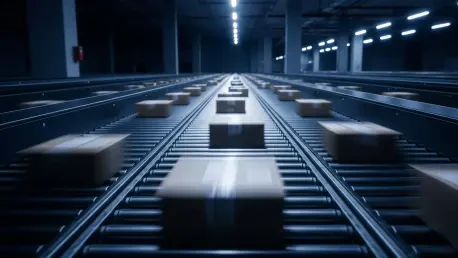

As an e-commerce strategist specializing in customer engagement and operations, I’ve been closely watching the evolution of logistics in emerging markets. The recent announcement by Bosta is a watershed moment for Egypt’s digital economy. Their move to launch the largest automated sorting machine in the Middle East isn’t just an upgrade; it’s a fundamental shift in how e-commerce logistics will operate at scale in the region. We’ll explore the strategic thinking behind this massive $5 million investment, how it redefines operational capacity, and what it means for everyone from small online sellers to the national workforce. This is a story about a single machine with the power to reshape an entire ecosystem, and it has significant implications for the future of regional e-commerce.
Investing $5 million in an automated sorting machine is a major leap. What specific trends in Egypt’s e-commerce sector prompted this move now, and could you share some metrics on how this will directly improve delivery speed and accuracy for your merchants?
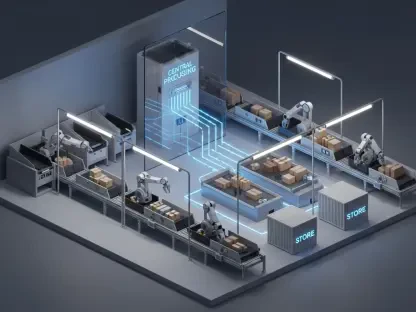
This investment is a direct and aggressive response to the explosive growth we’re seeing in Egypt’s e-commerce market. Bosta’s own figures tell the story: they handled 37 million parcels in 2025 and are targeting over 80 million in 2026. You simply cannot double your volume year-over-year with manual processes without quality collapsing. This $5 million machine, capable of processing 11,000 parcels an hour, is their answer to that scaling pressure. It directly impacts speed and accuracy by dramatically reducing manual errors, which are the biggest bottleneck in any high-volume logistics network. For a merchant, this means fewer lost packages, faster transit times, and ultimately, a more reliable customer experience that builds trust and repeat business. Technology, as Bosta’s CEO Mohamed Ezzat noted, has become the essential factor in achieving this efficiency.
Your daily operational capacity is set to jump from 100,000 to over 250,000 parcels. Beyond the machine itself, what are the key downstream challenges this creates for your 50+ hubs and last-mile delivery? Please walk me through the steps you’re taking to scale those operations.
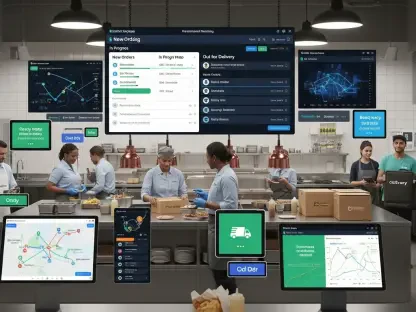
That jump in capacity is staggering, and it creates a massive ripple effect through the entire network. The automated sorter is like a powerful new engine, but you also need to upgrade the transmission and the wheels. The primary challenge is ensuring that the 50+ operational hubs aren’t overwhelmed by this firehose of perfectly sorted parcels. It requires a complete overhaul of downstream processes. This means investing in smarter route-planning technology for last-mile delivery, expanding the physical footprint of the hubs to handle increased temporary storage, and hiring and training more delivery personnel. The key is to create an integrated ecosystem where every part of the chain, from warehousing to final delivery, can match the pace set by the central sorting machine. Without that synchronization, the investment’s potential is capped.
The new system is built for high volume, targeting over 80 million parcels in 2026. How does this large-scale automation specifically benefit small and medium-sized businesses? Could you share an example of how it helps them compete with larger e-commerce players on service quality?
This is where the investment becomes truly transformative for the broader economy. Large-scale automation levels the playing field for small and medium-sized businesses (SMBs). Previously, a small artisan selling online couldn’t dream of offering the same delivery speed or reliability as a massive retailer because they lacked the logistics muscle. Now, by plugging into Bosta’s ecosystem, they can. For example, a small Cairo-based fashion brand can now promise next-day delivery to a customer in a distant city with the same confidence as a major international player. The sorting machine ensures their single parcel is processed with the same speed and accuracy as a thousand parcels from a big-box store. This access to world-class logistics infrastructure allows them to compete on the quality of their product, not the size of their operations.
With the machine automating work by processing 11,000 parcels per hour, how has this impacted your workforce? What new skills or training programs have you introduced to help your team manage and maintain this advanced technology effectively and ensure a smooth transition?
This is a classic case of workforce evolution, not replacement. While the machine automates the repetitive, manual task of sorting, it creates a need for higher-skilled roles. You now need technicians who can maintain and troubleshoot a complex piece of machinery, data analysts to monitor its efficiency, and operational managers who understand how to leverage the technology to optimize the entire network. The transition requires a significant investment in people. This means implementing comprehensive training programs focused on mechatronics, system diagnostics, and data interpretation. The goal is to upskill the existing team, empowering them to manage this advanced infrastructure. It’s about shifting human capital from manual labor to technology oversight, which ultimately creates more valuable and sustainable jobs.
Your total investments now stand at $27 million, with this machine being a key part. Looking ahead, what are the next major infrastructure or technology gaps you aim to address to further strengthen Egypt’s logistics ecosystem and support the country’s digital economy?
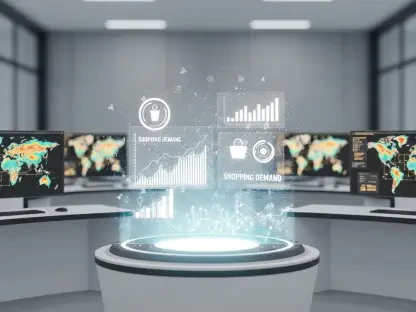
With a total investment of $27 million, Bosta has clearly laid a powerful foundation. The next logical step is to build on this central processing strength. I see two major gaps to address. First is deepening the technology integration in last-mile delivery, using AI for dynamic route optimization and providing customers with more precise real-time tracking. The second is expanding intelligent warehousing and fulfillment services. As merchants grow, they need more than just delivery; they need a partner to manage their inventory efficiently. By investing in smart fulfillment centers that are seamlessly connected to their new sorting hub, they can create a true end-to-end logistics solution that further solidifies their role as a growth partner for Egypt’s digital economy.
What is your forecast for the e-commerce logistics sector in the Middle East over the next five years?
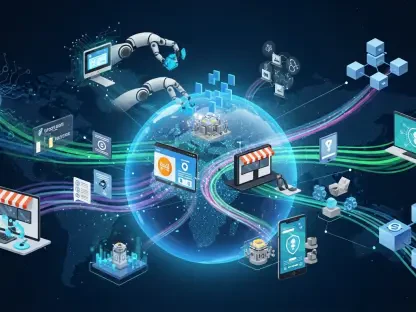
My forecast is one of hyper-competition and accelerated technological adoption. Bosta’s move has thrown down the gauntlet, and we will see competitors racing to match this level of automation, not just in Egypt but across the region. The next five years will be defined by an arms race in logistics technology—more robotics in warehouses, AI in delivery routing, and drone experiments for remote areas. Customer expectations will soar, with same-day or even two-hour delivery becoming the standard in major urban centers. The companies that will win won’t just be the ones with the fastest machines, but those who can build the most intelligent, integrated, and resilient end-to-end supply chains. It’s an incredibly exciting time, and the ultimate beneficiary will be the regional consumer and the small businesses that can now reach them more effectively than ever before.