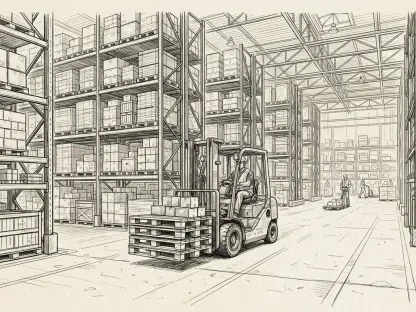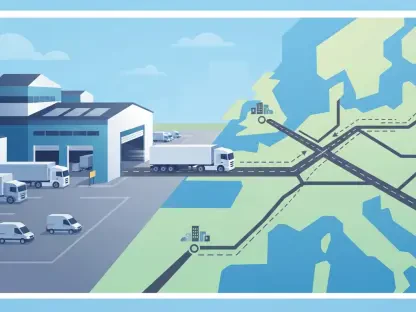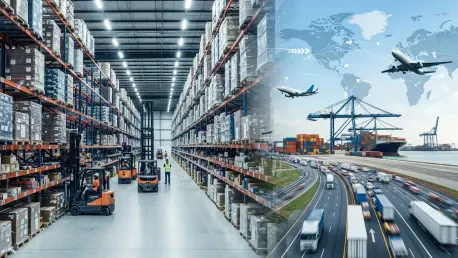

The traditional architecture of international commerce is undergoing a radical reconstruction as the physical gap between manufacturing lines and final consumer delivery narrows to an unprecedented degree. In the current global logistics landscape, a decisive shift toward origin-based fulfillment is reshaping how goods move across borders. By situating distribution centers directly within major manufacturing corridors like those in China, retail platforms are fundamentally altering the speed of modern supply chains. This evolution is particularly significant for third-party sellers who require high-capacity bulk storage to meet the relentless demands of the modern retail ecosystem. Technological integration now allows for a seamless transition from the factory floor to the digital storefront, ensuring that product availability remains consistent even during periods of high market volatility.
Redefining the Flow of Goods: Strategic Trends and Market Projections
Emerging Trends in Origin-Based Warehousing and Just-in-Time Inventory
Moving the logistical brain closer to the point of manufacture enhances organizational agility by allowing companies to respond to real-time data rather than relying on outdated projections. This strategic shift facilitates a demand-based replenishment model, where inventory is staged at the source and shipped only when domestic supply levels require it. Consumer behavior trends increasingly favor consistent product availability and rapid delivery windows, making the proximity of storage to production a critical competitive advantage. By integrating global warehousing with cross-border transportation, retailers can maintain a leaner inventory profile while ensuring that popular items remain in stock.
The integration of Global Warehousing and Distribution systems allows for a more flexible approach to inventory management. Instead of committing to massive bulk shipments that risk sitting in expensive domestic warehouses, merchants can utilize origin hubs to act as a pressure-release valve. This methodology supports a just-in-time logistics strategy that minimizes the capital tied up in unsold goods. Consequently, the transition from manufacturing to final fulfillment becomes a synchronized movement, reducing the time products spend in transit and increasing the overall efficiency of the global supply chain.
Data-Driven Growth and the Economic Outlook for Global Fulfillment
Financial metrics indicate that origin-based storage offers a 45% cost reduction compared to domestic warehousing in the United States. This significant overhead reduction is a primary driver for the expansion of China-based sellers, who currently represent nearly half of the active seller base on major platforms. Market indicators suggest that these origin hubs will soon expand beyond Shenzhen into the Yangtze River Delta and European markets, reflecting a broader trend toward localized logistics infrastructure. Performance data confirms that this model can accelerate inventory replenishment cycles by up to seven days, providing a vital edge in competitive categories.
Economic projections for the coming years suggest a continued reliance on these high-efficiency hubs to offset rising labor and real estate costs in Western markets. The ability to store goods at a fraction of the cost while maintaining a high degree of shipping readiness creates a powerful incentive for small and medium enterprises. As digital infrastructure becomes more sophisticated, the correlation between localized storage and profit margins becomes clearer. Merchants who leverage these data-driven logistics solutions are better positioned to scale their operations globally without the traditional burdens of massive upfront capital expenditure.
Navigating the Complexities of International Trade and Logistical Bottlenecks
The financial risks associated with out-of-stock statuses are profound, as they negatively impact search rankings and long-term revenue potential. When a product disappears from the digital shelf, the momentum built through marketing and customer reviews can vanish almost overnight. Managing the transition from manufacturing lines to high-seas freight requires a delicate balance of timing and volume. Strategic solutions, such as maintaining flexible inventory buffers at the point of origin, provide a necessary safeguard against the long-term forecasting errors that often plague international trade.
Overcoming the overhead challenges of testing new product lines is a persistent hurdle for merchants entering foreign markets. The logistical friction of moving unproven inventory across the ocean often discourages innovation. However, by utilizing localized distribution centers, sellers can mitigate these risks by keeping larger stock volumes at the source and sending smaller, frequent shipments to domestic fulfillment centers. This flexibility allows for a more iterative approach to product development and market entry, reducing the potential for significant losses on unsold merchandise.
The Regulatory Landscape and Compliance in Transpacific Trade
United States customs duties and import regulations exert a substantial influence on merchant cash flow and operational strategy. Navigating these complex legal requirements demands a high level of transparency and accurate data management. Compliance standards within a closed-loop supply chain ensure that every shipment adheres to international trade laws, reducing the likelihood of costly delays at the border. Digital infrastructure plays a pivotal role in this process, providing the necessary documentation and security measures to maintain the integrity of cross-border shipments while ensuring that all regulatory obligations are met.
Security measures have become increasingly stringent as e-commerce volumes grow, requiring sophisticated tracking and verification systems. Adherence to international trade laws is no longer just a legal necessity but a functional requirement for maintaining a high-velocity supply chain. By utilizing integrated logistics platforms, merchants can automate much of the compliance process, ensuring that duties are calculated correctly and that all shipments are cleared through customs with minimal intervention. This level of regulatory precision is essential for maintaining the fluid movement of goods between major manufacturing hubs and global consumer markets.
Future Horizons: Amazon’s Path Toward an End-to-End Operating System
Market disruptors are forcing traditional retailers to build more robust logistics moats to protect their market share against aggressive competitors. Innovations in automated replenishment and the expansion of distribution networks to regions like Japan and the United Kingdom signal a move toward a truly global operating system. Economic conditions and trade stability will continue to shape how infrastructure investments are prioritized, with a heavy emphasis on resilient, decentralized supply chains. Localization will redefine what it means to sell globally, enabling even the smallest enterprises to access international markets with the same efficiency as multinational corporations.
The escalation of logistics competition is driving a new wave of technological adoption, particularly in the realm of artificial intelligence and predictive analytics. These tools will allow platforms to anticipate demand fluctuations with greater accuracy, further optimizing the placement of inventory across the global network. As trade routes become more complex, the ability to offer a seamless, end-to-end logistics solution will be the primary differentiator for major e-commerce players. This transition marks the end of the era where platforms were merely marketplaces, signaling their rebirth as comprehensive infrastructure partners for global commerce.
Final Assessment: The Strategic Impact of the Shenzhen Distribution Center
The establishment of the Shenzhen distribution center effectively reinforced the dominance of integrated logistics in the global supply chain landscape. This move provided a clear roadmap for how platforms could improve merchant liquidity and operational agility by reducing the financial burden of inventory management. The transition of e-commerce entities into comprehensive logistics partners was finalized through the successful implementation of origin-based storage solutions. Sellers who recognized the value of these hubs gained a significant competitive advantage by lowering their overhead and accelerating their time to market.
Future strategic considerations for merchants should involve a deeper integration with these localized hubs to maximize their supply chain efficiency. The ability to pivot quickly in response to shifting consumer trends became a hallmark of successful businesses in the modern era. As logistics continue to evolve, the focus will likely shift toward further automation and the expansion of these distribution models into emerging manufacturing regions. Ultimately, the shift toward origin-based fulfillment represented a fundamental change in the global trade paradigm, prioritizing flexibility and cost-effectiveness in an increasingly interconnected world.