
Zainab Hussain is a retail and e-commerce strategist who has spent her career at the intersection of customer engagement and operations. She’s been hands-on with enterprise AI programs that span diagnostics, service automation, creative tooling, and R&D—always with an eye on measurable impact and brand integrity. In this conversation with William Ainslie, she unpacks how rising consumer reliance on large language models is reshaping go-to-market, why a three-pillar AI strategy keeps investments grounded, and how disciplined governance—across data, energy, and workforce—turns experimentation into durable advantage. Themes include trust in beauty diagnostics, agent-based automation at scale, the power of unified data (115 years’ worth), and the human-first playbook that avoids fatigue while delivering results.
Many consumers already use LLMs to learn about products, with massive weekly chat volumes on beauty. How is that reshaping your go-to-market plans, and what new metrics matter most? Can you share a concrete example where this behavior changed launch strategy, messaging, or channel mix?
When 39% of consumers use LLMs to learn about products and you see more than 280 million weekly messages on beauty topics on a single platform, your launch plan can’t be channel-first—it has to be model-first. We start by structuring claims and benefits so they’re machine-readable and explicitly stated, because that’s what discovery agents pick up and amplify. Our KPI set now includes “bot-catch rate” (the percentage of core benefits recognized by assistants), structured-claims coverage, and agent-led conversion lift alongside the usual reach and ROAS. In one launch, we rewrote copy to front-load three explicit benefits and syndicated them into the beauty diagnostic platform; that shift rebalanced spend toward assistants and diagnostic surfaces, moving budget from traditional upper-funnel channels where the same claims were getting buried.
You’ve framed AI around three pillars: consumers, business lines, and employees. How do you prioritize investments across them quarter by quarter, and what trade-offs have you faced? Walk us through one decision where you reallocated budget based on measurable impact.
We weight funding by proximity to value: consumer pilots that unlock immediate discovery or conversion, business-line agents that compress cycle times, and employee tools that scale adoption. Each quarter we benchmark impact using hard numbers—like 80% time reduction in customer advisors’ administrative tasks or over 50% faster in-store verification at 99% reliability—and then shift dollars to the top two performing pillars. A recent example: we pulled funds from a low-velocity awareness campaign and redirected them to expand our service agent to more languages after week-one data showed handling time falling sharply and response volumes cresting over 1 million conversations per week internally. The trade-off was fewer vanity impressions in exchange for measurable service and productivity gains that touched both consumers and teams.
For consumer experiences like beauty diagnostics, how do you validate accuracy across diverse skin tones and hair types? What datasets, testing protocols, and user feedback loops do you rely on, and how do you correct errors in production without breaking trust?
Our starting point is governance: we actively work to address potential algorithmic biases so diagnostics perform across all skin tones and hair types. We train and test on proprietary beauty datasets enriched by 115 years of domain knowledge, 17 terabytes of insights across eight key areas, and inputs from 8,000 experts, then stress-test with targeted edge cohorts before wide release. In production, we maintain feedback loops through the diagnostic UI and service channels, triaging patterns into weekly retraining sprints so corrections land quickly without jarring changes for users. When we do make updates, we disclose improvements and provide side-by-side before/after guidance so consumers feel informed, not experimented upon.
When leaning into clear product benefits to make AI bots favor your brands, how do you avoid over-optimization that feels gimmicky? What internal guidelines, A/B tests, and retailer partnerships help you balance discovery, transparency, and conversion?
We use a “clarity over cleverness” rule: state benefits explicitly so assistants can parse them, but never stuff claims or over-index on keywords. Every edit goes through an A/B where we track assistant recognition and human comprehension together; if bot-catch rises but readability drops, it doesn’t ship. Retailer and platform partners test our structured data on their surfaces, and we align on transparency cues that make recommendations feel earned, not gamed. The guardrail is simple—if the language wouldn’t pass our consumer care standards in a live conversation, it doesn’t belong in an assistant-facing brief.
Your customer-care agent detects intent, gathers facts, and drafts replies in multiple languages. What were the hardest edge cases to solve, and how did you tune for tone, compliance, and latency? Share before-and-after metrics on handling times and satisfaction.
The toughest moments were multi-intent messages—think returns plus ingredient sensitivities plus shipping delays—where tone can swing from anxious to frustrated in a single paragraph. We built a planner that sequences intents, adds policy snippets, and renders answers in the appropriate language, then a final pass adjusts tone for reassurance and clarity. Compliance was templated at the clause level so updates cascade instantly; latency targets were set to keep responses snappy without sacrificing accuracy. The impact was tangible: advisors now spend up to 80% less time on administrative tasks, and overall response times are expedited, which we see reflected in faster resolutions and steadier satisfaction scores across languages.
Visual recognition now verifies shelf availability and flags potential stock-outs with high reliability. What model architectures and data labeling standards made the leap in accuracy possible? Describe the rollout playbook from pilot to global scale, including failure modes and retraining cadence.
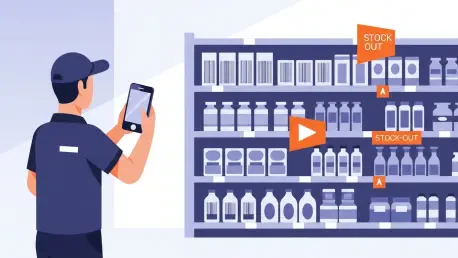
We focused on disciplined labeling—consistent taxonomy for facings, variants, and shelf conditions—and field images that reflect real lighting, angles, and clutter. That foundation, plus iterative tuning, got us to 99% reliability and reduced verification time by over 50%. We piloted with a single market, documented failure modes like glare, partial occlusion, and lookalike packaging, and baked those back into the next training round before adding categories and countries. Retraining now runs on a regular cadence tied to pack changes and seasonal resets, so the system stays in step with what reps actually see in stores.
A research agent synthesizes over 100,000 marketing studies across many countries. How do you ensure confidentiality, deduplication, and bias control in the summaries? Give a real example where a synthesized insight changed a campaign or portfolio decision.
Access is gated: more than 10,000 users authenticate to a secure environment that houses over 100,000 proprietary studies across 70 countries, and documents inherit permissions from source systems. We canonicalize metadata to merge duplicates and surface a single source of truth, then the agent flags sampling or regional skews so teams see the context behind each claim. In one case, the synthesis showed a benefit theme emerging consistently across three regions, which prompted us to elevate that claim in creative and pause a lower-performing message. The result was a leaner campaign with clearer benefits that aligned with what the data already knew—just scattered until the agent pulled it together.
Creative teams use a secure platform to generate brand images and videos. How do you enforce brand safety, IP compliance, and cultural nuance at speed? What governance gates, prompt libraries, and human reviews prevent off-brand or legally risky outputs?
Our CreAItech workflow front-loads safety: approved prompt libraries encode brand guardrails, mandatory disclosures, and usage rights so creators start inside the lines. Each asset passes through automated checks and then human review for tone, texture portrayal, and cultural cues, because subtle choices in lighting or skin rendering matter in beauty. We also carry forward learnings—rejected outputs become negative prompts and guidance for the next round—so the system gets faster without losing judgment. That’s how we get to “a few minutes and a few prompts” while staying true to brand and legal standards.
In R&D, digital hair responds to active ingredients like a physical twin. What validation benchmarks proved predictive power, and how did this cut molecule screening time? Share a step-by-step of a recent formula cycle from hypothesis to lab to launch.
We validated by matching digital hair response patterns to lab outcomes, then ran prospective tests to confirm predictive lift. The payoff is speed and scale: in four years, we tripled the number of molecules tested and reduced development time by a factor of four, so promising candidates move faster. A typical loop looks like this: hypothesis formation from consumer signals, digital-hair simulation to shortlist actives, lab bench tests to confirm benefits, and rapid formulation sprints that feed back into the model. That rhythm keeps R&D precise and fast, turning insight into launch-ready formulas without compromising rigor.
Employees can self-assess AI skills and use a proprietary GPT at scale. Which skills gaps surfaced first, and how did you close them? Provide adoption curves, usage depth (beyond chat), and examples where teams moved from “assist” to true “co-creation.”
The early gaps were prompt design, evaluation of outputs, and knowing when to move from generation to structured workflows. We’re closing them with AmplifAI, a self-assessment program aiming for 40,000 completions by year-end, paired with role-specific learning paths. Our proprietary GPT has been live for two years and is now accessible to 56,000 employees; 21,000 use it daily, generating over 1 million conversations per week. Beyond chat, teams build personal agents for planning and analysis—over 22,000 companions exist already, with 254 governed at the business level—so the work shifts from “assist” to co-creation inside spreadsheets, presentations, and internal messaging.
Personal AI companions are proliferating across teams. How do you prevent shadow automation, manage data leakage, and keep versions aligned with policy? Outline your guardrails, audit methods, and how business governance steers high-impact templates.
We whitelist capabilities and data scopes so companions can’t access sensitive sources without explicit provisioning, and business-owned templates sit under governance for auditability. Versioning is centralized; updates to prompts or policies roll out to governed companions first, then to personal agents that inherit constraints. Regular audits review logs for anomalous access and off-policy behavior, and we retire or refactor templates that drift. That balance lets creativity flourish while keeping automation inside the rails of security and compliance.
You consolidated over a century of beauty data into a unified model and harmonized many IT systems. What were the toughest schema, lineage, and identity challenges, and how did you solve them? Detail the tooling stack and the migration choreography that minimized downtime.
The hardest part was reconciling 115 years of beauty information and 17 terabytes of insights across eight key areas into a common language while preserving lineage. We leaned on expert curation from 8,000 specialists to validate crosswalks and keep identities aligned across channels and brands. In parallel, we harmonized 20 IT systems to create a unified operational language, staging cutovers so interfaces flipped with minimal disruption. That choreography—data first, then systems—built resilience into the supply chain and gave AI consistent signals to learn from.
You track energy use and prioritize efficient models and low-carbon data centers. How do you quantify the carbon cost per use case, and when do you trade accuracy for efficiency? Share the scorecard you use to decide models, vendors, and deployment regions.
We measure energy consumption of our technologies and factor in the data centers’ energy sources, prioritizing partners that use low-carbon power. Each use case gets a performance-to-energy ratio, so teams see when a heavier model adds little real-world value. The scorecard weighs accuracy against efficiency and regional carbon intensity; if parity is close, we default to the most energy-efficient conversational model and a greener region. That way, sustainability is not an afterthought—it’s a decision input from day one.
With a goal to complete most of the IT transformation soon, what milestones define “done,” and how do you avoid transformation fatigue? Describe your change-management engine, from incentives to communication rhythms, and the KPIs that prove durable value.
We define “done” as operationalized capabilities, not pilots—things like harmonized processes across 20 systems, governed agents in daily use, and clear handoffs from data to deployment. The target is to reach roughly 60% of the total IT transformation by year-end, and we pace communications so wins stay visible without drowning teams. Incentives reward measurable outcomes—cycle-time cuts, adoption milestones, and energy efficiency—so people see progress in their day-to-day work. Durable value shows up in fewer handoffs, steadier supply chains, and consistent AI performance across markets.
What safeguards ensure AI augments rather than replaces roles? Walk us through role redesigns, training paths, and new career ladders created by automation. Include anecdotes where AI freed time for higher-value work and how you measured the uplift.
The principle is empowerment: AI absorbs iterative tasks so people focus on judgment, creativity, and care. In customer service, agents report spending up to 80% less time on administrative steps, freeing them to handle nuanced cases and proactive outreach; that’s the work they’re proud of, and it shows in smoother resolutions. Training paths tie to AmplifAI so employees see where they stand and how to grow, and new ladders include agent owners, prompt librarians, and domain evaluators. We measure uplift through time saved, case complexity handled, and the spread of governed companions that encode best practices.
As AI increasingly influences product discovery, how do you defend share against competitors training their own models? What data moats, partnerships, and feedback loops matter most, and how do you test for long-term brand lift rather than short-term clicks?
Proprietary beauty data is our moat—diagnostics, R&D signals like digital hair responses, and decades of consumer studies give assistants richer evidence for our claims. Partnerships on low-latency, energy-efficient models ensure we’re present where discovery happens, and feedback loops from service and diagnostics feed straight into copy and formulation. We track assisted discovery and post-exposure engagement, not just clicks, to gauge whether benefits land and persist. Over time, the brands that tell clear, truthful stories—backed by validated data—earn a larger share of model recommendations and consumer trust.
Do you have any advice for our readers?
Start where outcomes are visible and compounding: one governed agent in service, one diagnostic that truly helps, one creative workflow inside safe prompts. Invest in the foundations—harmonized systems, clean data, and energy-aware choices—because scale without structure just multiplies noise. Keep the human in the loop, from creators to care advisors, and celebrate time given back as much as cost saved. And remember: clarity wins—if your benefits are explicit, assistants will find them and consumers will feel them.