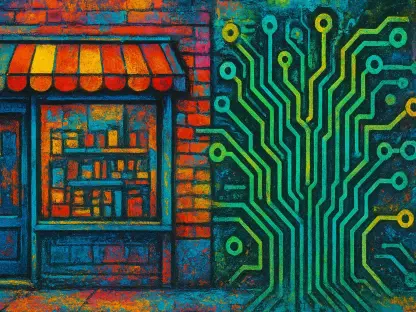

The transformation of the American marketplace over the last two and a half centuries represents a profound evolution from simple frontier transactions to a sophisticated global ecosystem built on the bedrock of trust and technological precision. As the United States reaches this significant milestone in its history, the narrative of the customer experience reveals that while the delivery methods have shifted from horseback to drones, the underlying psychological needs of the consumer remain remarkably consistent. Reliability, transparency, and a respect for the individual’s time have always been the markers of businesses that endure through economic shifts and cultural revolutions. In the early days, a merchant’s reputation was their only true currency, and today, that same principle is amplified through digital transparency and immediate feedback loops. Success in the competitive landscape of 2026 requires an understanding that innovation is not merely about adopting the latest artificial intelligence tools, but about using those tools to fulfill the ancient promise of a fair and seamless exchange. By examining the trajectory of service from the 1700s to the present, one can see a clear pattern where the most successful organizations are those that treat every interaction as an opportunity to reinforce a long-term relationship rather than a one-off sale. This historical perspective provides a roadmap for the next era of commerce, emphasizing that the human connection remains the ultimate differentiator in an increasingly automated world.
Historical Precedents: The Birth Of Consistent Service
In the late 18th century, the biggest challenge for any business was dealing with total uncertainty regarding logistics and communication. The Pennsylvania Packet became a pioneer in customer experience by solving this problem for its readers, acting as a one-stop hub for news, shipping schedules, and advertisements. By providing a predictable schedule and bundling essential information, the paper reduced the cognitive load and effort required for citizens to stay informed, effectively turning a chaotic flow of information into a reliable daily habit. This early model demonstrated that the value provided to a customer was not just the product itself, but the convenience and predictability surrounding its delivery. The publication understood that in a world of fragmented information, being the most reliable source was the quickest path to market dominance. This focus on consistency allowed the publication to build a loyal following that relied on it for daily survival and economic planning, setting a standard for how information-based businesses would operate for centuries to come. The lesson from this era remains clear: the organization that provides the most stable and predictable environment for the consumer will invariably win their trust and their continued business.
At the same time, the creation of the U.S. Postal Service under the leadership of Benjamin Franklin established a masterclass in building trust through standardized infrastructure. Franklin treated the customer’s time as a sacred asset, redesigning mail routes for better speed and standardizing rates so the service was accessible to every citizen regardless of their location or status. This move toward a fair and consistent system for all citizens established a foundational level of equity in American service that still serves as a model for large-scale operations in 2026. By implementing a system where the rules were clear and the outcomes were predictable, the postal service proved that a large-scale government or private entity could maintain a personal level of accountability. This infrastructure became the backbone of the American economy, allowing for the rise of catalog sales and long-distance commerce that would later define the 19th and 20th centuries. The emphasis on speed and accessibility created a culture of expectation among the American public, where the timely delivery of goods and information became a right rather than a privilege. This historical shift laid the groundwork for the modern expectation of instantaneous results and frictionless service that characterizes the current digital landscape.
Industrial Scalability: The Rise Of Predictable Quality
In the modern era, consistency at scale has become the gold standard for service excellence across every sector of the American economy. Companies like Chick-fil-A have built their entire reputation on the idea that every customer should receive the same polite, high-quality experience regardless of which specific location they visit or the time of day. This level of execution requires incredible organizational discipline, focusing on repetitive training and a culture of hospitality that permeates every level of the workforce. By mastering the “boring” but essential habit of showing up the same way every single day, such organizations create a powerful sense of predictability that makes customers feel comfortable and valued every time they interact with the brand. This predictability reduces the psychological risk for the consumer, as they know exactly what they will receive in exchange for their money and time. In an age where consumers are overwhelmed with choices, the brands that can guarantee a baseline of high-quality service without variance are the ones that achieve the highest levels of customer retention. This commitment to execution over flashiness proves that the most sustainable form of innovation is often the perfection of the basic service model at a massive scale.
Digital giants like Amazon have further refined the customer experience by focusing on the total removal of friction, especially during the critical moments when things go wrong. Their model of customer obsession often involves taking the user’s word as bond and resolving issues without making the person jump through complex hoops or provide excessive documentation. By eliminating the psychological stress and the tedious back-and-forth typical of service failures, they have proven that how a company handles a mistake is often more significant than the mistake itself. This approach to resolution builds an immense reservoir of trust, as customers feel that the company is on their side rather than acting as an adversary. In 2026, the ability to automate these resolutions through intelligent systems has only increased the expectation for immediate gratification and problem-solving. This shift has forced every other industry to reconsider their own friction points, moving away from defensive service postures toward proactive advocacy for the user. The focus on the post-purchase experience ensures that the relationship continues long after the initial transaction, turning a simple purchase into a long-term partnership based on the assurance that the company will always make things right.
Cultural Foundations: Employee Empowerment And Brand Loyalty
A deep look at successful retailers like Costco reveals that there is a direct and unbreakable connection between how a company treats its employees and the quality of the service those employees provide. When workers are well-compensated, provided with robust benefits, and empowered to make decisions, they are much more likely to deliver the friendly and efficient service that keeps members returning year after year. This employee-first approach creates an internal culture where the staff feels a personal stake in the brand’s reputation and the ultimate satisfaction of the customer. In 2026, as the labor market continues to reward companies that prioritize human capital, this model has become a competitive necessity rather than an optional strategy. The ripple effect of a happy workforce is felt in every interaction, as employees who feel respected are naturally more inclined to extend that same respect to the people they serve. This creates a virtuous cycle of loyalty that is difficult for competitors to replicate through technology alone. It proves that the foundation of a great customer experience is not found in a manual or an app, but in the psychological safety and motivation of the people who represent the brand on the front lines every day.
While big-box stores and digital platforms focus on efficiency, local businesses and emotional brands like Disney prove that human empathy and storytelling are still vital components of the American commercial identity. Whether it is a local hardware store expert taking the time to teach a customer how to fix a leak or a theme park creating a sense of magic for a child, these personal touches build a level of emotional loyalty that transcends price or convenience. These organizations understand that the customer is often looking for more than just a product; they are looking for a solution, a memory, or a sense of belonging. By integrating empathy into the service model, businesses can connect with individuals on a level that algorithms cannot reach, fostering a sense of community and shared values. This connection suggests that even in a world dominated by automation and artificial intelligence, the human element remains the primary way for a business to stand out from a crowded and noisy marketplace. The ability to listen, understand, and react with genuine care remains the most powerful tool in the service arsenal. This balance between high-tech efficiency and high-touch empathy defines the modern standard for what it means to be a truly customer-centric organization.
Strategic Evolution: The Final Verdict On Long Term Growth
When looking at the top-rated companies across the country today, from Apple and Starbucks to Delta and Nordstrom, several universal traits become clear as the defining markers of success. These industry leaders consistently prioritize the customer’s time, treat trust as a sacred and non-negotiable responsibility, and understand that consistency is the most important form of innovation. They have moved beyond simply selling products to providing integrated experiences that simplify the lives of their users and remove the complexities of modern living. By focusing on making the customer’s life easier and resolving problems with genuine empathy, these organizations define the very best of American commerce across two and a half centuries of history. They recognize that the competitive landscape is constantly shifting, but the desire for a fair, honest, and efficient transaction is a permanent fixture of the human experience. In 2026, the strategy for growth involves a relentless focus on these fundamentals, ensuring that every new technology or process is designed to enhance the human connection rather than replace it. The brands that have survived the longest are those that have never lost sight of the individual at the other end of the transaction.
The historical trajectory of American service demonstrated that lasting success was always rooted in the ability to adapt to new tools while maintaining ancient values. Organizations that thrived were those that realized that a customer’s trust was earned through a thousand small, consistent actions rather than a single grand gesture. Businesses moved away from transactional models and toward holistic relationship management, recognizing that the cost of acquiring a new customer far outweighed the investment required to keep an existing one happy. The integration of advanced logistics and real-time communication provided the means, but the commitment to reliability provided the meaning behind every delivery and service call. Leaders in the field established that the most effective way to future-proof a brand was to empower the workforce and simplify the path to resolution for the consumer. By prioritizing the removal of friction and the elevation of empathy, the American marketplace set a global standard for how commerce could serve as a bridge between innovation and human needs. These proven principles provided a clear path forward, ensuring that the next era of growth would be built on the same foundation of integrity that supported the pioneers of the past.