
Zainab Hussain has spent her career at the intersection of consumer psychology and operational efficiency, helping brands navigate the rapidly shifting sands of the global marketplace. As an e-commerce strategist, she interprets complex data to reveal the human stories behind shopping habits, focusing on how businesses can bridge the growing disconnect between digital innovation and customer trust. Today, she joins us to break down the findings of a massive global study involving 29,000 online shoppers and 5,800 businesses across 29 countries. Throughout our conversation, she highlights how the future of retail is being shaped not just by smarter code, but by the physical reliability of delivery and the emotional weight of a secure checkout.
The latest data reveals a massive disconnect in how people want to shop on their mobile devices compared to what retailers are actually providing; how should businesses interpret the fact that 72% of shoppers prefer apps while only 38% of companies offer one?
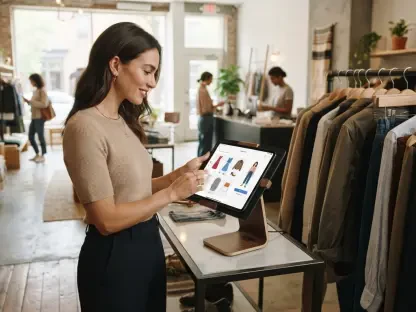
This is a stark wake-up call for any retailer who still treats mobile commerce as a secondary channel or a simple extension of their desktop site. When nearly three-quarters of the 29,000 shoppers surveyed express a preference for dedicated apps, they are signaling a desire for the speed, biometric security, and high-performance interfaces that a standard mobile browser often fails to deliver. For the 62% of businesses currently lacking an app, this gap represents a significant loss of potential loyalty, as customers increasingly crave the immediate, “always-logged-in” experience that an icon on their home screen provides. To bridge this, businesses must realize that an app is no longer a luxury but a fundamental requirement for capturing the attention of a consumer base that is browsing and buying on the move. The frustration of navigating a clunky, slow-loading mobile website can lead to a sensory “turn-off” that drives a customer straight into the arms of a competitor who has invested in a seamless mobile environment.
Many retailers view the checkout process as a purely technical stage, but 62% of consumers say they will walk away if their preferred payment method isn’t available—what does this reveal about the modern psychology of convenience?
This statistic highlights that the checkout is the most emotionally charged moment in the entire shopping journey, where the excitement of discovery meets the cold reality of a financial transaction. If a customer reaches the end of their journey and doesn’t see their trusted digital wallet or a local payment option they recognize, that sense of hard-won momentum evaporates and is replaced by a feeling of friction or even suspicion. Retailers often underestimate how a minor operational decision—like which payment gateways to support—can have a massive, direct impact on their total revenue. In a world where consumers have countless alternatives only a tap away, providing a diverse range of payment options is an essential form of customer service that validates the shopper’s preferences. It’s about removing every possible psychological barrier so that the act of paying feels as effortless and safe as the act of browsing.
Social media platforms have evolved from simple marketing galleries into active marketplaces where 45% of consumers now make purchases; how is this shortening the traditional customer journey?
We are witnessing the collapse of the traditional multi-step marketing funnel, as discovery, evaluation, and conversion now happen simultaneously within a single social ecosystem. For younger generations in particular, the path to purchase is no longer a linear trek through search engines and external websites; it’s an integrated experience triggered by an influencer’s post or a targeted ad. With nearly two-thirds of businesses already selling directly through these social channels, the industry is recognizing that capturing high-intent energy in the moment is crucial for growth. This shift demands that retailers create content that is not only visually stimulating but also functionally ready to handle a transaction without forcing the user to leave the app. It turns the entire world into a virtual storefront where the distance between “I want that” and “I bought that” is reduced to a few seconds of interaction.
Trust seems to be the invisible currency of e-commerce, with seven out of ten shoppers refusing to buy if they don’t trust the delivery provider—how have logistics become a central pillar of brand identity?
Logistics have moved out of the back office and onto the front lines of brand strategy, acting as the ultimate physical manifestation of a digital promise. When 70% of shoppers are willing to abandon a cart based solely on the reputation of a delivery service, it shows that the post-purchase experience is just as vital as the marketing that led them there. Retailers must understand that the delivery person or the service point is often the only physical touchpoint a customer has with their brand, and any failure there feels like a personal breach of trust. Interestingly, while 88% of businesses recognize that free shipping and returns drive sales, many still fail to see logistics as a storytelling tool that can build long-term loyalty. A package that arrives on time, in good condition, and with a transparent tracking process provides a sensory relief that cements the consumer’s decision to shop with that brand again.
In Europe, we see a massive shift toward lockers and service points for both deliveries and returns; what is driving this demand for out-of-home solutions over traditional home delivery?
The move toward out-of-home delivery is driven by a desire for autonomy and the elimination of “delivery anxiety,” which is the fear of missing a courier or having a package stolen from a doorstep. Nearly half of consumers are now opting for lockers because it puts the schedule back in their hands, allowing them to collect parcels during their commute or while running errands. This trend is even more pronounced in the returns process, where three-quarters of shoppers prefer using service points because it offers a predictable, self-service way to resolve a purchase that didn’t work out. It highlights a shift in how we define convenience; it’s no longer just about the speed of a delivery to a home address, but about the flexibility and control the shopper has over the entire physical exchange. Retailers who provide these varied “out-of-home” options are essentially giving their customers the gift of time and peace of mind.
While companies are racing to implement AI-powered personalization, consumers remain focused on data privacy—how can retailers balance high-tech innovation with the need for transparency?
This “AI paradox” is one of the most complex challenges facing the industry today, as businesses invest heavily in algorithms that consumers may find intrusive or opaque. While AI has the potential to make shopping incredibly efficient through better search results and personalized recommendations, that innovation means nothing if the shopper feels their personal data is being mishandled. Consumers are becoming much more sophisticated about their digital footprints and expect retailers to be clear about how their data is being used to influence their buying decisions. To succeed, retailers must ensure that every AI-driven feature provides a clear, tangible benefit to the customer, such as more accurate sizing or faster checkout, while maintaining a high standard of security. The goal should be to use technology to enhance the human experience of shopping, not to replace it with a process that feels cold, calculated, or exploitative.
Looking at the data from the 29,000 shoppers and 5,800 businesses in the DHL report, what is the single biggest “expectation gap” that retailers must close to stay competitive?
The single biggest gap is the difference between the speed of consumer evolution and the inertia of traditional business operations. Shoppers have moved into a world of mobile-first, social-driven, and highly flexible commerce, but many businesses are still playing catch-up with infrastructure that wasn’t designed for this level of friction-less interaction. We see this in the app adoption numbers and the disconnect over payment options, where businesses are essentially leaving money on the table because they haven’t aligned with modern consumer habits. Closing this gap requires a mindset shift where the retailer stops guessing what the customer wants and starts building systems that prioritize transparency and control at every stage. As the industry moves forward, those who can bridge the divide between a digital “click” and a reliable physical delivery will be the ones best positioned to capture the next phase of growth.
What is your forecast for the future of e-commerce?
I believe we are entering an era where the “last mile” and the “returns journey” will become the primary competitive battlegrounds, even more so than product variety or price. As digital interfaces become standardized and AI levels the playing field for personalization, the physical reliability of the logistics chain will be what separates elite brands from the rest. We will see a massive consolidation of trust, where shoppers stick with a small circle of retailers who can guarantee a zero-friction experience from the moment of discovery on social media to the moment a return is dropped off at a local locker. Success will be defined by “invisible commerce,” where the technology and logistics are so well-integrated that the customer never has to think about them—they simply work. Ultimately, the retailers who thrive will be those who view every delivery not as a cost to be managed, but as a crucial opportunity to earn the customer’s trust all over again.