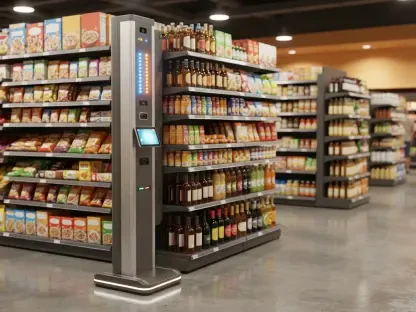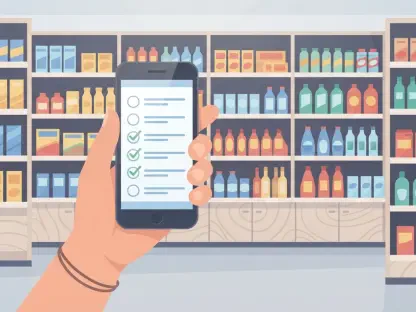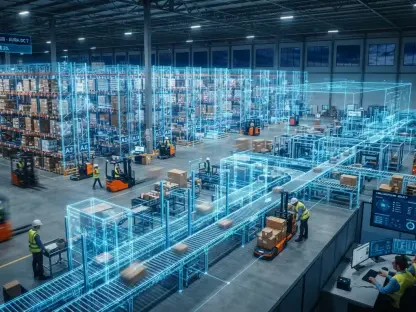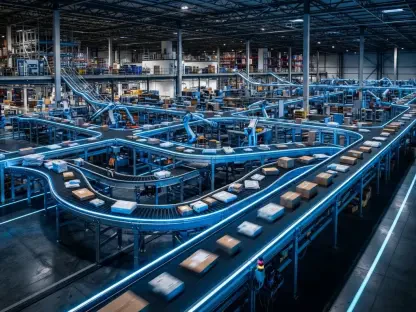

The once-routine weekend excursion to the local supermarket has been fundamentally replaced by a sophisticated network of algorithms and autonomous logistics that prioritize immediacy over the sensory experience of browsing physical aisles. Today, the American grocery sector exists in a digital-centric environment where online platforms have transitioned from mere convenience to essential household utilities. By the first quarter of 2026, the industry has seen a radical transformation driven by consumer expectations for near-instant fulfillment, leaving legacy retailers to decide between rapid technological adoption or eventual obsolescence.
Contextualizing the Modern Grocery Landscape
In this high-stakes ecosystem, mass merchants such as Walmart and Amazon have leveraged their massive infrastructures to dominate the landscape. Meanwhile, regional players like Kroger, Albertsons, and Aldi are attempting to maintain their relevance by integrating sophisticated digital tools. The logistical backbone of this revolution is supported by delivery platforms like Instacart and Shipt, alongside traditional carriers such as FedEx and UPS. These entities are no longer just service providers; they are the gatekeepers of the modern pantry in a world where physical proximity matters less than digital agility.
Technological tools have become the primary differentiators in capturing consumer attention. For instance, Walmart has successfully deployed “Sparky,” an AI agent designed to streamline the management of household essentials, while other retailers rely on expansive retail media networks to influence purchasing decisions before a customer even enters a store. Understanding the interplay between these massive logistics networks and physical retail footprints is crucial for any analysis of how ultra-fast delivery is dismantling traditional shopping habits.
Comparative Dynamics of Grocery Fulfillment and Market Impact
Speed of Fulfillment and the Erosion of Physical Errands
The current competition centers on the erosion of the “quick trip,” a long-standing habit where consumers would drive to a store for just one or two missing items. Online fulfillment now offers delivery in under an hour, with Walmart currently reaching 60% of the U.S. population within a 30-minute window. This unprecedented speed has resulted in 18% of all delivery orders occurring in the ultra-fast category. Consequently, the traditional physical errand is being dismantled by a digital alternative that is often faster than the time it takes to find a parking spot at a local grocer.
This shift in speed has fundamentally altered the performance metrics of the industry. Retailers are no longer measured solely by their inventory variety but by their proximity to the “last mile” and the efficiency of their picking processes. As more households realize that a gallon of milk can arrive at their door in the time it takes to prepare a meal, the psychological barrier to online grocery shopping has effectively vanished. This trend has placed immense pressure on physical stores to either match these speeds or offer an experience that digital platforms cannot replicate.
Market Share Distribution and Spending Shifts
Analyzing consumer spending reveals a significant migration toward digital channels. As of the first quarter of 2026, online grocery orders account for 19% of total U.S. grocery spending, representing a sharp climb from the 15% observed in late 2024. Walmart leads this digital shift with a commanding 40% market share, a testament to its ability to convert its physical store network into localized fulfillment centers. In contrast, regional giants like Kroger and Albertsons maintain a steady 10% growth rate by tethering online loyalty programs to their existing physical networks.
These traditional retailers are surviving by ensuring that digital convenience does not completely detach from brand heritage. By integrating rewards programs that function seamlessly across both physical and digital storefronts, they have managed to retain a core group of shoppers who value both options. However, the data suggests that the momentum favors the mass merchants who can subsidize the high costs of logistics through their sheer scale and diversified revenue streams, leaving smaller chains to fight for the remaining market share.
Fulfillment Models: Delivery, Pickup, and Ship-to-Home
Modern logistics have branched into three primary frameworks: delivery, pickup, and ship-to-home, each serving a different consumer need. Delivery remains heavily reliant on immediate, same-day demand, which currently accounts for 80% of its total volume. This model is the primary engine of the ultra-fast revolution, utilizing both in-house fleets and third-party services like Instacart to bridge the gap between the warehouse and the doorstep. It caters specifically to the “need-it-now” consumer who prioritizes time over service fees.
Pickup serves as a popular hybrid solution, allowing shoppers to avoid delivery fees while enjoying the efficiency of digital selection. This model has become a staple for suburban families who prefer the control of collecting their own goods. Meanwhile, ship-to-home remains the domain of Amazon and non-regional merchants, utilizing carriers like FedEx or UPS primarily for non-perishable goods that do not require climate-controlled transport. This three-pronged approach ensures that every shopping scenario, from the emergency dinner ingredient to the bulk monthly restock, is covered by a digital solution.
Practical Challenges and Strategic Limitations
Despite the growth, operational obstacles remain significant for smaller players. Regional grocers like Aldi face massive capital expenditure hurdles when attempting to build proprietary delivery fleets. This financial pressure often forces a reliance on third-party services like Instacart, which, while providing immediate access to the market, can significantly impact overall profit margins. The industry is currently searching for a tipping point where digital expansion does not erode the foundational profitability of the physical store footprint, a balance that is increasingly difficult to maintain as delivery speeds accelerate.
The integration of artificial intelligence is now a baseline requirement for survival rather than a luxury upgrade. Walmart’s “Sparky” AI agent has already demonstrated its value, with users spending approximately 35% more per order than those using traditional interfaces due to better predictive suggestions. Similarly, Albertsons utilizes AI-driven personalization to analyze customer data and offer tailored recommendations that increase conversion rates. These technological tools are essential for increasing basket sizes and ensuring that customers remain loyal in an environment where switching costs are practically non-existent.
Synthesis of Findings and Strategic Recommendations
The analysis confirmed that while traditional retail remained a core component of the industry, the trajectory of the digital sector—now nearly a fifth of the total market—depended entirely on delivery speed and technological integration. For those requiring the highest levels of speed, the logistics networks of Amazon and Walmart proved superior, particularly given Walmart’s 30-minute delivery capabilities and Amazon’s expanded same-day network. Conversely, regional grocers like Kroger and Albertsons remained the better choice for shoppers who valued deeply integrated loyalty rewards and personalized shopping experiences over raw fulfillment speed.
The transition toward digital models represented a permanent shift in American consumerism, where the “speed vs. cost” trade-off became the primary decision-making factor. Utilizing Instacart-partnered stores like Aldi served specialized local needs effectively, but relying on mass merchants became the most efficient method for the ultra-fast fulfillment of daily essentials. As the industry moved forward, the most successful entities were those that treated logistics and AI as the primary products being sold, rather than just the groceries themselves. Strategic investments in data infrastructure proved to be the only way to protect profit margins against the rising costs of near-instant delivery.