
Zainab Hussain is a distinguished e-commerce strategist and customer engagement expert who has spent years analyzing the friction points between digital convenience and human necessity. With a career rooted in operations management and human-centered innovation, she has witnessed the rapid shift toward agentic AI and its profound impact on how brands interact with their audiences. Today, she advocates for a strategy that treats human presence not as a cost to be minimized, but as a premium asset that defines the future of luxury and service. In this conversation, we explore the growing “meaning gap” in digital interactions, the counter-intuitive power of designing for the edges of society, and why the most innovative companies of 2026 are those that know exactly when to keep the machines in the background.
Research indicates that nearly nine out of ten customers still demand access to a human agent, especially as generative AI becomes a standard fixture in service. How do you interpret this persistent need for human presence in an increasingly automated world?
This demand reflects a fundamental realization that, while machines can process data, they cannot yet provide the reassurance or nuanced judgment that a person can. When we look at the research from Gartner, the figure is striking—87% of customers explicitly state that access to a human agent is essential when companies are using generative AI in their service models. This tells us that consumers aren’t rejecting technology itself, but rather the isolation that often comes with it. We are seeing a very low tolerance for failure in these systems; for instance, after just one negative chatbot experience, only 27% of customers say they would ever try using one again. In our current landscape, presence has become a scarce resource, and in any economy, scarcity drives value. We have reached a point where human connection is being reclassified as a luxury good, something that high-end brands are beginning to leverage as a key differentiator.
We often talk about “frictionless” experiences, like scanning a QR code at a restaurant to order. What are the hidden costs of removing these small human interactions from our daily lives?
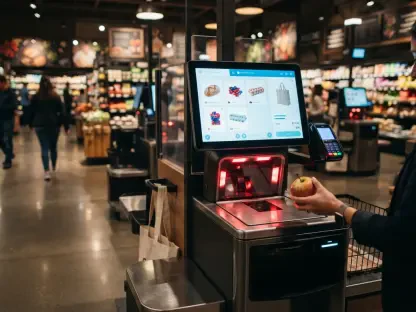
The cost is what I call the “meaning gap,” where we solve for efficiency but lose the social fabric that makes an experience worth having. Think about that restaurant scenario: you scan a code, tap a screen, and eat your meal without a single person ever looking up to say hello or acknowledge your presence. While you have successfully removed friction, you have also removed the hospitality that likely drew the customer to the restaurant in the first place. This paradox is visible in recent data from Australia, where more than one in five Gen Z and millennial individuals believe AI relationships can be as meaningful as human ones, yet nearly two-thirds of the broader population feel a deep unease about this overreliance. When we optimize only for speed, we risk turning every brand encounter into a sterile transaction. Brands like McDonald’s have even acknowledged this, noting that as drive-thru ordering becomes automated, the few remaining opportunities for guests to connect with the crew become even more vital to the brand’s identity.
You’ve mentioned that innovation should “design for the edges” to improve the middle. How can AI-driven tools actually expand human participation rather than just replacing it?
Inclusive design has taught us that when you solve for the most specific human needs, you often create a better experience for everyone. A classic example is tactile paving—those raised bumps on sidewalks originally developed in Japan to help people with visual impairments navigate safely. Today, they are a global standard that benefits everyone, from parents with strollers to travelers with luggage. In the digital realm, we can use AI to perform similar “tactile” functions, such as instantly converting a standard restaurant menu into a sensory-friendly version for autistic individuals. By detailing textures, temperatures, and preparation styles, the technology isn’t replacing the human server; it is empowering a person who might have felt excluded to participate confidently in a social experience. The innovation here isn’t the AI itself, but the way it enables a person to feel seen and included in a world that often overlooks their specific needs.
With the majority of organizations across Southeast Asia ready to experiment with agentic AI, what strategic questions should leaders ask to ensure they aren’t automating away their brand’s value?
Organizations need to move beyond asking if a task can be automated and start asking if it should be. There are three questions that I believe are non-negotiable for any leadership team in 2026. First, you must identify what the customer is actually seeking in that specific moment—is it mere speed, or are they looking for empathy, judgment, and connection? Second, you must ensure there is a “human fallback” that is easy to reach; for example, Singapore Airlines uses its Kris chatbot for routine queries but maintains the option to connect to a human agent for complex issues. Finally, you have to be brutally honest about whether the automation improves the customer’s outcome or if it is primarily designed to reduce the company’s cost to serve. If the technology is just a cost-cutting measure that leaves the customer feeling ignored, it will ultimately destroy the trust that takes years to build.
What is your forecast for the evolution of human-centric innovation?
I believe the defining characteristic of the coming years will be a shift in how we measure the success of innovation, moving away from “friction removal” toward “meaning creation.” We have spent the last decade making everything faster and smarter, but we are now entering an era where the smartest technology will be the one that knows when to step aside. My forecast is that we will see a “premiumization” of human interaction, where the most successful businesses will be those that use AI to handle the invisible, mundane tasks specifically so their people have the time to be truly present for customers. As AI agents begin to act and transact on our behalf, the “trust gap” will become the biggest hurdle for businesses to overcome. The winners will be the organizations that use technology to help people feel more connected, inspired, and human, rather than just more efficient.