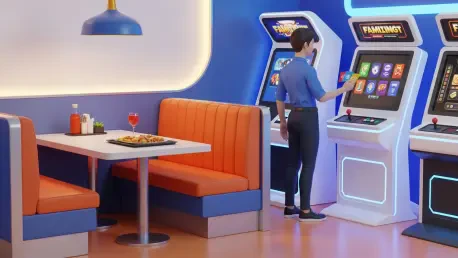

Walking through a high-energy entertainment hub often reveals a frustrating technological disconnect where a guest must abandon a comfortable table just to reload a gaming card at a distant, separate kiosk. For years, the invisible boundary between the restaurant booth and the arcade floor has hindered the flow of commerce and dampened the visitor experience. By launching a formal integration with the Square point-of-sale platform, Embed has effectively bridged this divide, allowing operators to merge two previously isolated worlds into a single, cohesive service environment.
Bridging the Gap Between Arcade Play and Guest Hospitality
The integration addresses a long-standing pain point for family entertainment centers that rely on diverse revenue streams. Traditionally, guests had to navigate multiple payment systems depending on whether they were ordering food or purchasing credits for a high-tech simulator. This friction often resulted in shorter visit times and missed sales opportunities as customers grew weary of repetitive checkout lines.
By enabling the sale of Embed game cards directly through the Square interface, venues can now offer a truly frictionless journey. This means a server can facilitate a gaming purchase right at the table alongside a beverage order. This shift moves the industry away from the cumbersome practice of managing separate software islands, creating a more holistic approach to guest engagement that encourages spontaneous play.
The Push for Unified Commerce in Modern Entertainment
As contemporary venues transform into multi-faceted destinations, the backend technology must match the high expectations of a digitally savvy public. Modern guests prioritize speed and convenience above almost all else, viewing any delay in service as a significant drawback to their outing. Consequently, the demand for unified commerce has become a central pillar of successful operations in the leisure sector.
The synergy between Embed and Square responds to this trend by synthesizing retail, dining, and gaming into one connected ecosystem. This consolidation helps operators solve the persistent problem of transactional friction, which historically led to logistical bottlenecks during peak hours. By reducing the number of steps required to complete a sale, businesses can maximize their throughput and capture more revenue from every guest interaction.
Streamlining Workflows Across Dining, Retail, and Gaming
Operational efficiency is often won or lost at the terminal, where staff must juggle various guest needs under pressure. The collaboration creates a streamlined workflow that empowers employees to handle everything from beverage service to arcade activation without switching devices. This central point of control reduces the cognitive load on staff, allowing them to focus more on hospitality and less on navigating complex menus.
Furthermore, the unified system simplifies the onboarding process for new hires, which is a critical advantage in an industry often plagued by high turnover. Training employees on a single, intuitive interface—while still accessing robust gaming features—shortened the learning curve significantly. For larger attractions, this technical harmony ensured that the hardware remained an asset rather than a hurdle during busy weekend shifts.
Industry Perspectives on the Efficiency Revolution
The movement toward a more integrated environment is championed by leaders who recognize the immediate impact on the bottom line. Michael Lopez, the GM for the Americas at Embed, noted that this development directly addressed the requests of operators who wanted a faster way to sell across their entire footprint. The objective was to eliminate the toggling between systems that slowed down service and frustrated both employees and customers.
Industry veterans have already begun to see the tangible results of this technological marriage. Doug Mechling of Star Lanes Polaris characterized the integration as a game-changer for the industry, highlighting its ability to elevate the speed of service. This validation from the field confirmed that the integration was not merely a technical update, but a strategic evolution that changed how entertainment businesses interacted with their clientele.
Transitioning to an Integrated Service Model
Operators who utilized the Embed TOOLKIT found that adopting this integration was a logical step toward a more modern service delivery. They focused on cross-training their teams to handle diverse transactions, ensuring that every point of contact became a potential point of sale. By implementing this unified touchpoint, businesses effectively removed the old logistical hurdles that once separated the arcade from the restaurant.
The final transition toward this model required a shift in mindset, where the guest journey was viewed as a singular experience rather than a series of disconnected stops. Venues that embraced this change reported a more fluid environment that kept visitors engaged for longer periods. Moving forward, the focus remained on refining these digital interactions to ensure that the technology continued to disappear into the background of a high-quality entertainment experience.