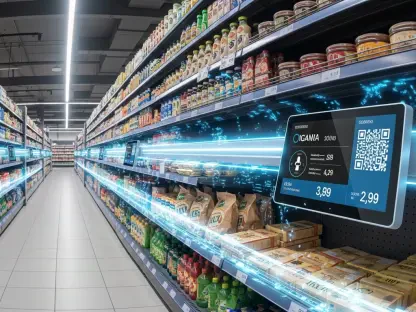

The seamless facade of a modern digital storefront often masks a crumbling foundation of legacy connections that threaten to collapse under the weight of artificial intelligence and real-time commerce demands. As the global marketplace pivots toward a future defined by autonomous decision-making, the technical architecture supporting these systems has become the ultimate decider of commercial longevity. Businesses are no longer just competing on product quality; they are competing on the speed and accuracy of the data flowing through their veins.
The retail landscape is currently navigating a radical shift where traditional storefronts are evolving into sophisticated ecosystems. While automation and predictive analytics represent the new frontier, the underlying structural integrity of a brand’s tech stack remains the primary differentiator between industry leaders and those struggling to keep up. This transition requires a departure from old habits, demanding a more transparent approach to data handling that aligns with increasingly strict international privacy standards.
Decoding the Evolution of Consumer Demand and Market Dynamics
The Rise of AI-First Shopping and the Demand for Hyper-Personalization
Shopper behavior is undergoing a profound metamorphosis as an increasing number of consumers bypass traditional search engines in favor of AI-driven tools that prioritize instant, tailored results. This shift has elevated hyper-relevance from a premium feature to a fundamental baseline expectation for every transaction. When customers interact with a brand, they anticipate a level of intuition that traditional search algorithms simply cannot provide, pushing retailers to reconsider how they present products and services in a crowded digital field.
Despite the massive capital being poured into generative AI and machine learning tools, many organizations are discovering that their investments are failing to bear fruit. The root of the problem lies in fragmented data environments that prevent these advanced tools from accessing the high-fidelity information they need to function. Without a cohesive data strategy, even the most expensive AI implementation remains little more than a superficial layer that fails to address the core needs of the modern shopper.
Quantifying the Impact: Revenue Projections and the Performance Gap
Recent market analysis reveals a growing divide between companies that merely connect their systems and those that truly unify them. Financial forecasts indicate that retailers capable of moving beyond legacy infrastructure can expect a 20% surge in online revenue alongside a dramatic reduction in the costs associated with daily operations. This performance gap is no longer theoretical; it is a measurable reality that is reshaping how boards of directors allocate their digital transformation budgets for the coming years.
Modern performance indicators now place a higher value on system readiness than on the simple adoption of trendy tools. Organizations that have prioritized streamlined architectures report that they can deploy new features and updates up to five times faster than their competitors who remain tethered to complex middleware. This agility allows for a more responsive business model, where a company can pivot its strategy in days rather than months, securing a significant competitive advantage in a volatile global economy.
Unmasking the Integration Trap: Why Disparate Architectures Stifle Innovation
The most dangerous hurdle in the current retail environment is the integration illusion, which leads many to believe that linking independent platforms via APIs is equivalent to having a cohesive strategy. This approach creates a fragile web of dependencies that masks underlying latency issues and creates multiple points of failure across the digital journey. While it may appear functional on the surface, this patchwork methodology creates a massive efficiency drag that requires constant manual intervention to maintain.
Fragmentation forces staff to spend countless hours reconciling mismatched data between e-commerce portals, point-of-sale systems, and warehouse management software. This labor-intensive process not only drains financial resources but also prevents the effective use of artificial intelligence, which requires a single source of truth to provide accurate insights. To truly innovate, the industry must pivot toward a unified commerce model that eliminates the need for the middleman, allowing data to flow freely and accurately in real time.
Regulatory Safeguards and the Critical Role of Data Integrity in Retail Operations
The trend toward centralized technical stacks is being further accelerated by a tightening regulatory environment focused on consumer privacy and data security. Comprehensive laws now demand that retailers maintain a rigorous standard of compliance across every digital and physical touchpoint. A fragmented system naturally increases the surface area for potential security breaches, making it far more difficult to ensure that customer information is handled according to the latest global mandates.
By moving toward a unified environment, a retailer can simplify its compliance posture and ensure that security protocols are applied consistently across the entire organization. This reduction in data silos not only protects the consumer but also safeguards the brand from the devastating reputational and financial consequences of a data leak. Maintaining integrity in a unified system is a strategic move that turns a regulatory burden into a streamlined operational advantage.
Forecasting the Future: Building Resilient Architectures for the Next Generation of Commerce
The next era of commerce will be defined by those who prioritize the resilience of their foundational architecture over the aesthetic of their front-end features. As emerging technologies continue to disrupt existing market norms, a retailer’s success will hinge on how easily its core infrastructure can absorb and process new data streams. The industry is reaching a tipping point where the hidden costs associated with system fragmentation will become too heavy to bear, forcing a widespread migration toward unified stacks.
Innovation is no longer about purchasing the latest software as a standalone solution; it is about ensuring the existing ecosystem is agile enough to scale alongside global shifts. We are entering a phase where the ability to utilize real-time data will be the only way to meet the unpredictable demands of the global consumer. Companies that fail to address the complexity of their internal systems will find themselves unable to participate in the rapid advancements of the autonomous commerce era.
Strategic Imperatives for Long-Term Commercial Success and Agility
Moving from a model of integration to one of true unification was the most critical step for companies seeking to thrive in a hyper-competitive environment. Retailers realized that they had to abandon the maintenance-heavy strategies of the past, where massive teams were dedicated solely to keeping disconnected systems in sync. Instead, the focus shifted toward building streamlined models that empowered employees to focus on creative innovation rather than technical troubleshooting.
The industry’s path forward became clear once the data foundation was addressed as the top priority for every commercial entity. By stripping away the layers of middleware and embracing a unified source of truth, businesses unlocked the latent potential of their technological investments. These organizations did not just survive the shift in consumer expectations; they mastered the new landscape by ensuring their core architecture was as dynamic as the markets they served.