
The once-staid world of industrial distribution, long defined by handshakes and physical catalogs, is undergoing a seismic transformation into a data-driven, technology-first powerhouse. In a fiercely competitive maintenance, repair, and operations (MRO) market, distributors face escalating pressure to elevate efficiency, perfect inventory levels, and deliver highly personalized customer experiences. Artificial intelligence has emerged as the critical enabler of this evolution, offering the tools to turn vast datasets into actionable competitive advantages. This analysis will dissect the current AI adoption trends, showcase real-world applications led by industry giants like W.W. Grainger, incorporate expert viewpoints on this strategic shift, and project the future trajectory of AI in this vital sector.
The Current Landscape: AI’s Growing Footprint in Distribution
From Niche to Necessity: AI Adoption and Market Growth
Artificial intelligence in the supply chain is rapidly transitioning from a fringe technology to a core business imperative. Market projections underscore this shift, with forecasts pointing to a multi-billion dollar valuation for AI in the logistics sector by the end of the decade. This growth is not merely speculative; it is a direct response to fundamental changes in customer behavior and operational demands. Companies are now building their entire strategies around digital integration, recognizing it as the most fertile ground for AI implementation.
This strategic pivot is exemplified by industry leader W.W. Grainger, where direct digital connections, powered by its “ePro” procurement system, now account for nearly 40% of its business. This deep digital penetration demonstrates a clear market readiness for more advanced AI applications. Embracing this future requires significant investment, and trailblazers are demonstrating a willingness to prioritize long-term technological dominance over immediate financial gains. Grainger’s recent performance, which saw a dip in Q4 2025 net earnings to $451 million from $475 million the prior year despite rising sales, highlights a calculated trade-off: accepting short-term profit pressure as the necessary cost of building a resilient, tech-driven future.
AI in Action: Real-World Applications and Case Studies
The theoretical potential of AI is being translated into tangible operational success through sophisticated platforms and integrated systems. W.W. Grainger’s “SellerInsights” platform is a prime example, leveraging AI to arm its sales teams with predictive, actionable intelligence. The system moves beyond simple reporting, automatically identifying new customer contacts and providing data-backed insights to enhance sales strategies and leadership coaching, proving that AI can directly influence front-line effectiveness.
Beyond sales enablement, machine learning is being deployed to optimize marketing spend with unprecedented precision. By analyzing data at the individual stock-keeping unit (SKU) level, these algorithms weigh factors like product availability, competitive pricing, and the projected lifetime value of a customer. This allows for a dynamic allocation of marketing resources, ensuring that investments yield the maximum possible return. Furthermore, integrated inventory solutions like Grainger’s “KeepStock” program do more than just streamline reordering; they generate clean, real-time demand signals. This high-quality data becomes the essential fuel for more advanced AI models that drive forecasting and automated inventory management, creating a virtuous cycle of efficiency.
Expert Perspectives: Voices from the Industry Frontline
The strategic vision articulated by industry leaders provides a clear blueprint for navigating the AI-powered era of distribution. W.W. Grainger CEO D.G. Macpherson has been vocal about a strategy centered on using digital tools and data analytics not just to sell products, but to create profoundly “sticky” customer relationships. The goal is to evolve the distributor’s role from a simple supplier to an indispensable operational partner, deeply embedded in the customer’s procurement workflow.
This philosophy signals a fundamental redefinition of competitive advantage in the sector. It is no longer solely about having the broadest product assortment or the largest physical footprint. Instead, the true differentiator lies in the ability to harness data for superior pricing, optimized product availability, and a seamless service experience. Macpherson’s perspective that the company is “just scratching the surface” of AI’s potential serves as a powerful indicator of the disruptive change yet to come, suggesting that current applications are merely the foundation for a much deeper integration of intelligent systems.
The Future Trajectory: AI’s Evolving Role in Distribution
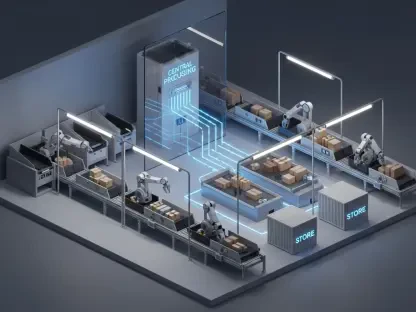
The next wave of AI development promises to move beyond predictive analytics, which forecasts outcomes, to prescriptive AI that can autonomously make and execute operational decisions. This evolution will usher in an era where AI doesn’t just provide recommendations but actively manages pricing, triggers inventory replenishment, and optimizes logistics networks in real-time. The potential benefits are immense, leading to hyper-efficient, self-optimizing supply chains that anticipate disruptions and adapt instantaneously. For customers, this will manifest as radically improved product discovery through AI-powered search and an overall experience defined by speed and reliability.
However, this advanced future is not without significant hurdles. The high cost of implementing and maintaining sophisticated AI systems presents a substantial barrier to entry, potentially widening the gap between industry leaders and smaller competitors. Moreover, unlocking the full potential of this technology requires a workforce skilled in data science and analytics, a talent pool that remains highly competitive. Accompanying these operational challenges are crucial ethical considerations surrounding data privacy and the potential for algorithmic bias in decision-making that must be proactively addressed. To support this intelligent future, forward-thinking companies are already investing in physical infrastructure designed for automation, such as Grainger’s new, highly automated distribution centers in Portland and Japan, which are being built to house the next generation of AI-driven robotics and fulfillment systems.
Conclusion: Navigating the AI-Powered Future of Distribution
The evidence examined made it clear that artificial intelligence is a profoundly transformative force, fundamentally shifting the basis of competition in industrial distribution from sheer scale to sophisticated intelligence. The journey requires a strategic, long-term commitment, as demonstrated by leading firms that have prioritized heavy technological investment to build a durable competitive moat for the years ahead. It became apparent that the ability to integrate digital tools, harness data, and deploy AI is no longer a forward-thinking aspiration but a present-day imperative. For all industrial distributors, the message was unambiguous: developing a clear and aggressive AI strategy is essential for survival and success in an increasingly intelligent and connected marketplace.