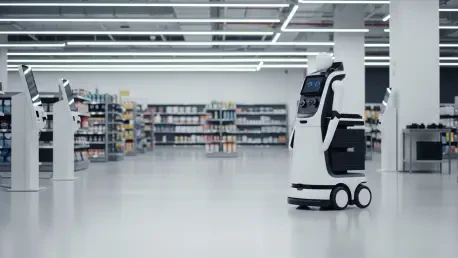

The silent, rhythmic glide of a fully autonomous cleaning unit navigating a complex maze of shopping carts and late-night patrons represents a fundamental departure from the labor-intensive retail models of the past decade. As retail environments become increasingly high-pressure, the emergence of AI-native service solutions has transitioned from a futuristic novelty to a practical necessity. Pudu Robotics has moved to the forefront of this shift, especially within the European market, by deploying systems that manage the intricate balance between hygiene and high-traffic operations. This evolution is particularly evident in large-scale supermarkets where the demand for consistent cleanliness often outstrips the available human labor pool, forcing a reevaluation of operational standards.
The shift from experimental pilot programs to large-scale, standardized operational adoption marks a maturation of the robotics industry. Standardized adoption means that these machines are no longer treated as isolated gadgets but as integrated components of a store’s core infrastructure. In the context of global retail transformation, this technology addresses the critical need for digital hygiene standards—a requirement that has become non-negotiable for modern consumers. By automating the most repetitive and physically demanding tasks, retailers are finding new ways to maintain store aesthetic and safety without placing additional burdens on a shrinking workforce.
Core principles of autonomous cleaning within high-traffic environments rely on a seamless blend of hardware durability and software intelligence. In a typical supermarket, the floor is not just a surface but a dynamic stage where customers, staff, and inventory are in constant motion. Robotic systems must therefore operate with a level of predictability and safety that exceeds human capability. This necessitates a move toward platforms that can operate independently for entire shifts, managing everything from obstacle avoidance to self-docking for power and water replenishment.
Technical Architecture and Core Capabilities
The structural integrity and performance of retail robotics depend heavily on how well the hardware translates digital commands into physical results. At the heart of this technological review is an examination of how sensory data is processed to manage physical cleaning tasks. Unlike earlier generations of service robots that were often limited to a single function, current systems utilize multi-functional architectures to address various floor surfaces and types of debris found in commercial settings. This versatility is crucial because retail environments are rarely uniform, featuring everything from polished stone in the lobby to textured tiles in the produce section.
The PUDU CC1 Multi-Functional Cleaning System
The PUDU CC1 serves as the flagship for this integrated approach, featuring a 4-in-1 capability that allows it to sweep, scrub, vacuum, and mop within a single operational cycle. Such multi-functionality is achieved through a sophisticated internal arrangement where suction power, dual-tank capacity, and brush mechanics work in concert. A suction power of 17,000 Pa ensures that even fine dust particles are removed from crevices, while the 15-liter dual-tank system manages the separation of clean and wastewater effectively. This separation is vital for maintaining hygiene standards, as it prevents cross-contamination during extended shifts that can last several hours.
Battery longevity remains a significant metric for any autonomous system operating in a 24-hour retail cycle. The ability to perform intensive scrubbing for five hours or silent mopping for nine hours allows store managers to schedule maintenance during off-peak hours without constant human intervention for recharging. By automating these floor maintenance routines, the technology effectively eliminates the manpower drain associated with manual mopping, which is often inconsistent and prone to human error. The result is a standardized level of cleanliness that remains uniform across every square foot of the retail space.
Automated floor maintenance also contributes to long-term asset protection for the retailer. Traditional cleaning methods can sometimes be abrasive or use excessive water, leading to the premature wear of expensive flooring materials. In contrast, robotic systems provide a controlled application of pressure and moisture, which can be calibrated to the specific needs of the material. This precision reduces the frequency of major floor renovations, offering a secondary financial benefit that is often overlooked during the initial procurement process.
Intelligent Navigation and SLAM Technology: The Core of Autonomy
Navigation in a dynamic environment like a supermarket requires more than just pre-programmed paths; it demands real-time spatial awareness. The PUDU SLAM hybrid navigation system addresses this by combining visual and laser-based mapping, allowing the robot to create a three-dimensional understanding of its surroundings. This dual approach compensates for the weaknesses of single-sensor systems; where lasers might struggle with reflective surfaces like glass refrigerator doors, visual sensors provide the necessary depth perception. Consequently, the machine can weave through crowded aisles and dodge temporary displays with a level of precision that mimics human movement.
Beyond simple obstacle avoidance, the software layer allows for localized customization that is often overlooked in global technology reviews. For instance, adjustments for regional water mineral content are essential to prevent internal scale buildup, which can degrade the lifespan of the pumping systems. Furthermore, the integration of advanced environmental sensing enables the robot to prioritize high-traffic zones during peak hours and return to low-priority areas when foot traffic subsides. This level of environmental intelligence ensures that the presence of the robot enhances, rather than hinders, the customer experience.
The integration of these navigation systems with cloud-based management tools allows for fleet-wide updates and performance monitoring. Managers can track the cleaning progress across multiple locations from a single dashboard, identifying areas that may require additional attention. This data-driven approach to facility management enables a level of transparency that was previously impossible with manual labor. It turns the cleaning process into a measurable metric that can be optimized over time to improve efficiency and reduce resource consumption.
Economic Drivers and Global Market Trends
The economic landscape of 2026 has been defined by an acute manpower gap that has reshaped how facility management is approached. Labor shortages are no longer a temporary fluctuation but a structural reality in many developed economies, where the cost of manual labor has reached historic highs. In this climate, the financial argument for robotic investment transitions from a desire for innovation to a calculation of survival. The capital expenditure of a robotic fleet is increasingly viewed as a fixed cost that shields a company from the volatility of the labor market and rising minimum wages.
Market trends indicate a significant shift in industry behavior toward labor augmentation rather than the total replacement of human personnel. While the initial fear surrounding robotics often centers on job loss, the reality in the retail sector has been the redirection of human staff toward more complex, value-added roles. Humans excel at customer service, empathetic problem-solving, and inventory nuances that AI still struggles to master. By offloading the dirty and repetitive tasks to autonomous systems, retailers are creating a more sustainable work environment that can actually help in retaining human talent.
Moreover, the rising financial viability of these systems is bolstered by the growth of the facility management market, which is increasingly dependent on technology to maintain margins. As robotic cleaners grow at a rate that doubles traditional equipment, the scale of production for companies like Pudu Robotics allows for more competitive pricing and more robust hardware. This creates a feedback loop where increased adoption leads to better data, which leads to better performance, making the technology even more attractive to cautious retailers who were previously hesitant to invest in autonomous solutions.
Strategic Implementation and Real-World Applications
Analyzing the deployment of robotic fleets within major supermarket chains like Denner and the wider Migros Group provides a clear view of how these systems function at scale. A network-wide rollout across hundreds of locations is not merely a logistical feat but a strategic statement regarding the reliability of autonomous systems. These implementations demonstrate that the technology is ready for the rigors of high-density retail, where every square meter is optimized for sales. The presence of robots in these stores has become a hallmark of a modern, tech-forward brand identity that prioritizes hygiene and efficiency.
The success of such large-scale deployments often rests on the strength of localized service models and integration partners. For a retailer, a robot that is out of commission due to a minor technical glitch is a liability that creates more work for the staff. Strategic alliances with regional partners ensure that maintenance, training, and technical support are available within hours. These partners act as the bridge between the global manufacturer and the local store manager, providing the human touch necessary to smooth the transition toward an automated future. This localized layer is what allows a global technology to function effectively across diverse store networks.
By integrating these systems, retailers have been able to redirect their human personnel to customer-facing and product management roles. Instead of spending hours behind a manual floor scrubber, an employee can spend that time assisting a customer with a selection or ensuring that the fresh produce section is perfectly stocked. This shift not only improves the customer experience but also enhances the perceived value of the human worker. The robot becomes a tool that empowers the staff, allowing them to focus on the aspects of retail that require emotional intelligence and professional judgment.
Operational Challenges and Integration Barriers
Despite the rapid advancement of autonomous systems, the retail floor remains one of the most unpredictable environments for any robotic platform. Temporary displays, abandoned shopping carts, and spills present a constantly changing landscape that can confuse even the most advanced sensors. The technical hurdle lies in the ability of the robot to distinguish between a permanent fixture and a transient obstacle. If a robot is too cautious, it will stop frequently and fail to complete its route; if it is too aggressive, it risks damaging inventory or impacting the flow of customer traffic.
Another significant barrier is the necessity of a robust service infrastructure. The hardware is only as good as the software and support system behind it. Inadequate local technical support can lead to a situation where expensive machinery sits idle because of a lack of spare parts or trained technicians. Retailers must also consider the hidden costs of integration, such as the need to update store layouts or provide specialized charging stations. These logistical requirements can be daunting for smaller chains that lack the capital or the dedicated innovation departments found in larger conglomerates.
Cultural and regulatory obstacles also play a role in the speed of adoption. Data privacy concerns, particularly regarding the cameras and sensors used for navigation, require careful management to comply with strict privacy regulations. Furthermore, labor union perspectives on automation vary widely across different regions. While some see it as a way to reduce the physical toll on workers, others view it with suspicion. Navigating these cultural nuances requires transparent communication from retail leadership about the long-term goals of automation and the evolving role of the human workforce within the company.
Future Outlook: Toward the Autonomous Supermarket
The trajectory of retail robotics suggests a move toward unified service platforms where cleaning is just one of many integrated functions. In the coming years, the move toward systems that combine cleaning, inventory management, and perhaps even security patrolling into a single robotic unit will likely accelerate. This convergence would allow a retailer to manage their entire physical environment through a centralized digital interface, providing real-time data on everything from floor cleanliness to stock levels on the shelves. Such a platform would effectively transform the robot from a simple cleaner into a mobile data hub.
Breakthroughs in AI environment sensing will likely lead to even more nuanced interactions between machines and humans. We can expect robots that can recognize specific types of spills and deploy the appropriate cleaning method automatically, or units that can communicate with customers to provide directions to a specific aisle. The integration of inventory management with cleaning logistics will allow robots to identify out-of-stock items while they are performing their cleaning routes, creating a level of operational synergy that was previously impossible. This would streamline the supply chain and ensure that store shelves are always optimized for sales.
By 2030, the long-term impact of autonomous systems will likely extend to store design itself. Future supermarkets may be built with robot-friendly features, such as wider aisles, automated docking bays integrated into the walls, and flooring materials specifically chosen for optimal robotic maintenance. The retail workforce will have evolved into a group of highly skilled technicians and customer experience specialists who oversee these autonomous systems. The supermarket of the future will not be one without humans, but one where humans are free to engage in the most meaningful and creative aspects of their work.
Summary and Final Assessment
The scalability and efficacy of Pudu Robotics’ hardware indicated a significant milestone in the maturation of commercial service technology. In the preceding period of implementation, the PUDU CC1 and its counterparts proved that autonomous systems could handle the complexity of high-traffic retail environments while delivering a measurable return on investment. The transition from manual labor to robotic augmentation was not merely a cost-saving measure but a strategic move toward a more resilient and hygienic operational model. Retailers who embraced this change early positioned themselves as leaders in a rapidly evolving market that increasingly demands technical agility.
The state of retail automation suggested that the technology was no longer in its infancy but had reached a level of industrial reliability. The importance of strategic service alliances was highlighted as a critical factor in the success of these deployments, ensuring that the technology remained an asset rather than a maintenance burden. While technical and cultural challenges remained, the overall trajectory was clearly toward a more automated and data-driven retail experience. The assessment of these systems showed that they provided a consistent, high-quality service that manual processes often struggled to match over the long term, ultimately benefiting the consumer.
The technology had the potential to become the standard backbone for modern, efficient retail operations across the globe. For future implementations, the focus must shift toward deeper software integration and the training of staff to act as fleet supervisors rather than manual laborers. Companies looking to adopt these systems should prioritize finding partners who offer robust local support and comprehensive data analytics. By addressing the fundamental needs of the industry—hygiene, efficiency, and labor management—autonomous service robots redefined the expectations for what a retail space should be and how it should function in a digital world.