
The ubiquitous thin black lines that have defined global commerce for half a century are finally surrendering their dominance to a sophisticated square grid that promises to revolutionize how information travels from the factory floor to the kitchen pantry. As retail systems evolve, the familiar hum of the checkout scanner represents more than just a price check; it signifies a massive technological leap. While the traditional barcode served its purpose for decades, the industry now requires a far more powerful successor capable of handling the complexities of modern commerce.
The shift to 2D barcodes provides a “reusable digital identity” that stores thousands of times more information than its predecessor. As the marketplace moves toward GS1’s “Sunrise 2027” deadline, this transition has become a fundamental requirement for survival in a data-driven environment. Brands that fail to adapt risk losing visibility in an increasingly automated supply chain.
The End of the Beep: Why the Traditional Barcode Is Retiring
The simplicity of the original barcode was its greatest strength, yet that same simplicity has become its primary limitation in a world demanding granular data. Designed solely to ring up a price, the legacy Universal Product Code lacks the capacity to communicate expiration dates, batch numbers, or sustainability metrics. Consequently, retailers and manufacturers have reached a ceiling where the old stripes can no longer support the needs of a modern warehouse or a curious consumer.
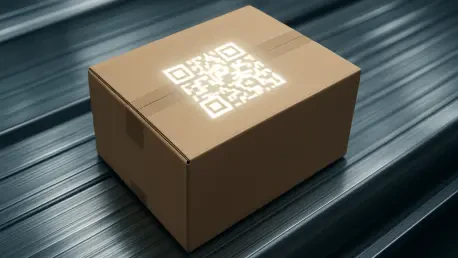
The adoption of 2D barcodes, such as QR codes and Data Matrix symbols, removes these information bottlenecks. These scannable squares allow for a seamless flow of data that remains accessible throughout the entire life of the package. Unlike the static stripes of the past, this new format enables a single scan to trigger different actions depending on who is scanning it, effectively turning a piece of cardboard into a high-capacity data terminal.
Sunrise 2027 and the Evolution of Product Identity
The global transition to 2D barcodes, anchored by the GS1 Digital Link standard, represents a pivot from basic identification to dynamic connectivity. Major conglomerates like Procter & Gamble, Nestlé, and PepsiCo are already moving toward this framework to bridge the gap between physical goods and the digital ecosystem. This standard ensures that a product’s identity is not just a number, but a web-addressable asset that connects to a vast network of information.
Unlike the legacy UPC, which only identifies a broad product category, the new 2D infrastructure allows each individual item to carry its own history. This means certifications, origin data, and destination details are embedded within a single square. By the time the industry reaches the 2027 milestone, the standard for what defines a “product” will have officially shifted from a physical object to a digital-physical hybrid.
Beyond the Point of Sale: A Multipurpose Tool for the Lifecycle
The true value of 2D barcodes lies in their ability to serve different stakeholders simultaneously through a single scan. Supply chain managers benefit from enhanced traceability, allowing them to verify sourcing and authenticity in real-time. This capability simplifies complex tasks such as targeted recalls and regulatory compliance, ensuring that safety standards are met with unprecedented precision.
For consumers, the change offers radical transparency regarding the items they purchase. A quick scan provides instant access to a product’s carbon footprint, usage instructions, and even the specific farm where ingredients were grown. This accessibility fosters a deeper level of brand trust, as shoppers no longer have to rely on vague marketing claims but can verify the facts themselves.
Furthermore, the power of connected packaging transforms static boxes into digital touchpoints. Brands can now update marketing campaigns, loyalty programs, or safety warnings via the cloud without ever changing the physical artwork on the packaging. This agility ensures that the communication between the brand and the buyer remains fresh and relevant long after the product has left the factory.
Expert Perspectives on the Data Revolution
Industry leaders, including Orijin Plus co-founder James Williamson, emphasize that this transition is an additive layer rather than a systemic overhaul. Companies do not need to replace their existing Enterprise Resource Planning or Product Information Management systems. Instead, the 2D barcode acts as a connective tissue that pulls relevant data from these existing silos and makes it available to the world.
Moreover, as AI shopping agents and smart appliances become more prevalent, they will rely on the structured, brand-authorized data found in 2D barcodes. These automated systems require precise information to make purchasing decisions or manage inventory in a smart home. The 2D code provides the necessary data bridge, ensuring that machines and humans alike are working with the same verified information.
Strategic Framework for Implementing 2D Infrastructure
To stay ahead of the upcoming mandate, consumer packaged goods companies adopted a phased approach to integrating digital links into their operations. The first step involved auditing existing data silos to identify where product information lived and ensuring it was web-ready. This preparation allowed for a smooth transition where data could be easily mapped to the new GS1 Digital Link format.
Organizations then prioritized specific use cases, such as supply chain efficiency or consumer engagement, to guide their digital architecture. They invested in variable printing technologies to handle the high-resolution requirements of 2D codes, ensuring every package was scannable at every stage of the journey. This strategic investment moved the industry toward a more agile future where packaging adapted to market demands without physical redesigns.
Finally, leaders integrated these digital assets into their long-term sustainability roadmaps. They recognized that the barcode was no longer just a tool for the retailer, but a gateway for the consumer. By embracing this evolution, businesses ensured they remained competitive in a landscape where data is as valuable as the product itself.