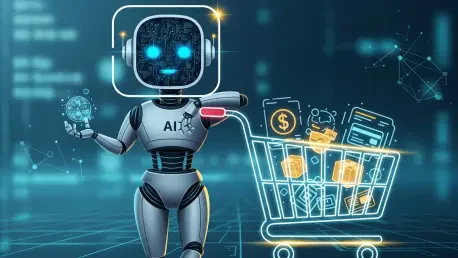

As an e-commerce strategist with deep experience in customer engagement and operations management, Zainab Hussain is at the forefront of the shift toward autonomous commerce. Today, she joins us to dissect the rise of agentic artificial intelligence and its transformative potential within the payments industry. We’ll explore how combining advanced AI with human expertise can demystify this powerful technology for businesses, walk through practical examples of how these AI agents are reshaping customer journeys, and delve into the critical importance of building security and trust from the ground up. The conversation will also touch on the unique strategic advantages that emerge when AI is integrated directly into a global payments network, offering a glimpse into the future of how we transact.
The Mastercard Agent Suite combines customizable AI agents with support from over 4,000 global advisors. How does this integrated approach of technology and human expertise help businesses overcome the initial hurdles of deploying agentic AI, and what are some key metrics for measuring success?
That combination is absolutely the key to unlocking practical value. For so many businesses, the biggest challenge isn’t a lack of awareness about AI’s potential; it’s the paralyzing question of where to even begin. Handing them a powerful AI tool without a roadmap is like giving someone a high-performance engine without a car. What Mastercard is doing with this suite is providing both the engine and the entire pit crew. The network of over 4,000 advisors ensures that the AI deployment is aligned with specific operational needs, complex compliance rules, and critical security requirements. It’s this hands-on guidance that helps a company move from a cool experiment to a tangible, successful outcome. In terms of measuring success, the metrics are tied directly to business impact: we’re looking for higher conversion rates, increased personalization that leads to greater customer loyalty, and a noticeable boost in operational efficiency.
Initial use cases include intelligent product discovery for banks and conversational shopping for merchants. Could you provide a step-by-step example of how an AI agent might guide a customer through a personalized journey in one of these scenarios, and explain how it improves conversion rates?
Let’s imagine a merchant’s conversational shopping experience. A customer might visit their website and, instead of a static search bar, they’re greeted by a conversational agent. The customer could type, “I’m looking for a gift for my friend who loves hiking and is environmentally conscious.” The AI agent, configured with the merchant’s brand voice and rules about inventory and promotions, wouldn’t just spit out a list of products. It would start a dialogue: “That’s a great idea! We have a fantastic line of waterproof jackets made from recycled materials. What’s your budget?” As the conversation flows, the agent can narrow down options, show product videos, and even bundle a recommended water bottle at a discount. This journey feels incredibly personal and guided, eliminating the friction of endless scrolling. It dramatically improves conversion because it builds confidence in the purchase, anticipates the customer’s needs, and makes them feel understood, turning a simple search into a tailored shopping service.
Agentic AI requires handling sensitive financial data, raising concerns about security and trust. What specific “privacy by design” principles were built into the Agent Suite to protect consumer information, and how do you ensure these agents operate responsibly as they gain more autonomy?
This is the most critical piece of the puzzle. Without trust, autonomous commerce simply cannot exist. The “privacy by design” approach means that security isn’t an afterthought; it’s woven into the very fabric of the technology from the first line of code. The agents are built to adhere to Mastercard’s stringent, time-tested security standards for data protection, which is a massive reassurance for both businesses and consumers. As these agents gain more autonomy, ensuring responsible operation involves setting clear guardrails. For example, in the conversational shopping scenario, the agent is configured with hard rules about margins and promotions, preventing it from making unauthorized offers. In banking, the agent’s recommendations are based on predefined criteria, not rogue decision-making. Continuous monitoring and the ability for human oversight remain paramount, creating a system where autonomy operates within a trusted, secure framework.
With one-third of enterprise software projected to include agentic AI by 2028, the competitive landscape is heating up. How does integrating these AI capabilities directly with a global payments network create a unique advantage for navigating the shift from digital to autonomous commerce?
Integrating AI directly with the payments network creates a powerful, closed-loop ecosystem that standalone tech companies can’t easily replicate. It’s one thing for an AI to recommend a product; it’s another for it to seamlessly and securely complete the transaction on behalf of the user through a trusted network. This connection allows for a much deeper level of insight and functionality. For instance, the AI can draw on anonymized transactional data to make smarter recommendations, while the payment network provides the secure rails for the final purchase. This positions a company like Mastercard not just as a technology provider, but as a central enabler of this entire new commercial model. It’s about owning the end-to-end journey, from discovery to payment, which gives banks and merchants a significant strategic advantage in a market where readiness is becoming the ultimate competitive edge.
What is your forecast for agentic AI?
My forecast is that agentic AI will become the invisible, indispensable engine of commerce within the next decade. We’re moving beyond AI as a tool we actively use, like a chatbot, to an era where AI agents operate quietly and proactively in the background, managing our financial lives, anticipating our shopping needs, and optimizing business operations. By 2030, I expect a significant share of both customer interactions and internal tasks will be handled by these agents. The major shift won’t just be in efficiency but in the very nature of engagement. Commerce will become more predictive, personalized, and conversational. The companies that thrive will be those that not only adopt the technology but also master the art of integrating it with a foundation of human trust and security.