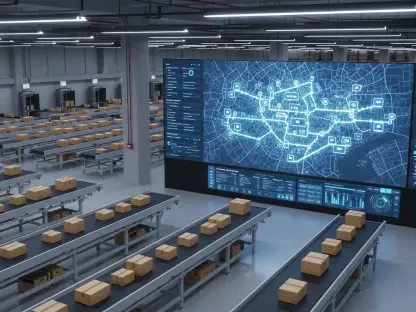

The transformation of a global retail giant into a specialized technology infrastructure provider represents one of the most ambitious corporate reconfigurations in the modern digital era. Alibaba Group is currently navigating a period of profound structural change, aggressively moving away from its long-standing identity as a pure-play e-commerce powerhouse to emerge as an AI-driven technology leader. Under the direction of its current leadership, the company is reallocating massive amounts of capital toward artificial intelligence and cloud infrastructure, signaling the start of a “cloud-first” era. This strategic metamorphosis explores how a massive organization balances a cooling retail market with the explosive potential of an agent-driven digital economy, aiming to redefine itself as the primary operating system for future global commerce.
A Strategic Metamorphosis: Beyond the Digital Storefront
To understand the scope of this pivot, one must consider the shifting dynamics of the Chinese digital landscape over the last decade. Historically, growth was fueled by the rapid expansion of Tmall and Taobao, platforms that successfully capitalized on a massive surge in middle-class consumption and digital adoption. However, as the domestic e-commerce market reached a stage of saturation and macroeconomic headwinds intensified, the traditional retail model began to face significantly diminishing returns. This environment necessitated a fundamental change in focus, pushing the company to look toward technological sovereignty as a new engine for growth.
By leveraging a decade of sustained investment in its Cloud Intelligence Group, the organization is transitioning from providing a marketplace for goods to offering the foundational “intelligence” that powers other global enterprises. This transition represents more than a simple product update; it is a fundamental shift in corporate identity that prioritizes infrastructure over simple transactional volume. The move acknowledges that in an increasingly automated world, the value lies not just in the sale of a product, but in the data and processing power that make the transaction possible.
The Rise of the Agent-Driven Economy
Redefining Enterprise Workflows: The Power of AI Agents
A critical pillar of this strategy is the evolution of artificial intelligence from simple conversational interfaces to sophisticated “agents” capable of executing complex, end-to-end tasks without human intervention. The proprietary “Qwen” large language models have already seen over one billion cumulative downloads, demonstrating a massive market appetite for advanced foundational models. By integrating these models into enterprise workflows, the company is moving beyond the concept of Model-as-a-Service toward a reality where AI manages logistics, automates customer service, and optimizes global supply chains autonomously.
This shift addresses the growing enterprise demand for efficiency in a competitive global market, though it requires significant upfront investment in research and development. The objective is to create a seamless environment where AI is not just a tool but a core component of business logic. As organizations seek to reduce overhead and increase speed, the ability of these agents to navigate complex data environments becomes a primary competitive advantage, positioning the cloud division as an indispensable partner for modern businesses.
Vertical Integration: The Proprietary Chip Advantage
To support these high-level AI ambitions, the company is pursuing a rigorous strategy of hardware-software synergy. More than 470,000 proprietary AI chips have already been deployed, with a significant portion of that capacity serving external customers who require high-performance computing. This level of vertical integration is a bold move to reduce dependence on third-party silicon providers and lower the cost of “token consumption” for end users. By controlling the hardware layer, the company can optimize performance in ways that software-only firms cannot match.
As businesses increasingly view AI tokens as a necessary production input—comparable to electricity or raw materials—the ability to control the entire stack allows for more competitive pricing and reliable service. This approach presents a significant opportunity to capture the enterprise market, even as it introduces the risks associated with high capital expenditure in a volatile semiconductor landscape. The long-term goal is to make high-performance AI accessible and affordable, thereby driving higher adoption rates across the broader cloud ecosystem.
Solving Complexity: Deep Model-Application Integration
The strategy also addresses a common misconception that AI is merely a supplementary tool by treating it as a core architectural requirement. The launch of the “Wukong” AI agent platform illustrates this by connecting large models directly with corporate data systems, effectively bridging the gap between raw intelligence and practical application. This deep integration helps businesses overcome the “silo” effect, where data exists within an organization but remains underutilized because it cannot be easily processed or analyzed by automated systems.
While regional regulatory differences and data privacy concerns remain ongoing challenges, the focus remains on high-frequency interaction and deep data immersion. By making AI “useful” through practical, data-heavy applications rather than just “innovative,” the company is positioning its cloud services as the backbone of the digital enterprise. This methodology ensures that as the digital economy becomes more complex, the tools provided to manage that complexity become increasingly vital to daily operations.
Anticipating the $100 Billion Cloud Frontier
The current trajectory of the technology industry points toward a future where cloud and AI revenue are essentially inseparable. An ambitious target has been set to reach $100 billion in annual revenue from these sectors within the next five years, a goal that relies on the “triple-digit growth” of AI-related products. Experts predict that as AI models become more powerful and less expensive to run, there will be a massive migration of traditional business processes to the public cloud, creating a surge in demand for scalable infrastructure.
Furthermore, the convergence of “quick-commerce” and AI-driven logistics is expected to create a new retail standard. In this environment, delivery speed and predictive inventory management become the primary differentiators in the market, allowing the company to maintain its retail relevance while shifting the underlying technology to the cloud. The synergy between rapid physical delivery and high-speed data processing creates a feedback loop that enhances both the consumer experience and the operational efficiency of the platform.
Strategic Takeaways: Navigating a Changing Landscape
The core takeaway from this pivot is that long-term market dominance often requires the strategic sacrifice of short-term margins to build a defensive moat. For businesses and professionals observing this shift, several actionable strategies emerge for navigating the transition:
- Prioritize Infrastructure: Investing in proprietary technology stacks can provide long-term protection against market volatility and competitor encroachment.
- Treat AI as a Production Input: Organizations should view AI not as a luxury IT expense but as a fundamental cost of production that drives overall efficiency.
- Focus on High-Frequency Engagement: The move into quick-commerce demonstrates that maintaining daily relevance to the consumer is vital for effective data collection and brand loyalty.
- Bridge the Data Gap: Using platforms that integrate AI directly with existing data systems helps eliminate information silos and improves decision-making speed.
By applying these principles, organizations can better prepare for a landscape where automation and intelligence are the primary drivers of value.
Leading with Intelligence: A New Global Standard
The strategic pivot undertaken by the organization represented a high-stakes bet on the future of the global digital economy. By integrating autonomous AI agents, proprietary hardware, and high-velocity commerce, the company attempted to build an ecosystem that functioned with greater intelligence and speed than its predecessors. While the financial costs associated with this transition remained high, the potential reward was a permanent position at the center of the next technological revolution. Industry observers noted that the focus on tight integration between hardware and software provided a blueprint for other legacy firms looking to modernize. Ultimately, the journey proved that in the digital age, stagnation was the greatest risk of all, and true leadership required the courage to reinvent the self before the market demanded it. Organizations were encouraged to audit their own technological dependencies and begin the process of integrating intelligence into their core architectural foundations to ensure long-term resilience.