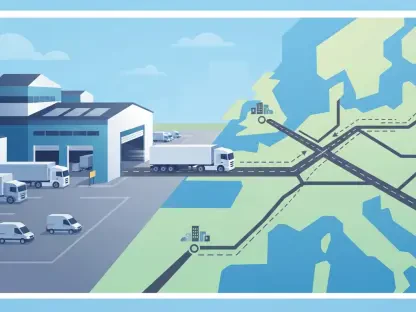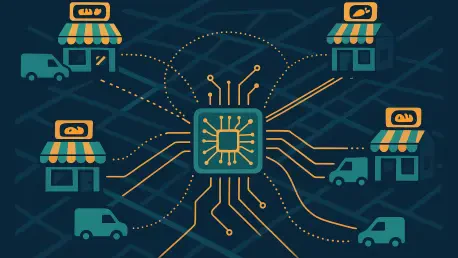

Digital tools that once lived exclusively behind the heavy iron curtains of multinational corporate budgets are now flowing freely into the hands of local Hungarian shopkeepers and regional grocery chains. The Fast-Moving Consumer Goods (FMCG) sector in Hungary is undergoing a fundamental transformation where the barrier between global giants and domestic players is rapidly dissolving. Historically, the high costs of artificial intelligence and automated logistics meant that only the largest corporations could afford to optimize their supply chains or personalize their customer interactions. However, the current environment in 2026 proves that digital empowerment is no longer a matter of scale, but a matter of strategic adoption. This shift represents a democratized era where intelligence is a service available to any retailer willing to modernize.
The Structural Shift: From Global Corporate Monopolies to Local Digital Empowerment
The evolution of the Hungarian FMCG sector during 2025 and 2026 highlights a decisive departure from the era of multinational dominance. Previously, the sophisticated data modeling required to predict consumer demand was a luxury reserved for those with deep pockets and sprawling IT departments. Today, the landscape is different because high-end retail technology has shifted from being an exclusive corporate asset to an accessible utility. This transition has allowed local Hungarian chains to adopt the same precision-based management systems that were once the hallmark of international retail conglomerates.
Software-as-a-Service (SaaS) and affordable algorithms have played the most significant role in leveling this competitive playing field. By offering subscription-based access to powerful AI engines, technology providers have removed the massive upfront capital requirements that used to prevent small and medium-sized enterprises (SMEs) from innovating. Now, a regional chain with only a dozen locations can implement automated inventory management that rival the efficiency of a global leader. This accessibility is fostering a more diverse and resilient market where agility and local knowledge are empowered by high-level digital intelligence.
The focus of competition has shifted from who has the largest budget to who can best integrate these digital tools into their daily operations. Regional players are finding that they can react more quickly to local market trends than their larger, more bureaucratic competitors. As digital tools become more standardized across the industry, the survival of a retail brand increasingly depends on its ability to use data to enhance the physical shopping experience. The democratized nature of current technology means that the competitive advantage now lies in execution and customer intimacy rather than purely in financial scale.
The Rise of Friction-Free Shopping and Experience-Driven Retail
The purchasing decisions of Hungarian consumers have undergone a notable shift, moving away from a primary focus on the lowest price toward a preference for convenience and reliability. Shoppers in 2026 are no longer willing to tolerate the traditional pain points of retail, such as empty shelves or long checkout queues. This has led to the rise of experience-driven retail, where the quality of the interaction is just as important as the product being sold. Consumers now expect a seamless journey that begins on a mobile app and ends with a quick, hassle-free visit to a physical store.
Key components of this modern expectation include absolute inventory reliability and highly personalized loyalty offers. When a customer sees an item listed as available on a digital platform, they expect it to be on the shelf when they arrive. AI-driven systems now ensure this accuracy by tracking inventory in real-time and predicting stockouts before they happen. Furthermore, generic mass-market discounts are being replaced by tailored rewards that reflect the specific buying habits of individual households, making the consumer feel recognized and valued by their local retailer.
The integration of automated and unstaffed operations has also become a vital strategy for local businesses looking to improve efficiency during off-peak hours. By utilizing smart sensors and automated payment kiosks, retailers can offer twenty-four-hour service without the prohibitive costs of overnight staffing. This shift not only meets the needs of a more mobile and time-pressed population but also allows smaller retailers to maximize their revenue from existing physical assets. The transition toward these friction-free models is essential for any business aiming to stay relevant in an increasingly fast-paced urban environment.
Analyzing Market Growth: Digital Expansion and the 40% Online Surge
Market performance indicators reveal that the online FMCG segment in Hungary has experienced a massive expansion, with revenue growth reaching nearly 40% in recent cycles. This surge is not merely a temporary spike but a reflection of a permanent structural change in how Hungarians procure their daily essentials. Major players who invested early in robust e-commerce infrastructures are now reaping the rewards of a more digitally savvy population. The growth is particularly visible in the hybrid model, where physical stores serve as micro-fulfillment centers for local home deliveries.
Domestic retailers like Pelenka.hu and Petissimo have emerged as significant benchmarks for digital competitiveness in this new era. These companies have demonstrated that by focusing on specific consumer niches and providing a superior digital interface, local brands can hold their own against much larger international marketplaces. Their success stems from a deep understanding of the local consumer journey combined with the use of advanced analytics to optimize everything from warehouse management to last-mile delivery. These examples serve as a roadmap for other Hungarian businesses looking to scale their digital presence.
Projections for the remainder of 2026 suggest a continued integration of physical and digital storefronts to meet evolving structural demands. The distinction between online and offline shopping is becoming increasingly blurred as “click-and-collect” services and in-store digital assistants become the norm. Retailers are no longer viewing their websites as separate entities but as extensions of the physical shelf. This unified approach is necessary to capture the full potential of a market where consumers move fluidly between digital research and physical purchasing.
Navigating the Obstacles: Data Quality and the Cost of Inaction
While the software itself has become more accessible, the primary barrier to successful AI implementation in Hungary remains the “Data Quality Gap.” Many retailers are attempting to build advanced predictive models on top of foundational data that is fundamentally flawed. If the underlying records of inventory and sales are inaccurate, even the most sophisticated AI will produce useless or even harmful results. This discrepancy often stems from years of inconsistent manual entry and a lack of standardized processes across different store locations.
To overcome these legacy issues, retailers must address systemic problems such as negative stock levels and manual bookkeeping discrepancies. Negative stock occurs when a system believes more items have been sold than were ever recorded as arriving, usually due to errors in receiving shipments or unrecorded waste. Correcting these issues requires a disciplined approach to data hygiene and the implementation of automated scanning systems that reduce the chance of human error. Bridging this gap is not a one-time project but a continuous commitment to operational excellence.
There is a growing financial risk associated with maintaining a reactive, “survivor” mentality in the current economic climate. In the past, high inflation and market volatility allowed some retailers to hide their operational inefficiencies. However, as the economy stabilizes, those who fail to innovate will find their margins squeezed by more efficient competitors. The cost of inaction is no longer just a missed opportunity; it is a direct threat to the long-term viability of the business. Moving from a reactive stance to a proactive, data-driven strategy is the only way to secure a future in the modern retail landscape.
The Regulatory Landscape: Governing Data Security and Electronic Standards
The regulatory environment is also evolving to keep pace with these technological shifts, particularly concerning the implementation of electronic receipts and unified loyalty systems. New standards are being introduced to streamline the retail experience while ensuring that digital transactions are as transparent as their paper predecessors. These regulations are designed to make it easier for consumers to track their spending and for retailers to manage warranties and returns without the need for physical documentation. This move toward a paperless ecosystem is a significant step in the modernization of the Hungarian market.
Data privacy and security compliance have become central concerns as retailers transition to more data-heavy loyalty ecosystems. To build and maintain consumer trust, businesses must be transparent about how they collect, store, and use personal information. Localized AI tools that provide personalized marketing must be designed with “privacy by design” principles to ensure they do not overstep ethical boundaries. Retailers who can demonstrate a high level of integrity in their data practices will find it much easier to encourage customers to participate in their digital programs.
As these electronic standards become mandatory, they are creating a more level playing field for all market participants. Unified systems allow for better interoperability between different service providers, making it easier for smaller retailers to join larger digital networks. The role of the regulator in 2026 is to ensure that the digital transition does not lead to new forms of market exclusion. By establishing clear rules for data sharing and electronic standards, the government is helping to foster a retail environment that is both innovative and secure.
Looking Ahead: Hyper-Localization and the Dawn of Agentic Commerce
The future of Hungarian retail is moving away from rigid, centralized profiling toward hyper-local inventory selection based on the unique demographics of each neighborhood. AI algorithms are now capable of analyzing local purchasing patterns to ensure that the products on the shelves perfectly match the needs of the surrounding community. For example, a store in a university district will carry a completely different assortment than one in a suburban neighborhood with many young families. This level of localization ensures that every square foot of retail space is used as efficiently as possible.
We are also witnessing the emergence of agentic commerce, where AI assistants begin to influence and even execute purchasing decisions on behalf of consumers. These digital agents can monitor a household’s consumption patterns and automatically order replacements or suggest new products based on personal preferences. This shift means that retailers will soon need to optimize their data structures not just for human shoppers but for the algorithms that serve them. Being “discoverable” by an AI assistant will become a critical component of a brand’s digital strategy.
This transition marks a shift from human-centric store optimization to a model where data structures are optimized for AI-driven ecosystems. Stores will increasingly be designed as physical databases where every item is a data point that can be tracked and analyzed. The ability to feed accurate, real-time information into the global AI web will determine which products are recommended to consumers. For Hungarian retailers, this means that the quality of their digital “footprint” is now just as important as the physical location of their stores.
Synthesis and Strategy: Building a Resilient Future for Hungarian Retail
The divide between proactive innovators and those tethered to legacy systems became significantly wider as the market matured in 2026. The research showed that those who embraced the democratization of technology were able to offset rising costs through increased operational efficiency. Strategic recommendations emphasized the necessity of establishing real-time data foundations before attempting to deploy complex artificial intelligence models. This foundational work allowed retailers to eliminate the hidden waste that previously eroded their profitability during less stable economic periods.
The optimization of operations through AI proved to be a decisive factor in maintaining competitive margins against larger international entities. Successful domestic players focused on refining the digital customer journey, ensuring that the transition between online browsing and in-store purchasing was as seamless as possible. By prioritizing the removal of friction from the shopping experience, these businesses fostered a new level of consumer loyalty that was based on service quality rather than just price discounts. The modernization of these workflows provided a clear path for local chains to reclaim their market share.
Ultimately, the democratization of high-level digital intelligence offered a unique window for local Hungarian players to future-proof their operations. The transition toward a more data-centric model required a fundamental shift in corporate culture, moving away from reactive survival tactics toward a proactive growth strategy. As the industry moved toward 2027, the most resilient businesses were those that recognized data as their most valuable asset. The successful integration of AI into the local retail fabric proved that technological sophistication is no longer the exclusive domain of the global elite.