
Successful global enterprises are no longer competing solely on product quality but on the speed at which they can turn raw data into decisive market advantages. Robert Ibarguen, Newell Brands’ head of digital intelligence, recently detailed how the company is flipping the script on the traditional retail landscape. By moving away from labor-intensive spreadsheets toward automated systems, Newell is proving that the future of business intelligence is about empowering people to lead with better data rather than removing them from the process.
From Manual Grunt Work to Strategic Decision-Making
The retail environment has long been bogged down by manual data collection that leaves little room for high-level strategy. Newell replaced these repetitive, time-intensive tasks with automated systems that prioritize strategic interpretation over simple gathering. This shift ensures that technology serves as a foundation for human creativity.
By automating the “grunt work,” the organization allows its workforce to focus on analyzing trends and making proactive adjustments. This transition moves the needle from reactive data management to a proactive stance that favors agility in an increasingly volatile market.
Why Decision Intelligence is the New Enterprise Standard
Organizations must bridge the gap between IT infrastructure and practical business outcomes. Decision Intelligence (DI) has become the new standard for managing global operations. For a multi-brand powerhouse, the challenge is ensuring data serves as a transmission for the entire organization, turning fragmented info into a unified growth engine.
This intelligence framework treats information not as a static resource, but as a dynamic tool for alignment. When data is accessible and actionable, it enables teams to make choices that are grounded in real-time reality rather than outdated projections or gut feelings.
The Strike Team and the Unified Dashboard Architecture
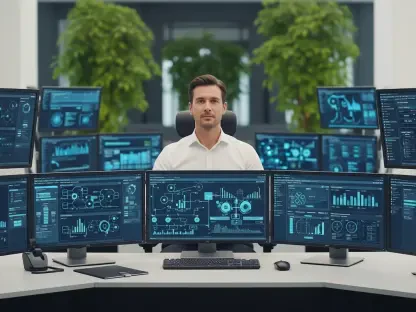
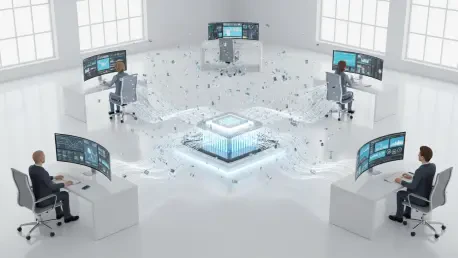
A specialized, cross-functional “strike team” acts as the central intelligence hub at Newell. This unit consolidates disparate data points from across the enterprise into a single, actionable dashboard. By removing traditional corporate silos, this team ensures that information flows seamlessly between departments.
The unified architecture allows for a level of operational agility that manual processes simply cannot match. This structure treats advanced technology as a specialized accelerator, ensuring every automated insight is filtered through a framework of real-world business needs.
Balancing Internal “Glue” with External Innovation
Ibarguen emphasized that internal knowledge serves as the “glue” connecting tech tools to business functions. While using external experts for implementation, Newell maintains a strict “co-pilot” philosophy. This approach keeps human-led guardrails in place to ensure accuracy and safety across all digital channels.
Maintaining this balance fostered a culture of iterative experimentation where teams were encouraged to fail quickly and learn. By keeping humans at the center, the company maintained a technological frontier that felt accessible and practical for everyday business users.
Roadmap for Scaling Human-Centric AI Systems
To replicate this success, organizations prioritized stakeholders who demonstrated a high appetite for digital experimentation. Leaders deployed AI agents and advanced analytics to handle the heavy lifting of data processing. This approach effectively freed human innovators to focus on high-impact strategy and long-term problem solving.
Building these complementary systems required addressing specific, localized pain points rather than generic solutions. Ultimately, the company established a model where technology scaled human expertise, ensuring the enterprise remained grounded in practical realities while pursuing aggressive digital growth.