
As an e-commerce strategist who has navigated the complexities of consumer behavior and high-stakes operations management, Zainab Hussain understands that a successful retail footprint is never an accident. In a world where digital and physical spaces increasingly overlap, she brings a sophisticated perspective to the “measure twice, cut once” philosophy of site selection. This discussion delves into the critical balance between cutting-edge mobility analytics and the indispensable “boots on the ground” approach required to truly understand a market. We explore how leading operators are defining their brand identities, identifying “lookalike” customers through predictive modeling, and future-proofing their investments against the shifting landscape of infrastructure and competition. By synthesizing data-driven insights with old-fashioned community engagement, Hussain reveals the roadmap for scaling a retail brand with confidence and precision.
When a brand is preparing for a significant expansion, how do you advise them to define their identity and the specific services they offer before even looking at a map?
It is absolutely vital to know exactly what kind of retailer you are and who your customer is before the first shovel hits the dirt. You have to ask yourself if you are a premium offering, like a Fresh Stop Express, or if you are catering to a different niche, because your identity dictates your location. For an operator like Fresh Stop, which currently has 37 stores and aims to open 15 to 20 new locations per year through 2028, that identity is the foundation of their entire growth strategy. You need to think deeply about your services and what makes your brand stand out in a crowded market. Once that identity is crystallized, you can begin to look for the fastest-growing areas that align with those core values and house the specific people you want to reach.
In the search for the perfect location, we often hear about the “North Star” customer profile; how do you move beyond simple traffic counts to truly understand who is in those cars?
The most common mistake is looking at raw traffic numbers and assuming more cars always equal more sales, but it is really about who is inside the car rather than the vehicle itself. Knowing your customers means understanding their interests, their daily jobs, and even how they view the world and prefer to be marketed to. This customer profile must be your “North Star” throughout the entire selection process. By identifying high concentrations of your “lookalike” customers in a new area, you can marry that demographic data with traffic patterns to zone in on the most lucrative sites. If you see a nearby Aldi, for instance, you should ask if that store attracts the same type of shopper you are chasing, as surrounding retail can tell you a lot about the neighborhood’s pulse.
How is the integration of mobility data and geofencing changing the way developers evaluate the potential of a specific community center or neighborhood?
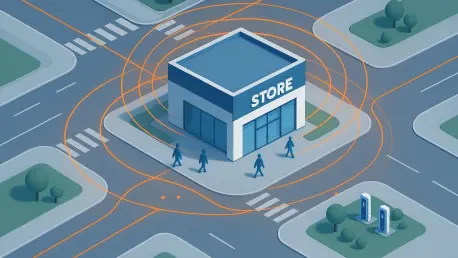
We are now able to let analytics drive the discovery of opportunities by projecting growth and movement with incredible accuracy. Tools like Kalibrate allow us to deploy mobility data and geofence specific locations to compare them directly, giving us a clear read on population, ethnicity, age, and even income levels. It is not just about where people live, but how they move—are they commuting out of the area past your store, or are they staying local and using your services at specific times of the day? We also look closely at electric vehicle usage in these areas to ensure the site is ready for the energy needs of the next decade. When you match this inherent knowledge with hard data, it either validates your personal opinions or forces the necessary research to avoid a costly mistake.
When assessing a competitive landscape, what are the most critical factors to watch for to ensure a new site doesn’t cannibalize your existing network or fall prey to future rezoning?
Understanding the “white space” in your own network is just as important as watching the competition, because the last thing you want to do is open a store that eats into the sales of your existing locations. You have to keep a close eye on what is around you—not just other convenience stores, but quick-service restaurants and grocery stores that might share your target market. It is essential to monitor state websites for any new permits or rezoning projects that could fundamentally shift the area’s dynamic. Beyond the competition, you have to be aware of technical deal-breakers like sewer capacity or unsuitable soil conditions that could turn a promising site into a “no-go” zone. It’s about checking every high-level box so you don’t waste resources on a site that is ultimately unbuildable.
Why is physical site inspection, or the “boots on the ground” approach, still considered a non-negotiable step despite the wealth of digital data available today?
A map is merely a snapshot in time, and there are things a screen simply cannot tell you, such as the actual feel of the topography or the presence of wetlands and endangered species. Walking a site at different times of the day, in different seasons, and in various weather conditions allows you to see the reality of how the land functions. You might find that access points look perfect on a digital rendering, but when you are physically standing there, you realize they are functionally unusable for a heavy flow of traffic. I always encourage developers to drive the market and talk to local business owners to understand the unique challenges they face. There is a specific kind of confidence that comes when science and art work in concert, allowing you to “measure twice and cut once” with absolute certainty.
How do you approach long-term forecasting when a retail site is expected to remain profitable for twenty years or more?
When you build a store, you aren’t building it for a five-year window; you are looking for a return on investment that spans 10 to 15 years, or even two decades. This requires looking at what is planned for the future, such as whether the town is going to build a bypass that diverts traffic or a major housing development that will bring in thousands of new residents. We discover these long-term shifts by chatting with locals, visiting the mayor’s office, and staying active in city hall to hear what is being discussed behind the scenes. If you know what the area will look like 20 years out, you can position your business to grow alongside the community rather than being left behind by infrastructure changes. This level of community engagement ensures that the locals feel heard and that the business becomes a welcomed staple of the neighborhood.
What is your forecast for the future of retail site selection as technology and community needs evolve?
I believe we are entering an era where the hyper-localization of data will become the standard, where we won’t just look at who is in the neighborhood, but the specific emotional and environmental triggers that drive their daily stops. The integration of real-time AI modeling with physical community feedback will allow brands to predict site viability with nearly 100% accuracy before a single brick is laid. We will see a shift toward sites that are not just convenient, but are essential community hubs that offer a mix of traditional retail, EV infrastructure, and personalized digital engagement. The winners in this space will be the ones who can seamlessly blend the cold, hard numbers of mobility data with the warm, human insights gathered from a simple conversation with a local business owner. Success will belong to those who realize that while data provides the map, it is the human connection that provides the destination.