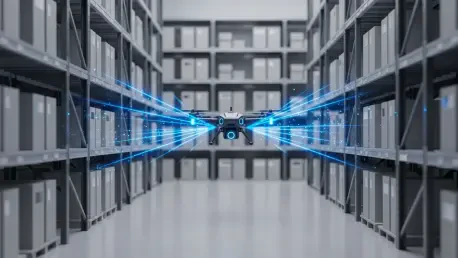

The hum of high-performance rotors echoing through a massive distribution center represents the new heartbeat of a supply chain that no longer sleeps or overlooks a single pallet. A single misplaced item in a vast warehouse can trigger a costly ripple effect, delaying shipments and inflating labor costs across an entire network. While manual inventory checks have long been the industry standard, a silent revolution is taking place overhead. In a recent eighteen-month period, a fleet of autonomous drones successfully identified 35,000 verified errors—ranging from missing labels to incorrectly shelved stock—without a single human operator at the controls. This shift from manual labor to aerial automation is no longer a futuristic concept; it is currently reclaiming thousands of operational hours for major national supply chains.
The End of the Clipboard Era in Modern Logistics
Traditional inventory management has historically been a reactive process, often relying on exhaustive quarterly audits that provide only a snapshot in time. In the fast-paced world of modern commerce, this visibility gap leads to stockouts, shipping delays, and inaccurate data within Warehouse Management Systems. As labor shortages continue to squeeze the logistics sector, the need for a system that provides real-time updates has become critical. By automating the auditing process, companies are finding they can maintain high-density storage environments without the bottleneck of manual counting.
Bridging the Visibility Gap in the Global Supply Chain
The deployment of technology like the Corvus One drone across national distribution networks demonstrates how robotics can operate alongside human staff without interruption. These drones navigate complex warehouse aisles independently, scanning reserved storage locations and feeding data directly back to the central system. The results of this integration are measurable and immediate: a 100-basis-point increase in cases per hour and the recovery of 60 to 70 labor hours per site every week. By performing bi-weekly scans instead of seasonal checks, warehouses catch discrepancies before they impact outbound logistics, ensuring a more resilient and predictable flow of goods.
Scaling Efficiency Through Autonomous Flight and Real-Time Data
The impact of autonomous drones extends beyond simple counting; it provides a new level of accountability and performance benchmarking. With timestamped records and searchable scan data, management can perform deep-dive root cause analyses to understand why errors occur in the first place. This shift allows supervisors to move away from policing manual counts and toward providing targeted coaching to their staff. When the burden of repetitive, tedious audits was removed, the workforce became empowered to focus on high-priority operational tasks, effectively cementing robotics as a cornerstone of modernized logistics infrastructure.
Transforming Warehouse Culture from Reactive to Proactive
To successfully transition to an autonomous inventory model, organizations prioritized seamless integration with their existing digital architecture. The first step involved ensuring the drone hardware was capable of navigating high-traffic environments without requiring specialized infrastructure or no-fly zones for humans. Once deployed, the focus shifted to data synchronization, where aerial scans automatically reconciled with the system to flag anomalies in real-time. Leadership redefined labor roles, shifting personnel from manual auditing to data-driven problem solving. This transition ensured that the insights gathered by the drones led to permanent improvements in warehouse accuracy and fill rates.
A Framework for Integrating Drone Technology into Existing Operations
Moving forward, the focus should remain on expanding these autonomous capabilities to include predictive analytics and automated replenishment triggers. Companies that adopted this technology early discovered that the primary benefit was not just the speed of the count, but the quality of the resulting data. As these systems matured, they paved the way for fully lights-out warehouse segments where accuracy reached near-perfect levels. Future considerations involved the integration of diverse robotic fleets that communicate across a single unified platform, further reducing the margin for human error in global trade.