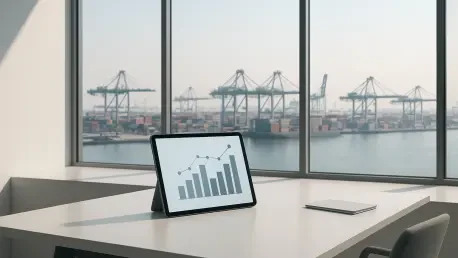

Global trade has reached a point of complexity where the margin for error in stock levels has effectively vanished, forcing companies to rethink their entire operational backbone to survive. The current state of the global logistics industry reflects a fundamental transition from traditional storage models to highly integrated, data-driven partnerships. In this environment, third-party logistics providers no longer operate as simple warehouse landlords who merely rent out square footage to the highest bidder. Instead, they have evolved into strategic technology and intelligence hubs that offer the analytical depth required to navigate a volatile market. This shift is essential because modern businesses require more than just space; they need a sophisticated defense mechanism against global supply chain shocks that can occur without warning.
The significance of inventory forecasting has grown as the primary shield against these unpredictable disruptions. By leveraging specialized software and real-time data streams, these logistics partners provide a level of visibility that was previously unattainable for most mid-sized enterprises. Integrated automated infrastructure across global markets allows for a seamless flow of information, ensuring that every stakeholder in the supply chain remains informed of shifts as they happen. This technological maturity has turned the logistics provider into a co-pilot for business growth, where the focus is on maintaining a lean and responsive inventory posture rather than just piling up safety stock in a dark corner of a facility.
The Modern Landscape of Third-Party Logistics and Inventory Intelligence
Modern logistics operations are defined by their ability to convert raw data into actionable insights that protect a company’s bottom line. The transition toward intelligent warehousing means that every pallet move, shipment delay, and order surge is captured and analyzed to improve future performance. These providers now act as the central nervous system of the supply chain, connecting manufacturers, retailers, and end consumers through a unified digital interface. This evolution allows businesses to focus on their core competencies, such as product development and marketing, while leaving the heavy lifting of data-centric fulfillment to specialists who possess the necessary scale and technical stack.
The integration of real-time data streams has effectively eliminated the information silos that once plagued traditional distribution models. Automated infrastructure, ranging from robotic sorting systems to cloud-based management platforms, ensures that inventory is not just stored but actively managed throughout its lifecycle. This level of sophistication is particularly vital in a globalized economy where a delay in one region can have immediate cascading effects across another. By positioning themselves as intelligence hubs, logistics partners provide the defensive and offensive tools necessary for businesses to maintain a competitive edge despite market fluctuations.
Market Dynamics and the Data-Driven Evolution of Supply Chains
Emerging Trends in Predictive Logistics and Consumer Demand
The rise of Artificial Intelligence and Machine Learning has redefined how the industry predicts consumer behavior and market shifts. These technologies analyze vast datasets, including historical sales, weather patterns, and social trends, to forecast demand with high accuracy. This allows companies to adopt Just-in-Time inventory models that minimize waste while ensuring product availability. Visibility tools like Radio Frequency Identification further enhance this by providing a granular view of every item in the network, allowing for precise adjustments to stock levels on the fly.
Consumer expectations for rapid delivery have also forced a transition toward decentralized warehousing strategies. Rather than relying on a single massive distribution center, businesses are now spreading their inventory across multiple smaller hubs located closer to major population centers. This shift is heavily influenced by the rise of omnichannel retailing, where a single pool of inventory must serve online orders, brick-and-mortar stores, and third-party marketplaces simultaneously. Managing this complexity requires the sophisticated coordination that only a modern logistics partner can provide through a centralized data view.
Quantifying Growth: Performance Indicators and Industry Projections
Statistical analysis of the current market reveals that AI-driven supply chains are capable of reducing general inefficiencies by a staggering 20% to 50%. The financial impact of this increased forecasting accuracy is profound, as it directly prevents the 4% revenue loss typically caused by frequent stock-outs. When companies can accurately predict what consumers want before they even click the purchase button, they significantly reduce the capital tied up in slow-moving goods. This leads to a virtuous cycle where increased inventory accuracy correlates directly with long-term business profitability and market share expansion.
Market projections from 2026 to 2030 suggest a continued surge in the adoption of third-party logistics services, with the logistics technology sector reaching record valuations. As businesses witness the undeniable correlation between data-driven fulfillment and financial stability, the demand for high-tech logistics partners will only intensify. Forward-looking data indicates that companies investing in these partnerships now will be better positioned to absorb the costs of future economic shifts. The move toward data-rich logistics is not just a trend but a foundational change in the global economic landscape that rewards precision and punishes guesswork.
Navigating the Obstacles of Modern Inventory Management
One of the most persistent financial burdens in retail is the accumulation of dead capital, which consists of overstocked goods that incur high storage fees without generating revenue. Logistics partners mitigate this risk by implementing continuous replenishment models that keep stock levels aligned with actual demand. This approach helps in tempering the bullwhip effect, a phenomenon where small changes in consumer demand result in massive, wasteful over-corrections further up the supply chain. By maintaining a steady flow of goods, companies can keep their working capital fluid and ready for new opportunities.
Beyond financial planning, physical bottlenecks in yard management often hinder the efficiency of even the best-laid plans. It is common for trailers to sit idle for long periods due to poor coordination, creating a ripple effect of delays throughout the facility. Modern providers optimize these exterior operations by using automated tracking systems to reduce idle times and maximize dock throughput. Bridging the gap between legacy manual processes, like the ubiquitous spreadsheet, and integrated Warehouse Management Systems is the final step in ensuring that the entire operation functions as a single, cohesive unit.
Compliance, Standards, and the Regulatory Environment
As logistics platforms move toward the cloud, the role of data security and privacy standards has become a top priority for international trade. Organizations must navigate a complex web of regulations that govern how sensitive consumer and corporate data is stored and transmitted across borders. Compliance is no longer just about physical safety; it is about digital integrity. Modern providers invest heavily in cybersecurity to ensure that the real-time data streams powering their forecasting models remain protected from unauthorized access or manipulation.
Regulatory impacts on international shipping and customs also require constant vigilance to avoid costly border delays and inventory stagnation. Specialized goods, such as pharmaceuticals and perishables, face even stricter requirements under cold chain regulations that mandate precise temperature controls throughout the journey. Standardizing safety and labor protocols within automated distribution centers is another critical area where logistics partners must lead the way. By maintaining high compliance standards, these providers protect their clients from legal liabilities and ensure that the brand’s reputation remains untarnished in the eyes of the consumer.
The Future of Logistics: Innovation and Market Disruptors
The potential for autonomous yard management and drone-based inventory auditing represents the next frontier of operational efficiency. These technologies promise to eliminate human error in stock counts and speed up the movement of goods within the warehouse environment. Furthermore, the influence of global economic shifts has prompted a wave of near-shoring, where 3PL networks expand closer to the domestic markets they serve. This strategy reduces reliance on long, fragile international shipping routes and provides a faster response to local demand fluctuations.
Moving toward hyper-local fulfillment centers will likely be the ultimate solution to the final-mile delivery gap that continues to challenge the industry. These small, highly automated facilities can be tucked into urban environments, allowing for near-instant delivery of high-demand items. Additionally, sustainability regulations and the push for green logistics will reshape how transportation routes are planned and how inventory is packaged. Future forecasting models will not only predict what people want but also the most carbon-efficient way to get it to them, aligning profitability with environmental responsibility.
Summarizing the Strategic Shift Toward Integrated Logistics
The transition toward integrated third-party logistics represented a fundamental shift in how businesses protected their working capital and brand reputation. By moving away from reactive management, companies utilized the visibility offered by 3PLs to build more resilient and proactive supply chains. The successful integration of real-time data and advanced analytics allowed leadership teams to focus on scaling their operations rather than managing the minute details of daily warehouse challenges. It was established that those who embraced these technological partnerships were far better equipped to survive the volatility that defined the mid-decade economy.
Businesses looking to leverage these partnerships found that the most critical factor was the willingness to share data and collaborate on long-term strategy. The report highlighted that the most successful companies treated their logistics providers as extensions of their own teams rather than simple service vendors. These partnerships enabled a level of scalability that was previously impossible, providing a clear roadmap for navigating the complexities of a global market. Ultimately, the move toward integrated logistics proved to be a necessary evolution for any organization seeking to maintain stability and growth in a rapidly changing world.