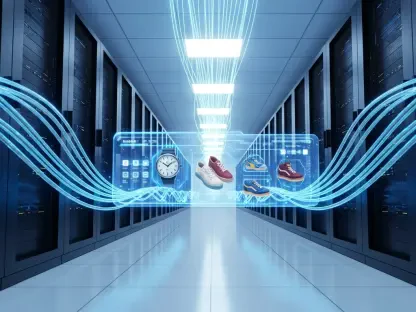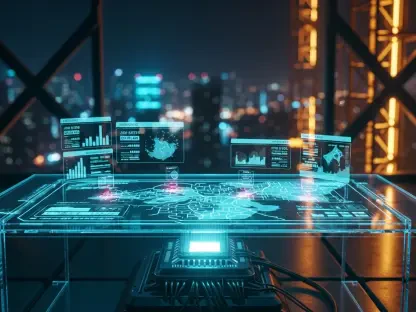

The modern storefront has undergone a metamorphosis from a simple point of transaction into a sophisticated hub of localized intelligence where every microsecond of data processing impacts the bottom line. This transition represents a fundamental shift in how physical space is valued and managed within the broader commerce ecosystem. While the digital and physical worlds used to exist as parallel tracks, they have now fused into a singular, data-rich environment that demands immediate responsiveness. Retailers have moved past the era of viewing a store as a mere endpoint of a supply chain, instead treating it as a dynamic engine of customer insight and operational agility.
The 2026 retail landscape is defined by its reliance on instantaneous decision-making that happens within the four walls of the shop. High-volume merchants and specialty boutiques alike have realized that the customer journey is no longer a linear path but a complex web of interactions that require real-time validation. From the moment a shopper enters a geofenced zone to the final confirmation of a contactless payment, thousands of data points are generated. These points must be processed with near-zero latency to maintain the fluidity that modern consumers expect as a baseline standard for their brand loyalty.
Centralized processing models that once dominated the previous decade are now viewed as insufficient for the high-intensity demands of current retail operations. Relying solely on a distant cloud server to manage every inventory update or customer recommendation introduces a level of fragility that modern enterprises cannot afford. This realization has sparked a widespread transition toward hybrid edge models, where the cloud serves as a long-term system of record while local hardware handles the immediate heavy lifting. The shift is not a rejection of the cloud but a strategic rebalancing of where the computation happens to ensure maximum uptime and speed.
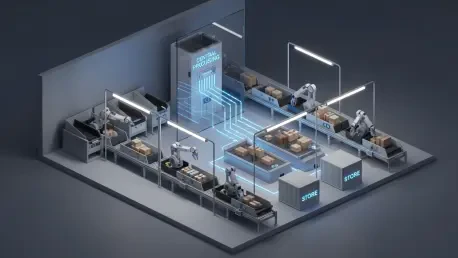
Different market segments are approaching this architectural shift with varying priorities but a shared goal of resilience. Big-box retailers focus heavily on micro-fulfillment and high-speed checkout throughput to maintain margins in a competitive high-volume market. Specialty brands often prioritize hyper-personalization and rich media experiences that require significant local compute power to render without lag. Meanwhile, micro-fulfillment centers use edge architecture to coordinate robotic picking systems with surgical precision, ensuring that the promise of same-hour delivery is kept regardless of external network conditions.
The ecosystem supporting this localized intelligence has matured into a robust network of infrastructure providers and software platforms. Leading the way are comprehensive commerce solutions like Shopify POS, which provides the critical software layer that bridges the gap between local store operations and global business management. These platforms are supported by a hardware landscape featuring compact, high-performance servers and networking standards that allow for seamless integration. This collaborative environment ensures that even smaller retailers can deploy sophisticated tech stacks that were once reserved only for the largest global corporations.
The State of Localized Intelligence in Modern Commerce
The current era of retail is characterized by the total integration of data processing into the physical shopping experience. Physical storefronts are no longer just places where goods are displayed; they have become data-intensive experience centers where every shelf, camera, and terminal contributes to a living map of consumer behavior. This shift has necessitated a move away from simple connectivity toward true local intelligence. The store is now a self-contained ecosystem capable of sophisticated analysis without needing a constant tether to a central data center for every minor operation.
This evolution is driven by the fact that centralized processing is no longer sufficient for high-volume, real-time demands. When every transaction involves multiple checks for loyalty points, inventory availability, and fraud detection, the milliseconds lost in transit to the cloud add up to visible friction for the customer. Moreover, the sheer volume of data produced by modern in-store systems would overwhelm standard internet connections if every raw byte had to be uploaded. By processing data at the edge, retailers can filter and summarize information locally, sending only the most relevant insights to the central cloud.
Market segments have diverged in their specific applications of edge tech, yet the underlying architecture remains consistent. Large-scale grocery chains use edge nodes to manage complex supply chain inputs and automated checkout lanes that process hundreds of items per minute. In contrast, luxury retailers employ localized compute to power high-definition displays and interactive mirrors that provide a personalized concierge experience. The rise of micro-fulfillment has also introduced a need for edge-controlled robotics that must operate with high precision and zero lag to avoid collisions and errors in dense urban warehouses.
Infrastructure standards have finally caught up with the ambitions of retail CTOs, leading to a more standardized approach to deployment. The industry has moved toward containerized applications and modular hardware that can be easily updated or replaced without disrupting the entire store. Networking standards now prioritize multi-access edge computing, allowing for a seamless blend of wired, Wi-Fi, and cellular connections. This standardization has lowered the barrier to entry, making it possible for brands to scale their edge deployments across thousands of locations with a level of consistency that was previously impossible to achieve.
Trends and Projections for the Next Era of Retail Tech
Emerging Technological Drivers and Consumer Expectations
One of the most significant shifts in the current market is the migration of machine learning models from massive cloud clusters to local edge nodes for in-store AI inference. Retailers are now capable of running complex algorithms on-site to make instant decisions regarding pricing, security, and customer engagement. This local inference allows a store to react to a sudden surge in traffic or a specific shelf-outage in a matter of seconds rather than minutes. It essentially gives the physical building a brain that can perceive and react to its environment in real-time.
Hyper-personalization has moved from being a digital-only perk to a standard expectation in physical retail environments. Consumers now anticipate that their preferences and purchase history will be recognized the moment they step through the door. This level of clienteling requires the edge node to pull customer segments and predictive models instantly, allowing sales associates to provide recommendations that feel truly tailored. Without the speed of edge computing, these interactions would feel clunky and artificial, but localized processing makes them feel like a natural extension of the brand’s service.
The widespread adoption of 5G Standalone networks and advanced network slicing has provided the reliable backbone necessary for these distributed deployments. Retailers can now dedicate specific slices of their network to critical functions like payment processing or security, ensuring that these high-priority tasks never compete for bandwidth with guest Wi-Fi or digital signage. This granular control over connectivity allows for a more resilient and predictable environment. It ensures that the most important systems always have the throughput they need to function at peak performance.
Computer vision has evolved far beyond simple surveillance into a sophisticated tool for loss prevention and operational efficiency. Modern systems use real-time anomaly detection to identify potential theft patterns before they result in a loss, and they simultaneously monitor shelf-gap analysis to trigger restocking alerts. Because video data is incredibly heavy, processing these feeds at the edge is the only viable way to gain these insights without incurring massive bandwidth costs. It also allows for a higher level of privacy, as raw video never needs to leave the store’s local network.
Market Data and 2026 Growth Forecasts
Investment projections show a clear and decisive shift in IT budgets toward localized compute power and the creation of mini data centers within the retail footprint. Most forward-thinking organizations have redirected a significant portion of their cloud spending into edge infrastructure to solve the latency and reliability issues that plagued earlier digital store initiatives. This investment is viewed not as a luxury but as a necessary foundation for any retailer that wishes to compete in an environment where speed is a primary competitive advantage.
The statistical evidence supporting this shift is found in key performance indicators such as checkout throughput and revenue stability during network outages. Retailers who have embraced edge architecture report significantly lower latency at the point of sale, leading to shorter lines and higher customer satisfaction scores. Furthermore, the ability to maintain full functionality during a local internet failure has prevented millions of dollars in potential lost revenue. These tangible results have made the business case for edge computing undeniable for executive leadership teams.
A major industry trend currently being observed is the 75% data shift, where the vast majority of enterprise-managed data is now processed outside of traditional clouds. In the retail sector, this means the store itself has become the primary site for data generation and analysis. This shift reflects a broader understanding that data is most valuable when it is actionable, and action is most effective when it happens close to the source. By 2027 and beyond, this trend is expected to accelerate even further as more devices become internet-enabled and data-hungry.
Navigating Technical and Operational Complexities
A primary technical challenge that edge computing addresses is the single point of failure problem inherent in cloud-only models. In the past, a simple fiber cut or an ISP outage could paralyze an entire store, rendering POS systems useless and stopping all transactions. Modern edge strategies involve maintaining local versions of critical databases and transaction logic, allowing the store to function in a disconnected state indefinitely. When the connection is restored, the edge node automatically synchronizes the local changes with the central cloud without manual intervention.
Managing distributed hardware at scale presents its own set of logistical hurdles that require sophisticated orchestration. Patching, monitoring, and maintaining hardware across hundreds or thousands of physical locations is a massive undertaking for any IT department. To solve this, retailers have adopted centralized governance platforms that allow for remote management of the entire edge fleet. These tools provide a single pane of glass for seeing the health of every node, pushing software updates, and troubleshooting issues without needing to send a technician to every site.
Data inconsistency and conflict resolution remain critical areas of focus for engineers designing these systems. When a store operates offline, its local ledger might deviate from the central cloud system of record, leading to potential discrepancies in inventory counts or customer data. Technical strategies like event sourcing and advanced conflict-resolution algorithms are used to ensure that when synchronization occurs, the data is merged accurately. This prevents the loss of transaction data and ensures that the inventory reported to online shoppers remains as accurate as possible.
The risk of shadow IT is another significant operational complexity that retailers must actively manage. Regional teams or individual store managers might be tempted to deploy their own localized solutions to solve immediate problems, leading to a fragmented and insecure infrastructure. Centralized governance is essential to prevent these unauthorized deployments and ensure that the brand maintains a consistent tech stack and security posture across all locations. A unified approach ensures that the advantages of edge computing are realized without creating a nightmare of unmanaged and incompatible systems.
Security, Privacy, and the Regulatory Landscape
Adhering to the NIST Cybersecurity Framework has become the gold standard for retailers implementing a structured approach to edge security. This framework provides a comprehensive roadmap to identify, protect, detect, respond, and recover within a distributed compute environment. By following these guidelines, organizations can ensure that their edge nodes are not only secure from external threats but also resilient against internal errors. It creates a culture of security that extends from the central office all the way to the local store associate’s mobile device.
Data sovereignty and privacy compliance are significantly aided by the inherent nature of edge computing. With global regulations like GDPR and CCPA becoming increasingly strict, the ability to keep sensitive biometric data and raw video footage on-premises is a major regulatory advantage. Instead of transmitting high-risk data across the internet, edge nodes process the information locally and only send anonymized or aggregated results to the cloud. This approach minimizes the risk of a massive data breach and ensures that the retailer remains in compliance with regional privacy laws.
Physical security and tamper resistance are unique challenges in a retail environment where hardware is often located in public-facing areas. Retailers must employ strategies like encrypted storage and specialized enclosures to protect the physical integrity of their edge nodes. Many systems now include remote-wipe capabilities that can be triggered if a device is moved or tampered with, ensuring that sensitive store data never falls into the wrong hands. This physical layer of security is just as important as the digital one in maintaining a trusted infrastructure.
Role-based access and Zero-Trust architecture have become the standard for ensuring that only authorized personnel and devices can interact with the local edge node. In a busy retail environment with high staff turnover, managing access rights is a constant task that must be automated for efficiency. Zero-Trust models ensure that no device is trusted by default, regardless of its location on the network. Every connection request must be verified and authenticated, providing a robust defense against lateral movement by attackers who might have compromised a single low-security device like a smart thermostat.
The Future Road Map: Beyond 2026
The evolution of retail is moving rapidly toward fully autonomous store operations, where edge computing plays the central role. Technologies like just-walk-out systems and robotic inventory management rely on the ability to process massive amounts of sensory data in real-time. As these technologies mature, we will see stores that can almost entirely manage themselves, from restocking shelves to cleaning floors. The edge node will serve as the conductor for this robotic orchestra, ensuring that every movement is coordinated and every transaction is recorded without human intervention.
Spatial computing and augmented reality are poised to transform the shopping experience by adding a digital layer to the physical world. Edge nodes will be essential for processing the high-bandwidth requirements of AR-guided shopping, allowing customers to see real-time product information or virtual try-ons as they walk through the aisles. This requires a level of graphical processing and spatial mapping that can only be handled locally. These immersive experiences will bridge the gap between the convenience of online browsing and the sensory experience of in-store shopping.
Sustainability and energy efficiency have also become key drivers for the adoption of localized processing. By reducing the amount of data that must be transmitted over long distances to central data centers, edge computing can significantly lower the carbon footprint associated with a retailer’s digital operations. Furthermore, edge nodes can be used to optimize store-level energy consumption by managing lighting and climate control systems based on real-time foot traffic and weather data. This dual benefit of operational efficiency and environmental responsibility is a major part of the long-term ROI case.
Global economic integration is being reshaped by the ability to deploy standardized edge architecture in markets with varying levels of internet infrastructure. Retailers can scale into emerging markets more rapidly because their stores are not entirely dependent on high-speed, always-on fiber connections. This resilience allows for a consistent brand experience in any corner of the world, regardless of local connectivity challenges. It levels the playing field for global expansion, ensuring that the same high-tech shopping experience available in a major metropolis can be delivered anywhere.
Strategic Summary and Investment Outlook
The industry reached a consensus that localized compute power is the definitive driver of resilience, speed, and customer loyalty in the current market. Retailers discovered that the initial investment in edge infrastructure was not merely an IT expense but a foundational business requirement for competing in a real-time economy. The transition away from cloud-dependent models toward a resilient, edge-enabled hybrid architecture allowed for a significant reduction in operational friction. By moving the intelligence closer to the consumer, brands successfully eliminated the lag that once characterized high-tech physical retail.
CTOs and retail leaders followed a specific checklist to navigate this transition effectively. They prioritized the identification of latency-sensitive use cases, such as real-time inventory and checkout throughput, which offered the most immediate return on investment. Organizations that succeeded in this space were those that emphasized centralized governance and automated orchestration to manage their distributed hardware. This allowed them to maintain a consistent security posture and software version across their entire fleet without overwhelming their technical teams. The move toward containerized applications proved to be a critical factor in maintaining the flexibility needed to adapt to changing consumer demands.
The long-term ROI case for edge computing became undeniably clear as the decade progressed. While the initial capital expenditure was significant, the savings generated through reduced bandwidth costs, improved inventory accuracy, and the prevention of outage-related revenue loss far outweighed the costs. Moreover, the enhanced customer experience led to higher conversion rates and increased average order values, providing a direct boost to the top line. The industry recognized that the cost of inaction was far higher than the cost of implementation, as consumers quickly abandoned brands that failed to provide a seamless and modern shopping experience.
Looking back, the strategic integration of edge computing served as the bridge that finally allowed physical stores to match the agility of their ecommerce counterparts. Retailers who embraced this change found themselves with more than just better technology; they possessed a more profound understanding of their customers and a more responsive supply chain. The data processed at the edge became the lifeblood of the modern enterprise, fueling every decision from localized marketing to global logistics. This architectural foundation remains the standard for any organization looking to thrive in the complex and fast-paced world of modern commerce.
The successful deployment of these systems required a fundamental rethinking of the relationship between the central office and the local store. It was no longer enough for the store to be a passive recipient of corporate directives; it had to become an active participant in the digital ecosystem. This democratization of data and compute power empowered local managers and staff to provide better service and make more informed decisions. The result was a more human-centric retail experience, where technology faded into the background and allowed the focus to remain on the relationship between the brand and the shopper.
Ultimately, the shift toward edge computing was a move toward a more reliable and human-centric world of commerce. The technology provided the necessary speed and stability to make digital interactions feel natural rather than forced. By solving the technical hurdles of latency and connectivity, retailers were able to return their focus to the art of merchantry, supported by the science of localized intelligence. The lessons learned during this period of transformation continue to inform the strategic decisions of global retail leaders as they look toward the next generation of innovations.