
The rapid proliferation of micro-stores and the demand for seamless mobility have forced a fundamental reimagining of how commerce is conducted in a world that no longer waits for a physical connection. By mid-2026, the retail industry has largely moved past the limitations of fixed-line internet, embracing a landscape where cellular connectivity is as essential to a cash register as the power source itself. This transformation is not merely about convenience; it represents a comprehensive structural shift where Point-of-Sale (POS) terminals have evolved into sophisticated Internet of Things (IoT) endpoints. As merchants move into increasingly fragmented markets—ranging from temporary urban pop-up shops to mobile service fleets—the dependency on localized Wi-Fi has become a liability. In response, manufacturers and retailers alike are prioritizing independent, cellular-enabled hardware that ensures transaction continuity regardless of the surrounding infrastructure, setting a new global standard for the industry.
Market Growth and Platform Standardization
Connectivity Trends: The Shift to Cellular Independence
Recent market analysis indicates a robust upward trajectory for cellular-connected payment units, with the global installed base projected to reach 247 million units by 2029. This growth represents a steady compound annual increase of approximately 7.6 percent, reflecting a strategic pivot by large-scale retailers and independent vendors to eliminate connectivity bottlenecks. Starting from the current landscape in 2026, more than half of all newly shipped terminals already feature integrated cellular modules as a baseline specification. This transition signals that connectivity is no longer viewed as a premium add-on but as a core requirement for modern design. For businesses operating in high-density urban environments or rural areas where fixed broadband is unreliable, these terminals offer the autonomy needed to process payments securely and instantly. This shift effectively decouples the merchant from the local network provider, creating a more resilient global commerce ecosystem.
The move toward cellular dominance is further accelerated by the emergence of diverse retail formats that prioritize agility over permanence. Mobile service providers, outdoor market vendors, and transit-based commercial entities require hardware that can transition between locations without reconfiguring network settings or risking downtime. Consequently, the industry is witnessing a decline in the relevance of traditional, non-connected hardware in favor of devices that leverage 4G and 5G networks. This trend is not limited to developed economies; emerging markets are adopting cellular POS systems at an even faster rate to bypass the need for expensive physical internet infrastructure. By 2029, the presence of a standalone, non-cellular terminal will likely be a rarity, reserved only for the most legacy-bound environments. The standardization of cellular access ensures that the payment experience remains consistent for the consumer, regardless of the physical constraints or geographical location of the merchant.
Platform Evolution: Android and the Software Era
A pivotal transformation within the terminal market is the overwhelming adoption of the Android operating system, which now powers nearly half of all global shipments. This departure from proprietary, closed-loop systems has opened the door for a more flexible, app-centric approach to business management. By utilizing an open platform, retailers can integrate their payment systems directly with inventory management, customer loyalty programs, and real-time sales analytics. However, this increased flexibility introduces a higher level of complexity regarding device maintenance and security. Unlike older terminals that functioned with minimal intervention, modern Android-based systems require constant monitoring, frequent security patching, and proactive application lifecycle management. This has shifted the competitive landscape for manufacturers, who must now demonstrate excellence in software support and ecosystem stability rather than just focusing on the durability of the physical plastic and silicon.
The rise of Android has also redefined the relationship between the hardware manufacturer and the end user, turning the POS terminal into a managed service. In 2026, the industry is seeing a surge in demand for robust fleet management tools that allow administrators to push updates and enforce security policies across thousands of devices simultaneously. This software-centric model is essential for maintaining PCI compliance and protecting sensitive financial data in an increasingly hostile cybersecurity environment. As a result, the value proposition of a POS terminal is now heavily weighted toward its software capabilities and the ease with which it can be integrated into a broader digital strategy. Manufacturers who fail to provide a seamless software experience or reliable remote management tools are finding it difficult to compete, as merchants prioritize ease of use and long-term viability over initial hardware costs. This trend is expected to solidify through 2029, making software the primary differentiator in the sector.
Transactional Tech and the Mobile Landscape
NFC Saturation: The Global Contactless Standard
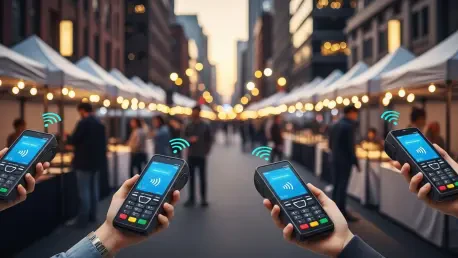
The widespread adoption of Near Field Communication (NFC) technology is fundamentally changing consumer behavior and merchant expectations on a global scale. By 2029, it is estimated that 97 percent of all POS terminals will support NFC capabilities, effectively making contactless payments the universal standard for physical retail. This growth is driven by the sheer volume of NFC-ready devices, which is expected to climb to 403 million units by the end of the decade. This saturation removes the final layers of friction from the checkout process, allowing for instantaneous transactions through digital wallets and contactless cards. For retailers, the decision to upgrade to NFC-capable hardware is no longer a matter of choice but a necessity for remaining relevant to a consumer base that increasingly views physical contact with a terminal as an unnecessary hurdle. This universal adoption ensures that the payment infrastructure is fully synchronized with the digital-first habits of the modern shopper.
Beyond consumer convenience, the near-universal presence of NFC creates a more streamlined operational environment for global payment networks. When almost every terminal in the world adheres to the same contactless protocols, the cost of maintaining fragmented systems decreases significantly. This allows for faster innovation in payment security and the implementation of new features, such as biometric authentication or dynamic transaction codes. In the current 2026 landscape, we are seeing the final wave of legacy hardware being phased out in favor of these high-performance, future-proof devices. Retailers are leveraging this transition to gather more precise data on purchasing patterns, as digital wallets often provide a more direct link to customer profiles than traditional cash or swipe transactions. This data-driven approach, enabled by NFC, is providing merchants with the insights needed to personalize the shopping experience and drive long-term customer loyalty in a highly competitive market.
The Rise of SoftPOS: Hardware Versus Software
While the mobile POS (mPOS) segment continues to expand, it is currently navigating a structural challenge from the emergence of SoftPOS technology. This innovation allows standard consumer-grade smartphones to act as fully functional payment terminals by utilizing their internal NFC chips and specialized, secure software. In 2026, while dedicated mPOS hardware remains a dominant force for high-volume retailers, SoftPOS is rapidly gaining ground among micro-merchants and gig economy workers who prefer a hardware-less acceptance model. This has created a bifurcated market where dedicated, ruggedized IoT terminals coexist with flexible, smartphone-based solutions. The primary advantage of SoftPOS lies in its low barrier to entry, as it requires no additional peripherals or specialized hardware procurement. This makes it an ideal solution for small-scale entrepreneurs who need to accept payments on the go without the overhead of maintaining a separate device fleet.
Despite the flexibility of software-only solutions, dedicated mPOS hardware still holds a significant advantage in environments that require high reliability and professional-grade durability. Integrated terminals often feature better battery life, superior scanning capabilities, and specialized security chips that offer a higher level of protection than a standard consumer phone. Through 2029, the industry is expected to see a dual-track development where both mPOS and SoftPOS thrive in their respective niches. The competition between these two models is driving significant innovation in both hardware design and software security. For example, mPOS manufacturers are making their devices thinner and more ergonomic, while SoftPOS developers are working to satisfy the stringent security requirements of global financial regulators. This dynamic environment ensures that merchants of all sizes have access to the tools they need to participate in the digital economy, regardless of their budget or technical expertise.
Strategic Shifts in the Payment Value Chain
Navigating the Future IoT Infrastructure
The deep integration of cellular connectivity and open software platforms has fundamentally altered the responsibilities of every stakeholder in the payment value chain. For original equipment manufacturers (OEMs), the focus has shifted toward building devices that are not only durable but also compliant with a complex web of global telecommunications standards. This requires a sophisticated understanding of cellular module integration and antenna design to ensure reliable performance across different network bands and geographic regions. Furthermore, manufacturers must now provide long-term support for their hardware, as the lifecycle of a modern POS terminal is increasingly defined by its ability to run the latest software updates. In 2026, success in the OEM space is measured by the ability to navigate these technical and regulatory hurdles while maintaining a cost-effective production model that can scale to meet the demands of a rapidly growing global market.
Building on these hardware requirements, system integrators are facing new challenges in managing the massive scale of connected terminal fleets. Deploying thousands of devices across multiple regions requires a seamless onboarding process and the ability to configure terminals remotely without manual intervention. This has led to the development of sophisticated orchestration platforms that provide real-time visibility into the health and status of every device in the field. Effective integration now involves coordinating between hardware vendors, mobile network operators, and payment processors to ensure that the entire ecosystem functions as a single, cohesive unit. As we move toward 2029, the role of the integrator will become even more critical, as businesses look for partners who can manage the entire device lifecycle—from initial deployment and security monitoring to eventual decommissioning and recycling. This holistic approach is essential for minimizing downtime and maximizing the return on investment for large-scale retail deployments.
Redefining the Role of Connectivity Providers
The shift toward cellular dominance has turned the point-of-sale terminal into a high-value asset for mobile network operators and connectivity providers. Unlike traditional consumer data plans, POS terminals represent a stable and predictable revenue stream that is less susceptible to the fluctuations of the consumer market. However, providing connectivity for financial transactions carries a high level of responsibility, as even a few minutes of network downtime can result in significant financial losses for a merchant. Consequently, connectivity providers are no longer just selling data; they are selling uptime and security. In 2026, leading providers are differentiating themselves by offering specialized IoT SIM cards with global roaming capabilities, private network slices for enhanced security, and advanced analytics tools that help merchants monitor their network usage and performance in real time.
This evolution is forcing telecommunications companies to move up the value chain by offering more than just a pipe for data. They are increasingly partnering with payment processors and hardware manufacturers to provide end-to-end solutions that include device management and cybersecurity services. By 2029, the most successful connectivity providers will be those that can offer a truly “global” SIM that works seamlessly across borders without the need for complex local contracts. This simplifies the expansion process for international retailers and ensures that their payment infrastructure remains consistent as they enter new markets. The convergence of payment technology and telecommunications is creating a more interconnected world where the ability to accept a payment is no longer tied to a physical location, but to the reach of the global cellular network. This partnership between tech and telecom is the foundation upon which the future of global retail is being built.
The transition toward a cellular-dominated retail landscape reached a critical turning point as the industry successfully moved away from localized infrastructure dependencies. This shift allowed merchants to operate with unprecedented mobility, while the universal adoption of NFC standardized the consumer experience across the globe. By embracing open software platforms and sophisticated IoT management, the payment ecosystem became more resilient and adaptable to the needs of a digital-first economy. Stakeholders across the value chain adapted by prioritizing software security and network reliability, ensuring that every terminal functioned as a secure gateway for commerce. This evolution did not just change the hardware used at the checkout counter; it redefined the possibilities of where and how business could be conducted. As a result, the retail environment became a more connected and efficient space, prepared to handle the complexities of a truly mobile and global marketplace.