
What if a single misplaced item on a store shelf could silently drain thousands of dollars from a brand’s revenue each day? This hidden threat looms large for consumer packaged goods (CPG) companies, where even minor in-store missteps can spiral into major losses. In a fiercely competitive retail landscape, the smallest oversight—be it a pricing error or an out-of-stock product—can erode customer trust and market share. Yet, a powerful solution is reshaping this battleground: AI-powered retail intelligence. This technology is not just a tool; it’s a game-changer, offering brands unprecedented visibility into shelf dynamics and actionable insights to drive growth.
The importance of this transformation cannot be overstated. As retail challenges mount with sluggish category growth and inconsistent in-store execution, CPG brands are finding traditional data sources like shipment records and point-of-sale (POS) metrics woefully inadequate. These older methods fail to capture what’s happening in real time on the shelves, leaving brands blind to critical issues. AI steps in as a revolutionary force, providing a lens into the minute-by-minute reality of retail environments. This story of innovation reveals how AI is not merely enhancing operations but redefining how brands compete and succeed at the store level.
How AI Transforms the Retail Arena for CPG Brands
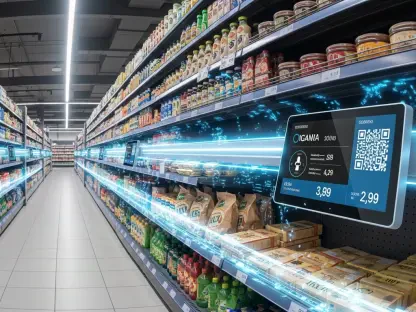
Artificial intelligence is rewriting the rules of retail for CPG companies by tackling long-standing pain points with precision. Gone are the days of relying solely on delayed or incomplete data to make decisions. Today, AI-powered tools deliver real-time visibility into shelf conditions, ensuring that products are positioned correctly and available when customers reach for them. This shift is monumental, enabling brands to spot issues instantly—whether it’s a misplaced display or a pricing discrepancy—and act before losses mount.
Moreover, the scope of AI extends beyond mere observation. It equips brands with insights that were previously unimaginable, such as identifying patterns in shopper behavior or detecting gaps in execution across hundreds of stores simultaneously. This level of detail empowers companies to fine-tune their strategies on the fly, ensuring they remain agile in a market that waits for no one. The result is a retail landscape where CPG brands can finally bridge the gap between planning and in-store reality.
Why Retail Intelligence Is a Critical Priority
In the current retail environment, challenges like inefficient trade spend and unpredictable in-store labor create formidable obstacles for growth. Categories are expanding slowly, and every dollar spent on promotions or displays must yield measurable returns. Without precise tools to monitor execution, brands risk squandering resources on efforts that fail to resonate with shoppers or simply go unnoticed due to poor placement.
Historically, reliance on shipment data and POS reports offered only a partial view of performance, missing the nuanced dynamics of the shelf itself. These outdated methods often left brands reacting to problems long after they occurred, rather than preventing them. Now, with retail execution emerging as a key differentiator, the ability to understand and influence what happens in-store has become the new frontier for gaining a competitive edge in a crowded market.
The AI Breakthrough in Retail Data for CPG Brands
AI marks the dawn of a new era in retail data, often dubbed the “third revolution” of insights. Moving beyond the limitations of smartphone-based tools, advanced AI technologies provide a depth of shelf visibility that was once out of reach. Where past approaches struggled with scale and speed, modern AI systems monitor real-time conditions across vast networks of stores, delivering updates as events unfold.
Specific in-store hurdles—such as ensuring pricing compliance, maintaining on-shelf availability, executing displays, and rolling out new products—are now directly addressable through AI. Platforms like Storesight, born from the merger of Field Agent and Shelfgram, exemplify this capability by enabling brands to track shelf health instantly. Additionally, machine learning amplifies this impact by predicting demand fluctuations, optimizing product positioning, and preventing stock imbalances, all through analyzing visual data like photos and videos in ways traditional feeds never could.
Voices of Change: Experts on AI’s Retail Impact
Insights from industry leaders highlight the transformative potential of AI in retail intelligence. Marc Yount, president and COO of Storesight, notes, “AI’s strength lies in its ability to parse vast amounts of data from visual inputs at scale, creating entirely new metrics with open-source modeling.” This perspective underscores how the technology is not just collecting information but inventing novel ways to measure success.
Henry Ho, co-founder and chief strategy officer at Storesight, adds a forward-looking view, stating, “The future of AI in retail will center on perfecting planogram compliance and sharpening demand forecasting.” His vision points to a horizon where AI doesn’t just solve today’s problems but anticipates tomorrow’s challenges. Real-world outcomes back this optimism, with brands reporting significant improvements in execution efficiency and shelf performance after adopting AI tools, painting a picture of a technology that’s already delivering tangible results.
Practical Steps to Harness AI for Retail Excellence
For CPG brands ready to embrace AI, the first step lies in adopting real-time shelf monitoring solutions. Implementing platforms that offer comprehensive coverage across multiple locations ensures no detail is missed. Tools like Storesight provide scalable options, allowing companies to track conditions and receive actionable data that can be acted upon immediately to correct issues and seize opportunities.
Beyond monitoring, leveraging predictive analytics through machine learning offers a strategic advantage. These tools forecast demand shifts and refine product placement, helping to avoid costly stockouts or overstocking scenarios. Integrating such insights into daily workflows ensures decisions are data-driven and proactive, keeping brands ahead of market trends. Finally, fostering collaboration across sales, marketing, and supply chain teams with AI-driven insights enhances in-store performance, while user-friendly systems empower staff at every level to respond swiftly to changing conditions.
Reflecting on the AI-Driven Journey
Looking back, the journey of AI in retail unfolded as a remarkable story of adaptation and innovation for CPG brands. It tackled persistent challenges head-on, from invisible shelf errors to inefficient execution, and turned them into opportunities for growth. The technology proved itself as more than a trend—it became a cornerstone of competitive strategy, offering clarity where there was once guesswork.
As brands navigated this landscape, the path forward became clear: embracing AI was not optional but essential. The next steps involved deepening investments in scalable tools, refining predictive models, and building stronger cross-functional teamwork to maximize in-store impact. With these actions, CPG companies positioned themselves to not only keep pace with a dynamic market but to lead it, ensuring every shelf told a story of success.