
Modern global logistics networks are currently undergoing a structural metamorphosis as autonomous digital entities transition from passive assistants to independent operational decision-makers. This shift is not merely a technical upgrade but a fundamental redesign of how enterprises manage the flow of goods across an increasingly volatile global landscape. Recent data indicates that over half of supply chain executives now expect a significant contraction in traditional entry-level roles, signaling that the era of human-led manual coordination is rapidly yielding to agentic autonomy.
The Emergence of Autonomous Agents in Supply Chain Management
The transition from predictive analytics to prescriptive agentic systems represents a pivotal moment for industrial operations. While previous AI iterations focused on forecasting demand or identifying potential disruptions, the current generation of agentic AI is designed to act upon those insights without requiring constant human oversight. This autonomy allows the system to not only identify a delayed shipment but also to negotiate alternative routes and reallocate inventory in real time.
This technological evolution addresses the twin pressures of escalating global complexity and persistent labor shortages. By moving beyond simple automation toward multi-agent orchestration, companies can maintain continuity even when faced with sudden geopolitical shifts or environmental challenges. The primary value proposition lies in the system’s ability to operate at a speed and scale that exceeds human cognitive capacity, effectively narrowing the gap between data perception and corrective action.
Core Pillars of Agentic AI Systems
Autonomous Decision-Making and Execution
The defining characteristic of these agents is their capacity for independent problem-solving within defined strategic boundaries. Instead of waiting for an operator to approve a purchase order, an agentic system evaluates supplier performance, current pricing, and lead times to execute the transaction automatically. This capability transforms the supply chain into a living organism that reacts to friction the moment it occurs, significantly reducing the “decision debt” that typically plagues large-scale organizations.
Multi-Modal Data Integration and Synthesis
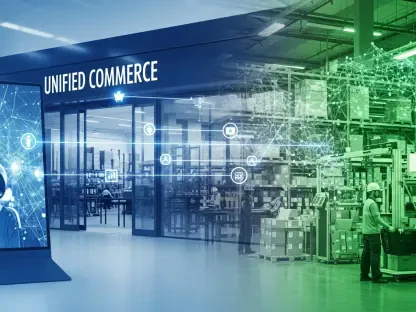
Modern agents thrive on their ability to ingest and interpret a diverse array of data sources, ranging from structured warehouse inventory levels to unstructured satellite imagery and news feeds. By synthesizing this information, the AI creates a unified operational view that bridges the traditional gaps between procurement, production, and distribution. This holistic perspective ensures that a change in one part of the chain—such as a factory delay—triggers an immediate, calculated adjustment across the entire network.
Adaptive Learning and Process Optimization
Beyond immediate execution, these systems utilize sophisticated machine learning feedback loops to refine their strategies over time. Every successful delivery or mitigated risk serves as a data point that informs future maneuvers. This constant refinement means the supply chain becomes progressively more efficient, learning to navigate seasonal fluctuations and market volatility with increasing precision, which eventually leads to a self-optimizing ecosystem that requires less manual tuning as it matures.
Current Trends: The Transition to a Flattened Talent Model
The rise of agentic AI is forcing a radical restructuring of the corporate hierarchy, moving toward a “co-opetition” model where machine logic and human intuition share the driver’s seat. This shift is most visible in the flattening of the traditional talent pyramid; as AI takes over repetitive coordination tasks, the need for entry-level administrative staff diminishes. This trend suggests that the workforce of the future will be leaner, consisting primarily of highly specialized professionals who manage the AI agents rather than the supply chain itself.
This evolution prioritizes high-value human roles that focus on ethical oversight, strategic boundary-setting, and complex relationship management. Organizations are moving away from hiring for task execution and are instead seeking individuals who can orchestrate the interaction between different AI systems. This transition represents a significant departure from historical hiring patterns, placing a premium on the ability to bridge the gap between technical algorithm management and physical logistics realities.
Real-World Applications Across the Value Chain
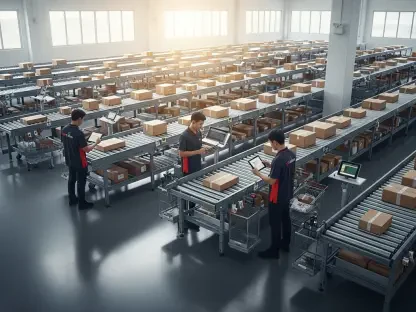
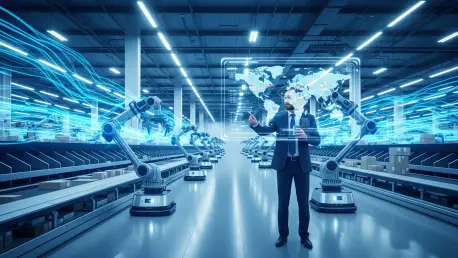
In the current landscape, agentic AI has moved from pilot programs to full-scale deployment in automated warehouse environments and dynamic logistics routing. High-performing organizations utilize these agents to synchronize workforce planning with physical automation, ensuring that robotic picking systems and human specialists work in perfect harmony. For instance, intelligent procurement agents now manage thousands of micro-transactions daily, optimizing spend in ways that were previously impossible for human teams to monitor.
Furthermore, dynamic routing agents are rewriting the rules of last-mile delivery by adjusting to traffic, weather, and customer availability on the fly. These implementations demonstrate that the technology is no longer a theoretical advantage but a functional necessity for maintaining competitiveness. Companies that have successfully integrated these systems report a marked improvement in their ability to handle “black swan” events, as the AI can pivot operations faster than any manual command structure could allow.
Navigating Technical and Organizational Hurdles
Despite the clear benefits, the path to a fully agentic supply chain is fraught with significant integration costs and persistent data silos. Many legacy systems were never designed to communicate with autonomous agents, creating “friction points” that can hamper the speed of AI decision-making. Moreover, the transition requires a massive investment in employee reskilling, as the skills required to oversee an autonomous system differ vastly from those needed for traditional logistics management.
Transparency remains another critical challenge, as the “black box” nature of some autonomous decisions can lead to concerns regarding algorithmic bias or unforeseen systemic risks. Developers are currently focusing on “explainable AI” to ensure that when an agent makes a high-stakes decision, the logic behind that choice is visible and auditable. Addressing these hurdles is essential for building the trust necessary for enterprises to hand over the keys of their most critical operations to digital agents.
Future Outlook: The Autonomous Enterprise
The trajectory of this technology points toward the creation of truly self-healing supply chains that can anticipate and repair their own disruptions. In the coming years, we can expect to see hyper-personalization at scale, where agents manage individual customer requirements with the same efficiency as bulk shipments. This level of granularity will likely redefine what it means to be an “efficient” enterprise, moving the goalpost from simple cost-cutting to total network resilience and responsiveness.
As the global workforce continues to restructure around these AI-centric models, the very definition of operational excellence will change. The future enterprise will likely function as a collection of interconnected agents, with human leadership providing the “moral compass” and long-term vision. This evolution will probably lead to a more sustainable global economy, as agents optimize for resource conservation and waste reduction with the same vigor they currently apply to speed and profit.
Summary of Findings and Strategic Assessment
The assessment of agentic AI in the supply chain revealed a technology that has moved beyond mere hype to become the backbone of modern industrial resilience. The transformation of the talent pyramid was found to be an inevitable consequence of this shift, as autonomous agents proved their ability to outperform human operators in complex, high-velocity environments. This transition demanded a complete rethink of organizational structures, placing a new emphasis on the synergy between machine execution and human strategic oversight.
Ultimately, the successful adoption of agentic AI was determined to be the primary differentiator between market leaders and those struggling with legacy inefficiencies. Enterprises that prioritized role redesign and data integration were better positioned to navigate the complexities of a volatile global market. The rise of the autonomous agent was not just a technical milestone; it was the catalyst for a new era of enterprise intelligence that redefined the boundaries of what a supply chain can achieve.