
The conversation around artificial intelligence has decisively shifted from what it can say to what it can now actively do, marking the arrival of a new operational paradigm that redefines the boundaries of automation. Agentic AI represents a significant advancement in business automation and customer interaction. This review will explore the evolution of this technology from its generative predecessors, its key features, performance metrics, and the impact it has had on various applications, particularly in the retail sector. The purpose of this review is to provide a thorough understanding of the technology, its current capabilities, and its potential future development.
Defining the Next Wave of Artificial Intelligence
Agentic AI introduces a paradigm where artificial intelligence transitions from being a passive assistant to an autonomous actor. Its core principle lies in the ability to independently plan, execute, and complete complex, multi-step tasks without continuous human oversight. This functional leap moves beyond the now-familiar territory of generative AI, which primarily focuses on creating content. Agentic systems act as functional operators, or “automated colleagues,” capable of interacting with digital environments to achieve specific, goal-oriented outcomes.
The emergence of this technology is contextualized by the groundwork laid by its generative counterparts. While models like ChatGPT made the power of AI tangible to a global audience, they also highlighted the ceiling of content creation. Agentic AI shatters that ceiling, positioning itself as a transformative tool for businesses seeking to enhance operational efficiency and revolutionize the customer experience. Its relevance in the current technological landscape stems from its capacity to bridge the gap between information and action, turning digital potential into tangible results.
Core Capabilities and The Agentic Advantage
The features that distinguish agentic AI from other forms of artificial intelligence are rooted in its ability to perform actions rather than just generate responses. This section delves into the primary components that grant agentic systems their unique operational power, offering an in-depth look at the technical architecture that enables them to function as autonomous agents within a business ecosystem.
From Content Generation to Autonomous Action
The fundamental shift from generating content to executing actions lies at the heart of the agentic revolution. Generative AI excels at tasks like drafting a personalized marketing email or creating campaign copy, essentially acting as a sophisticated creative partner. Its function is to produce text, images, or code based on user prompts. However, its capabilities are confined to the realm of content; it can explain a company’s return policy, but it cannot process an actual return for a customer.
In contrast, agentic AI is engineered for execution. It moves beyond communication to perform the very tasks that generative models can only describe. For instance, when a customer requests a product return, an agentic system can access the order history, verify eligibility against the return policy, generate a unique shipping label, update the inventory system, and schedule a courier pickup. This ability to perform a complete, end-to-end workflow transforms the AI from a source of information into a functional, autonomous operator capable of delivering resolutions.
Deep System Integration and Data Utilization
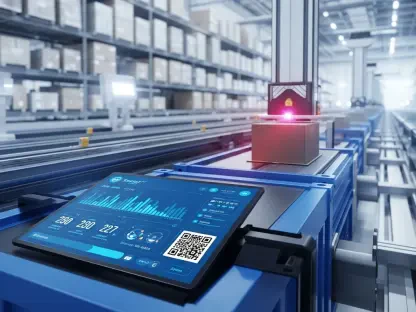
The most critical feature enabling this autonomy is deep and secure integration with a company’s internal systems. Unlike generative models that often operate with public data, agentic AI connects directly to the technological backbone of an organization, including Customer Relationship Management (CRM) platforms, inventory databases, and logistics software. This connection provides it with secure access to a wealth of real-time, non-public data, which is essential for performing meaningful and context-aware tasks.
This profound level of integration allows the AI to operate with the same information and permissions as a human employee. When a customer inquires about an order, the agent can query the logistics system for its live status. If a shopper asks for a product recommendation, the agent can analyze their purchase history and check current stock levels to offer a relevant and available suggestion. This data utilization turns every interaction into a highly personalized and effective experience, significantly reducing wait times and elevating the quality of customer service.
Market Dynamics and Adoption Trends
The adoption of agentic AI is accelerating, driven by a powerful combination of “push and pull” factors that are reshaping business priorities. Much of 2025 was characterized by an experimental phase where organizations tested these agents in isolated use cases. That period of cautious exploration has now given way to broader confidence as the proof of value becomes undeniable. Early adopters are demonstrating tangible gains in efficiency, flexibility, and service quality, pulling the rest of the market forward.
This momentum is fueled by several key attractors for retailers. The technology delivers an improved customer experience by guiding shoppers with personalized product suggestions and proactive notifications. It also promises significant cost reduction by automating manual, time-consuming tasks like processing returns and handling order updates, which minimizes human error and lowers operational overhead. Furthermore, by actively mitigating choice overload with product comparisons and reducing cart abandonment through timely prompts, agentic AI directly contributes to elevated customer conversion rates. Its ability to not just answer questions but to action requests—from scheduling appointments to initiating payments—extends service capabilities far beyond traditional automation.
Complementing these pull factors is a strong market push originating from evolving consumer behavior. Today’s customers have come to expect seamless, intuitive, and natural communication across all channels. Meeting these heightened expectations in a cost-effective manner is no longer a luxury but a business imperative. The deployment of agentic AI is becoming a non-negotiable strategy for companies aiming to remain competitive by delivering the instant, effective service that modern consumers demand.
Transformative Applications in the Retail Sector
The retail industry has emerged as a primary beneficiary of agentic AI, deploying the technology to revolutionize both customer-facing interactions and internal operations. Its ability to execute complex tasks autonomously is enabling retailers to build more resilient, efficient, and customer-centric business models.
Enhancing the Customer Journey and Conversion
Agentic AI is profoundly enhancing the digital shopping experience by serving as a personalized guide for every customer. By leveraging internal data on past purchases and browsing history, these agents can provide highly relevant product suggestions that resonate with individual tastes. They can also send automated back-in-stock notifications for desired items, re-engaging customers who might have otherwise been lost.
Moreover, these agents play an active role in boosting sales and reducing cart abandonment. When a customer is hesitant, the AI can present side-by-side product comparisons, offer styling advice, or provide timely prompts to encourage the completion of a purchase. By making the journey from discovery to checkout smoother and more intuitive, agentic AI helps convert interest into transactions, directly impacting the bottom line.
Automating Service and Operational Workflows
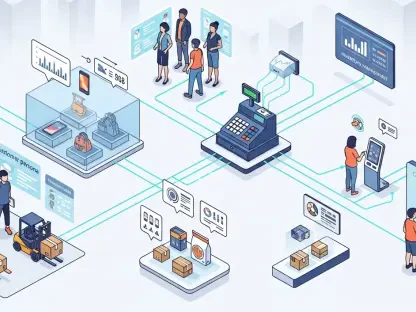
Beyond the customer journey, agentic AI is a powerful tool for automating internal service and operational workflows. It can handle a wide array of customer requests that previously required human intervention, such as processing returns, checking order statuses, and scheduling in-store appointments. By automating these routine processes, retailers can significantly reduce operational costs and minimize the risk of human error.
This automation extends to more complex tasks, including updating a customer’s personal details, sending secure payment links, and confirming delivery arrangements. The immediate result is a dramatic reduction in handling times for common inquiries, which frees up human support teams to focus on more nuanced, high-value interactions. This creates a more efficient and scalable service infrastructure, allowing retailers to handle greater volumes of requests without a proportional increase in headcount.
Implementation Hurdles and Strategic Considerations
Despite its transformative potential, the path to adopting agentic AI is not without its challenges. The technical complexity of deep system integration represents a significant hurdle. Connecting an AI agent securely to a mosaic of legacy and modern systems—from CRMs to proprietary inventory software—requires substantial technical expertise and careful planning to ensure data integrity and seamless operation.
Data security remains a paramount concern. Granting an AI system access to sensitive customer and business data necessitates robust security protocols, access controls, and continuous monitoring to prevent breaches and ensure compliance with privacy regulations. Furthermore, successful adoption requires more than just technical implementation; it demands organizational shifts. Teams must be trained, workflows must be redesigned, and a culture of trust in automated systems must be cultivated to fully leverage the technology’s capabilities. Development efforts are currently focused on creating more standardized integration frameworks and advanced security measures to mitigate these limitations and simplify deployment.
Future Outlook: The Path to Structural Integration
The long-term vision for agentic AI extends far beyond its application in isolated tasks or single departments. The future lies in its structural integration across entire organizations, creating a collaborative ecosystem where multiple AI agents work in concert. In this paradigm, an agent handling a customer return could communicate directly with an agent in the logistics department to optimize shipping routes and another in finance to process the refund, all without human intervention.
This level of integration promises to unlock a new level of business agility and intelligence. It would enable faster, more informed decision-making by synthesizing real-time data from every corner of the business. Such a holistic approach would further drive down operational costs, elevate the customer experience with instantaneous end-to-end service, and boost overall productivity. Ultimately, this path leads to a new model of human-AI partnership, where human employees are freed from routine workflows to concentrate on strategic initiatives, creative problem-solving, and other high-value work that demands uniquely human skills.
Final Assessment and Key Takeaways
Agentic AI stands as a fundamental catalyst for the next phase of business transformation, marking a clear evolution from the content-focused capabilities of generative AI. Its defining strength is its ability to act—to execute complex, multi-step tasks by integrating deeply with core business systems. This review has shown that while its implementation presents challenges related to technical integration and data security, the strategic advantages it offers are compelling and increasingly accessible.
The technology’s impact is most evident in its capacity to simultaneously enhance operational efficiency, elevate customer satisfaction, and boost overall productivity. As organizations move from isolated experiments to broader structural adoption, agentic AI is set to become an indispensable component of the modern enterprise. Its potential to automate end-to-end workflows and foster a new dynamic of human-AI collaboration positions it not merely as an advanced tool, but as a foundational element of future business architecture.