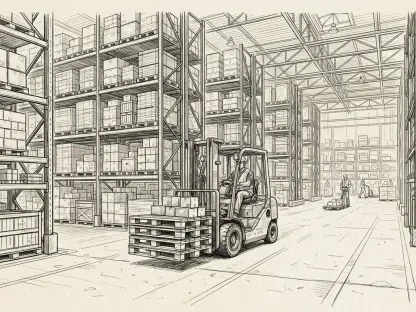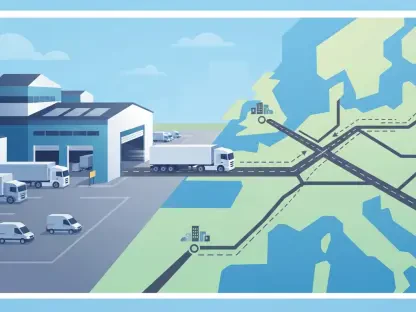

While consumers often perceive the act of shopping as a digital interaction through glowing screens, the true battle for retail supremacy is currently fought on the concrete floors of high-tech distribution centers. This shift marks a fundamental departure from the era when warehouses functioned as invisible storage vaults. Today, these facilities serve as the primary physical bridge between a digital brand and its global audience, necessitating a move toward high-speed, integrated logistics.
Supply chain excellence has transitioned from an operational necessity to a core corporate strategy. Modern retailers no longer view the back-end as a separate entity but as a vital part of the value proposition. The warehouse has evolved into a sophisticated laboratory where brand loyalty is forged through precision and technological agility, turning every shipment into a critical moment of truth.
Transforming the Back-End: From Storage Facilities to Brand Ambassadors
Fulfillment centers now operate as the primary physical touchpoint in the digital shopping journey. When a customer receives a package, the quality of that interaction defines the entire brand perception. This shift has forced companies to move from passive inventory storage to active customer experience engines, where the box serves as a silent brand ambassador that speaks to the company’s values and efficiency.
Market leaders ranging from big-box giants to agile e-commerce specialists are currently redefining industry standards through massive technological investments. Digital transformation has elevated the warehouse’s role in the boardroom, turning logistics into a competitive weapon. Global supply chain dynamics now dictate that the organizations with the most efficient fulfillment nodes will ultimately capture the largest share of the market.
The Dynamics of Modern Fulfillment: Emerging Trends and Market Projections
Navigating the Post-Purchase Landscape and Consumer Behavior
The post-purchase landscape is heavily shaped by the psychology of the unboxing experience. Brand loyalty is no longer bought through advertisements alone but earned through the tactile satisfaction of a perfectly packed order that arrives in pristine condition. Reliability and precision have replaced speed as the most critical consumer demands, making order accuracy the highest priority for modern warehouse managers.
Moreover, omnichannel mandates like Buy Online, Pick Up In Store (BOPIS) have blurred the lines between retail and distribution. Real-time order transparency is now a non-negotiable expectation for the modern shopper. This demand requires a seamless flow of data between the warehouse and the consumer’s tracking application to maintain trust throughout the final stages of the delivery process.
Quantifying Growth and the Future of Logistic Infrastructure
E-commerce penetration continues to drive unprecedented demand for warehouse space across the globe. Projections for the period from 2026 to 2029 suggest a steady increase in the valuation of the Warehouse Management System market as companies seek deeper insights. Current performance indicators, such as the cost per box and order accuracy rates, are being scrutinized to ensure long-term profitability in a high-inflation environment.
A notable shift toward decentralized micro-fulfillment centers is currently underway to meet localized demand spikes. These smaller hubs allow for faster last-mile delivery and help mitigate the risks associated with centralized distribution failures. Scaling these operations requires a robust digital infrastructure to maintain visibility and inventory consistency across multiple nodes.
Overcoming the Complexity: Operational Hurdles and Strategic Solutions
Logistics leaders must navigate a triple threat of rising tariffs, material expenses, and carrier volatility. These economic pressures squeeze margins and force a reliance on internal operational efficiency to maintain price competitiveness. The complexity of managing one common inventory across fragmented sales channels remains a significant technical challenge for most retail firms today.
Labor shortages continue to plague the logistics sector, accelerating the move toward human-machine collaboration. Integrating autonomous systems is no longer a luxury but a necessity for scaling operations without exponentially expanding the headcount. Solving inventory inaccuracies is critical, as out-of-stock errors directly lead to customer churn and significant brand damage in a competitive market.
The Regulatory and Compliance Landscape of Global Distribution
International trade policies and fluctuating tariffs have a direct impact on warehouse overhead and procurement strategies. Safety standards for automated workspaces are also evolving, requiring firms to adapt their infrastructure to protect both human workers and robotic assets. Compliance with these regulations is essential for avoiding costly legal disruptions and ensuring a stable workflow.
Data privacy and security have become paramount as Warehouse Management Systems handle increasingly sensitive customer information. Simultaneously, sustainability regulations are pushing the industry toward green logistics. Modern operations must prioritize energy-efficient lighting, solar-ready roofing, and zero-waste packaging to meet environmental targets and satisfy the demands of eco-conscious consumers.
The Next Frontier: Innovation and Disruptors in Fulfillment
Artificial Intelligence is currently revolutionizing predictive inventory placement and demand forecasting. By analyzing vast datasets, machines can predict where products should be stored before an order is even placed. This foresight reduces shipping distances and wait times, significantly enhancing the overall efficiency of the distribution network and reducing carbon footprints.
Autonomous mobile robots provide the flexibility and scalability needed to handle seasonal peaks without permanent infrastructure changes. The rise of dark stores—retail spaces converted into fulfillment hubs—is disrupting traditional distribution models in urban areas. Reshoring trends are also influencing where new warehouses are built to ensure closer proximity to the end consumer.
Final Perspective: Fulfillment as the Ultimate Competitive Advantage
Retailers recognized that warehouse efficiency served as the decisive factor in surviving the recent economic squeeze. They prioritized technological integration and inventory agility to build long-term consumer trust in an volatile market. Logistics infrastructure was elevated to a core marketing tool, proving that the fulfillment process was just as important as the product itself.
The industry established that the warehouse remained the enduring anchor of the retail ecosystem. Decision-makers invested in scalable solutions that mitigated the impact of labor shortages and carrier volatility while identifying that logistics served as a vital source of data for sentiment analysis. Ultimately, the successful organizations of this era were those that transformed their distribution hubs into proactive engines of growth.