The quiet hum of distribution centers across Australia serves as the heartbeat of a $493 billion market sector that currently faces a staggering productivity paradox. While the national economy relies heavily on the success of manufacturing, wholesale, and retail, recent figures from the Productivity Commission indicate that this vital backbone is struggling. Despite a significant increase in total hours worked during the most recent quarter, labor productivity within these industries fell by 0.7 percent, suggesting that traditional operational methods have reached a point of diminishing returns.
Logistics networks act as the invisible infrastructure sustaining domestic supply chains, yet their inefficiency has become a drag on overall economic health. These sectors employ one in every four Australian workers, making any dip in their performance a matter of national concern. The current challenge lies in the fact that the market sector is working harder than ever, but the complexity of modern commerce is outpacing the ability of human labor to keep up without technological assistance.
Shifting Paradigms: The Forces Reshaping Logistics and Distribution
Consumer Evolution and the E-commerce Fulfillment Burden
The landscape of Australian retail underwent a fundamental transformation as online spending surged to a record $82.6 billion last year. This boom created an unprecedented fulfillment burden on warehouses that were originally designed for bulk shipments. Today, the focus has shifted toward individual picking and high-volume processing of granular orders. Although total revenue figures remain high, the average online basket size has decreased to approximately $90, requiring warehouses to move more items more frequently just to maintain the same financial output.
Manual labor inefficiencies have become glaringly apparent under this new model, where order picking can account for as much as 65 percent of total operating costs. In a traditional setting, workers spend the vast majority of their time walking between storage locations rather than performing the actual task of packing goods. This transition from pallet-based storage to item-level processing has inflated fulfillment expenses, making it nearly impossible for businesses to scale by simply hiring more staff.
Market Data and the Financial Case for Automated Systems
Projections for the industrial sector from 2026 to 2030 indicate that the financial viability of businesses will increasingly depend on their ability to integrate robotics. The cost-benefit analysis of automation has shifted significantly, as the price of technological implementation continues to fall while labor and energy costs rise. Performance indicators now prioritize output per square foot and labor-hour efficiency over total headcount, highlighting the need for systems that maximize existing resources.
Growth forecasts suggest that the adoption of automated storage and retrieval systems will be the primary driver of logistics growth over the next five years. By investing in these technologies, distribution centers can achieve a level of throughput that manual teams cannot replicate. The data suggests that the return on investment for such systems is no longer a long-term prospect but a near-term necessity for remaining competitive in a high-speed marketplace.
Navigating Structural Constraints: Real Estate and Labor Scarcity
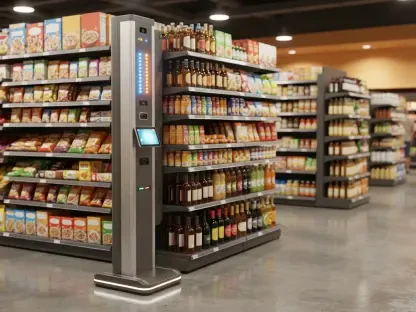
Australia is currently grappling with a national industrial vacancy crisis, with rates hovering around 3.2 percent in major metropolitan hubs. This shortage of developable land means that horizontal expansion is no longer a feasible solution for companies looking to grow. Businesses must instead find ways to optimize their existing warehouse footprints, turning toward vertical storage and high-density solutions to store more inventory in less space.
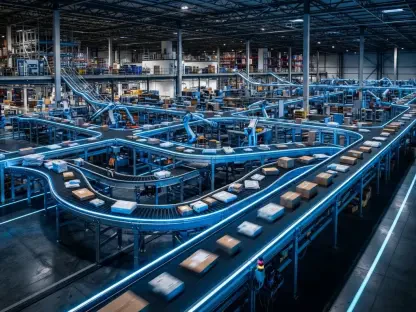
Rising labor costs and a scarcity of skilled logistics workers have further complicated the operational landscape. Technological investment serves as a strategy for mitigating these pressures, allowing companies to do more with the teams they already have. Integrating Goods-to-Person systems has proven effective in these scenarios, as it brings items directly to the worker, eliminating unproductive walking time and making better use of limited metropolitan real estate.
Standards and Governance: Aligning Innovation with Regulatory Frameworks
The integration of advanced technology requires a sophisticated understanding of safety standards, particularly regarding human-robot collaboration. Ensuring that automated systems operate alongside human workers without increasing workplace risks is a top priority for regulators. Moreover, navigating the complex landscape of Australian industrial relations is essential as the logistics workforce transitions into more tech-centric roles, requiring a focus on upskilling rather than displacement.
Government incentives and the work of productivity commissions have become increasingly important in fostering digital adoption across the industrial sector. Compliance requirements for data security and automated inventory management are also tightening, as warehouses become more reliant on software-driven operations. Aligning innovation with these regulatory frameworks ensures that the transition to automation is both sustainable and socially responsible.
The Future of the Supply Chain: Toward a Tech-Enabled Industrial Landscape
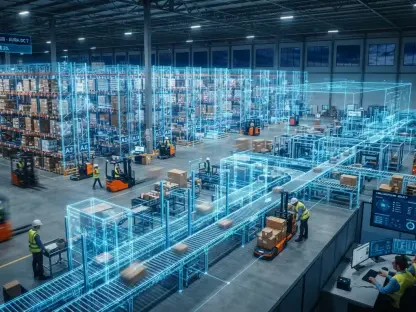
Emerging technologies such as autonomous mobile robots and AI-driven predictive analytics are beginning to define the next phase of the supply chain. These tools allow for a more proactive approach to logistics, where systems can anticipate demand fluctuations and adjust inventory levels in real time. The industry is also seeing a shift toward dark warehouses, where high-density automated storage systems operate with minimal human intervention, maximizing speed and accuracy.
Global logistics leaders have already set new benchmarks for speed, forcing domestic players to keep pace or risk irrelevance. As these technologies become more accessible, the gap between automated and manual facilities will continue to widen. The long-term economic benefits of a modernized industrial base include lower costs for consumers and a more resilient supply chain capable of weathering future disruptions.
Strategic Outlook: Revitalizing the Economy Through Operational Excellence
The transition to a modernized industrial framework provided the essential fourth option for businesses that were previously constrained by physical space and labor availability. By prioritizing operational excellence through automation, the market sector successfully addressed the productivity lag that had threatened national economic stability. This shift allowed for a significant increase in output per worker-hour, proving that technological adoption was the most effective path toward long-term growth.
The broader socio-economic impact of this transformation resulted in a more robust industrial backbone that supported the changing needs of the Australian consumer. Strategic investments in Goods-to-Person systems and AI-driven logistics created a new standard for efficiency that benefited the entire economy. Ultimately, the synergy between advanced automation and the workforce ensured that the nation remained competitive in an increasingly digital and fast-paced global market.