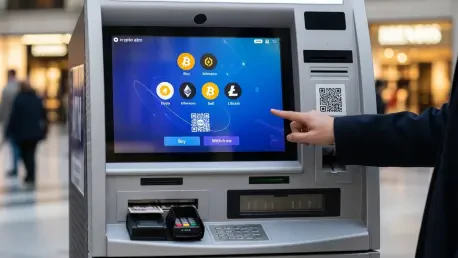

The soft glow of a cryptocurrency ATM in the corner of a familiar convenience store represents one of the most dangerous and lucrative intersections of digital finance and everyday retail, a seemingly innocuous machine that has become the weapon of choice for a new generation of financial predators. While promising a simple gateway to the world of digital currency, these devices have instead unlocked a floodgate of fraud, enabling criminals to siphon hundreds of millions of dollars from unsuspecting victims. This report investigates the symbiotic and profitable relationship between the crypto ATM operators who own the machines and the major retail chains that host them. It reveals a burgeoning industry whose financial success is inextricably linked to a surge in sophisticated scams, creating a system where plausible deniability masks a business model profiting from widespread financial devastation. As federal and state authorities grapple with the escalating crisis, the core of the problem remains: a powerful financial incentive for corporations to look the other way while their customers’ life savings vanish into the anonymous depths of the blockchain.
The New Corner Store Gold Rush and How Crypto ATMs Went Mainstream
An Industry Overview
The rapid proliferation of cryptocurrency ATMs marks a significant shift in the financial landscape, transforming the abstract world of digital assets into a tangible, physical presence in communities across the nation. In just a few years, these machines have moved from niche tech curiosities to common fixtures in gas stations, grocery stores, and corner markets. Their strategic placement in high-traffic, everyday locations is a calculated effort to normalize cryptocurrency and lower the barrier to entry for the average consumer. By offering a direct cash-to-crypto conversion point, they serve as a physical bridge to a digital ecosystem that can otherwise seem complex and inaccessible.
This expansion has created a multibillion-dollar industry built on convenience and the promise of financial innovation. For consumers, the appeal lies in the apparent simplicity of the transaction: insert cash, scan a QR code, and receive cryptocurrency in a digital wallet. This process deliberately bypasses the traditional banking system, which for some represents freedom from institutional oversight. However, this very feature—the ability to conduct swift, irreversible transactions outside of conventional financial guardrails—is precisely what makes these machines a uniquely potent tool for fraud, turning neighborhood stores into unwitting venues for high-tech heists.
The Key Players
At the forefront of this industry expansion is Bitcoin Depot, the largest operator of crypto ATMs in the world. The company’s business strategy, spearheaded by CEO Brandon Mintz, has been to aggressively pursue partnerships with major retail chains, betting that consumer trust in a familiar brand name will extend to the technology placed within its walls. Bitcoin Depot’s pitch to retailers is compellingly simple: “ZERO RISK. ZERO COST. MONTHLY REVENUE.” The company handles the installation, maintenance, and cash logistics of the machines, while the retail host provides the physical space and electricity in exchange for a steady stream of rental income and the potential for increased foot traffic.
This model found its most significant partner in Circle K, one of the largest convenience store chains in North America. An exclusive agreement signed in 2021 made Circle K the first major retailer to embrace a wide-scale deployment of crypto ATMs, placing thousands of Bitcoin Depot machines in its stores. The partnership proved immensely successful for both parties. By 2024, transactions at Circle K locations accounted for nearly a quarter of Bitcoin Depot’s revenue. This crucial alliance legitimized the presence of crypto ATMs in the mainstream retail environment, creating a template for an industry that prioritizes rapid market penetration and revenue generation above all else.
The Technology of Trust and Deception
At its core, a crypto ATM performs a straightforward function: it accepts physical cash and, after charging a substantial fee, transmits an equivalent value of cryptocurrency to a designated digital wallet address. This process leverages the public’s familiarity with traditional ATMs to create an illusion of security and routine. Users interact with a familiar-looking machine, feed it cash as they would a vending machine, and receive a digital product. The technology is designed to be fast and frictionless, completing transactions in minutes that might take days to clear through traditional banking channels.
This efficiency, however, is a double-edged sword. The speed and irreversibility of blockchain transactions, combined with the anonymity of unhosted digital wallets, make crypto ATMs the perfect instrument for financial criminals. Once cash is deposited and converted, the resulting cryptocurrency is sent directly to an address controlled by the scammer, often located overseas. There are no built-in delays, no fraud detection algorithms flagging unusual activity for review, and no institutional intermediaries with the power to reverse the transfer. The very technology designed to build trust by mimicking a familiar banking process becomes a tool of deception, exploiting that trust to execute flawless, untraceable theft.
Fueling Fraud with Market Trends and Soaring Scam Statistics
The Anatomy of a Modern Heist
Weaponizing Fear and Urgency
The success of crypto ATM scams hinges on the masterful manipulation of human psychology. Criminals employ sophisticated social engineering tactics designed to induce a state of extreme fear, panic, and confusion, effectively short-circuiting a victim’s rational decision-making processes. These schemes often begin with a pop-up on a computer screen disguised as a security alert from a company like Microsoft, directing the user to a fraudulent tech support hotline. Once on the phone, scammers impersonate a series of authority figures—from tech experts to bank fraud investigators and even federal agents—to construct a terrifying but believable narrative.
Victims are told their financial accounts have been compromised and used for heinous crimes, such as purchasing child pornography or funding terrorism, and that they face imminent arrest if they do not cooperate. This high-pressure scenario is designed to isolate the victim, who is typically forbidden from speaking to family or law enforcement under threat of further legal jeopardy. The only solution offered is to “secure” their funds by withdrawing their life savings in cash and depositing it into a crypto ATM. The manufactured urgency and terror are so overwhelming that even financially savvy individuals find their judgment completely compromised, becoming puppets in a meticulously scripted heist.
The Scammer’s Perfect Tool
From a criminal’s perspective, crypto ATMs are a near-perfect tool for liquidating the proceeds of fraud. Traditional methods of moving illicit funds, such as wire transfers or gift cards, come with inherent risks and limitations. Banks have robust anti-fraud systems that can flag and delay suspicious transactions, while gift cards have relatively low monetary limits. Crypto ATMs, in contrast, offer an unparalleled combination of speed, finality, and anonymity that bypasses these safeguards entirely.
As law enforcement officials attest, these machines provide a direct conduit from a victim’s cash to a criminal’s anonymous digital wallet. The transaction is nearly instantaneous, and once the cryptocurrency is sent, it is irreversible and almost impossible to trace back to a real-world identity, especially if the funds are quickly moved through a series of international wallets. This effectively launders the money at the point of theft, placing it beyond the reach of domestic authorities within minutes. The entire financial system designed to protect consumers is rendered irrelevant, making the corner store ATM the final, critical step in a devastatingly effective criminal enterprise.
A New Wave of Vulnerable Consumers
The strategic placement of crypto ATMs in trusted, mainstream retail environments has significantly expanded the pool of potential victims. Previously, cryptocurrency scams were largely confined to the digital realm, targeting individuals who were already active in or curious about the crypto space. By embedding these machines next to the lottery counter and the soda fountain in a Circle K or a local grocery store, operators have lent their product a powerful, if unearned, veneer of legitimacy.
This false sense of security has proven to be a dangerous catalyst for fraud. Consumers who would be wary of a complex online transaction are disarmed by the familiarity of conducting a financial task inside a store they visit every week. The presence of the machine in a corporate-approved setting implies safety and oversight, lowering the defenses of individuals who are already under immense psychological pressure from a scammer on the phone. Consequently, the victim profile has broadened to include people from all walks of life, many of whom have no prior knowledge of cryptocurrency and are only interacting with it under duress, believing it is the only way to save themselves from a fabricated crisis.
A Multi-Million Dollar Trail of Tears
Quantifying the Crisis
The financial devastation wrought by crypto ATM scams is no longer anecdotal; it is a quantifiable crisis of staggering proportions. Data from federal law enforcement paints a grim picture of exponential growth in this category of crime. In 2024 alone, the FBI recorded a 99% surge in fraud complaints involving these machines, with nearly 11,000 victims reporting approximately $247 million in losses. The trend has only worsened, with estimated losses from January to November of 2025 soaring to $333 million.
These figures, while alarming, likely represent only a fraction of the true financial toll. Many victims, overwhelmed by shame or embarrassment, never report their losses to the authorities. The data that is available, however, clearly demonstrates a direct correlation between the rapid expansion of the crypto ATM network and the explosion in related fraud. What was once a niche problem has metastasized into a mainstream financial threat, draining hundreds of millions of dollars from ordinary Americans each year.
The Alarming Transaction Data
While national statistics provide a broad overview, investigations at the state level have uncovered even more damning evidence about the nature of the transactions flowing through these machines. A lawsuit filed by Iowa’s attorney general included a forensic analysis of transaction data from machines operating within the state. The findings were stunning: for industry leader Bitcoin Depot, the analysis suggested that more than half of all transactions were directly linked to scams. For its next-largest competitor, CoinFlip, the figure was an astonishing 90%.
This internal industry data suggests that fraud is not an unfortunate side effect of the business but may, in fact, be a primary driver of transaction volume on some networks. The analysis transforms the perception of these machines from legitimate financial tools occasionally abused by criminals into instruments whose primary function in practice appears to be facilitating crime. It raises fundamental questions about the viability of the entire business model if fraudulent transactions were to be successfully eliminated.
Forecasting the Damage
Without significant regulatory intervention or a fundamental change in corporate behavior, the financial damage inflicted on consumers is projected to continue its upward trajectory. The crypto ATM industry remains in a growth phase, with operators like Bitcoin Depot continuing to sign new partnership deals and expand their physical footprint into more retail locations. Each new machine installed represents a new potential endpoint for a scam, widening the net for financial predators.
As long as the business model remains unchanged—prioritizing transaction volume and high fees over effective fraud prevention—the financial losses will inevitably mount. The combination of an expanding ATM network, increasingly sophisticated psychological tactics from scammers, and a lagging regulatory response creates a perfect storm for consumers. The hundreds of millions lost annually could soon climb into the billions, establishing this form of fraud as a permanent and devastating feature of the American financial landscape.
A Business Model Built on Plausible Deniability
The Profit-in-Fraud Dilemma
At the heart of the crypto ATM crisis lies a severe conflict of interest: a significant portion of operator revenue appears to be derived directly from the proceeds of crime. These companies generate profit by charging exorbitant fees on each transaction, which can range from 15% to as high as 50%. While such rates make the machines impractical for legitimate investors, they go unnoticed by scam victims who are under duress and focused only on complying with a criminal’s demands. Consequently, the large, desperate cash deposits made by victims are disproportionately profitable for the operators.
This dynamic creates a powerful disincentive for companies to implement truly effective scam prevention measures. As one former Bitcoin Depot employee candidly admitted, eliminating scams entirely would significantly harm the company’s bottom line. This admission points to a business model that is not merely susceptible to fraud but is structurally dependent on it for a substantial share of its revenue. The financial incentive is to maintain the status quo, processing as many high-fee transactions as possible while doing the bare minimum required to deflect legal liability.
The Facade of Consumer Warnings
In response to criticism, crypto ATM operators invariably point to their on-screen compliance measures as evidence of their commitment to consumer protection. Their machines display warnings about common scams and require users to tap through a series of prompts acknowledging that they are not acting under the direction of a third party. However, law enforcement officials, consumer advocates, and victims themselves attest that these warnings are functionally useless. They amount to a form of “compliance theater” designed to create a legal shield for the company rather than to provide genuine protection.
A victim in the throes of a high-pressure scam is in a state of cognitive overload, their judgment clouded by fear and a sense of extreme urgency. With a scammer on the phone providing step-by-step instructions and threats, on-screen text becomes meaningless background noise. Steve Beckett, the ordained minister who lost $7,000, confirmed he did not even notice the warnings on the Bitcoin Depot machine until after his money was gone. By placing the onus of fraud detection entirely on a psychologically compromised victim, operators can claim they provided a warning and then blame the consumer for failing to heed it, effectively absolving themselves of responsibility.
Retailer Culpability and Willful Blindness
The role of retail hosts like Circle K is critical and complex. These corporations provide the essential element of legitimacy that makes the scams so effective, yet they officially disavow any responsibility for the financial devastation occurring on their premises. For a retailer, hosting a crypto ATM is a low-effort, high-reward proposition. They collect thousands of dollars in monthly rent per machine and benefit from the ancillary foot traffic it generates, all while bearing none of the operational costs or risks.
Despite mounting evidence of pervasive fraud—including direct complaints from customers and even their own concerned employees—major retailers have demonstrated a consistent pattern of willful blindness. One Circle K manager estimated that “98%” of the machine’s users in his store were being scammed, while another district manager was recorded on police bodycam footage stating, “I hate these machines. I’d like to get them out of the stores.” Yet, the official corporate policy remains dismissive: “It’s not our machine, it’s not our problem.” By continuing and even extending lucrative contracts with ATM operators, these retailers make a calculated business decision to prioritize profit over the financial safety of the communities they serve, becoming indispensable partners in a system of profitable victimization.
The Wild West A Patchwork of Laws and Corporate Loopholes
The Lagging Legislative Response
The regulatory landscape governing crypto ATMs is a fragmented and inconsistent patchwork of state-level rules, leaving vast swaths of the country with little to no specific consumer protection. As of September, only 18 states have enacted laws or regulations aimed at curbing the fraud epidemic associated with these machines. These measures vary widely in scope and effectiveness, ranging from modest fee caps to more substantive requirements like daily transaction limits and mandatory refund policies for scam victims.
This state-by-state approach has created a “Wild West” environment where ATM operators can exploit regulatory gaps. While some jurisdictions are beginning to take action, the legislative process is slow and often struggles to keep pace with the rapidly evolving tactics of financial criminals. The absence of a strong, uniform federal standard means that consumer protection is largely determined by geography, leaving millions of Americans vulnerable simply because of where they live. This lack of comprehensive oversight allows the industry to continue its expansion with minimal friction, operating under a myriad of different rules that are often easy to circumvent.
Compliance Theater vs Real Protection
Even in states that have implemented new consumer protection laws, their real-world effectiveness has been questionable. ATM operators have proven adept at navigating or neutralizing these regulations in ways that create the appearance of compliance without meaningfully reducing fraud. For instance, a new law in Minnesota imposed a $2,000 daily transaction limit for new users in an effort to cap the potential losses from a single scam. Almost immediately, scammers adapted their tactics.
Criminals simply began instructing their victims to perform multiple smaller transactions, sometimes using different names, to bypass the daily cap. The ATM operators, in turn, can claim they are in full compliance with the letter of the law by enforcing the per-transaction limit, even as they continue to process a series of fraudulent deposits from the same distressed individual. This dynamic illustrates how many regulatory efforts are treated by the industry not as mandates for genuine consumer protection, but as legal hurdles to be cleared. The focus remains on building a defensible legal position against liability, rather than on implementing technology and protocols that could actually prevent scams from succeeding.
Corporate Resistance and Legal Battles
The crypto ATM industry has not been a passive participant in the regulatory debate; it has actively resisted measures that threaten its business model. This resistance is most evident in the legal tactics used to enforce contracts against retailers who attempt to take a stand against fraud. The case of Fareway Stores, an Iowa-based grocery chain, provides a stark example. After recognizing that the 66 Bitcoin Depot machines in its stores were “instrumentalities of massive fraud,” Fareway took the decisive step of unplugging all of them.
Instead of working with the retailer to address the problem, Bitcoin Depot immediately filed a lawsuit against Fareway for breach of contract, seeking to force the machines back online. The legal pressure worked. Fareway ultimately reactivated the ATMs after a new Iowa law was passed that introduced transaction limits and fee caps, hoping the legislation would at least mitigate some of the harm. The companies settled the lawsuit, but the episode sent a clear message to other retailers: attempting to remove these profitable machines, even in the face of overwhelming evidence of fraud, could result in a costly legal battle. This aggressive corporate stance ensures that contracts are enforced and revenue streams are protected, regardless of the consequences for consumers.
A Crossroads of Profit and Accountability
The Insider’s Verdict
Perhaps the most damning critique of the crypto ATM industry comes from those who have seen it from the inside. Marc Grens, a co-founder of the now-defunct crypto ATM company DigitalMint, provides a sobering verdict on the fundamental nature of the business. Grens attempted to lead a reform effort by establishing a self-regulating industry association aimed at improving compliance standards and combating fraud. His initiative was met with a complete lack of interest from major operators like Bitcoin Depot.
Through his own company’s experience, Grens came to a stark conclusion: operating a profitable crypto ATM business without facilitating scams was nearly impossible. He found that for large cash transactions—the most lucrative for operators—an overwhelming “95% of the customers you end up talking to were victims.” This insider perspective suggests that the industry’s business model is not merely flawed but is fundamentally unsustainable without profiting from criminal activity. Faced with this reality, both Grens’s company and its only partner in the reform effort chose to exit the business entirely, concluding that there was no ethical path forward.
The Rising Tide of Litigation
With regulatory and corporate channels offering little recourse, victims are increasingly turning to the civil court system as a final avenue for justice and accountability. A new wave of lawsuits targeting not only the ATM operators but also the host retailers is beginning to emerge as a potentially significant disruptor. Cases like the one filed by Steve Beckett against both Bitcoin Depot and Circle K seek to pierce the corporate veil of plausible deniability by arguing that both parties are complicit in creating an environment ripe for fraud.
These legal challenges represent a critical test of corporate responsibility. If successful, they could establish a new precedent for liability, forcing both operators and their retail partners to shoulder the financial consequences of the scams they facilitate. The threat of costly litigation and significant jury awards could become a powerful financial incentive for companies to re-evaluate their risk calculus. A rising tide of civil lawsuits may ultimately force the industry to implement the meaningful, technologically advanced fraud prevention measures it has long resisted, proving to be a more effective catalyst for change than the current patchwork of state regulations.
The Future of Retail and Crypto
The continued association with widespread financial fraud poses a significant long-term risk to the reputations of both crypto ATM operators and their retail partners. As public awareness of the scam epidemic grows through media coverage and community warnings, the sight of a crypto ATM in a trusted retail environment may begin to evoke suspicion rather than legitimacy. This shift in consumer perception could eventually erode the very trust that made these partnerships so valuable in the first place.
For major retail chains like Circle K, there may come a tipping point where the reputational damage and potential legal liability of hosting these machines outweigh the financial benefits of rental income and foot traffic. A large-scale public backlash or a series of high-profile legal defeats could compel these corporations to sever ties with ATM operators, fundamentally altering the industry’s growth trajectory. The future of crypto’s presence in mainstream retail may depend on whether the industry can fundamentally reform its practices or if it will be permanently branded as a facilitator of crime, forcing responsible retailers to walk away.
The Final Tally and Cashing In on Human Misery
A System of Profitable Victimization
The findings of this report reveal a deeply troubling ecosystem where crypto ATM operators and major retailers have formed a symbiotic financial relationship sustained by a constant flow of criminal fraud. It is a system in which the technological efficiency of crypto ATMs is exploited by scammers, while operators profit from exorbitant fees charged on fraudulent transactions, and retailers collect passive income while lending their trusted brand names to the enterprise. The result is a highly efficient machine for transferring wealth from the most vulnerable members of society directly into the hands of criminals and corporations. The on-screen warnings and superficial compliance gestures serve not as a shield for consumers, but as a legal firewall for companies that have built a business model on a foundation of willful blindness. This is not a system with a fraud problem; it is a system of profitable victimization.
A Call for Corporate Conscience
This situation presents a profound moral and ethical challenge to the companies involved. The continued operation of this business model requires a conscious decision to prioritize revenue over the well-being of the customers who walk through the retailers’ doors. It forces a question of corporate conscience: what is the responsibility of a company that facilitates and profits from a technology so easily and overwhelmingly used for crime? Disavowing responsibility while continuing to cash the checks is a position that is becoming increasingly untenable in the face of mounting evidence and human suffering. A genuine commitment to corporate social responsibility would demand a radical re-evaluation of these partnerships and the implementation of policies that place consumer safety above all else.
Pathways to Reform
Moving forward, addressing this crisis requires a multi-pronged approach that moves beyond the current ineffective framework. First, robust federal regulation is needed to create a uniform standard of consumer protection across all fifty states, eliminating the loopholes exploited by operators. Second, this regulation must mandate the implementation of advanced, technology-based scam prevention solutions—such as transaction delays for first-time users or AI-powered fraud detection—that are far more effective than the easily bypassed on-screen warnings. Finally, clear legal accountability must be established for all parties in the transaction chain. Legislation should clarify the liability of both ATM operators and host retailers, ensuring that those who profit from this system are also held responsible for the financial devastation it causes, thereby creating a powerful incentive to finally put an end to the fraud.