
Navigating the modern global trade landscape requires more than just logistical precision; it demands a radical rethink of how goods move across a fragmented world. Our guest, Zainab Hussain, is a seasoned e-commerce strategist and operations expert who has spent years helping brands stay afloat during unprecedented market shifts. With a background rooted in customer engagement and the complexities of international fulfillment, she offers a unique perspective on how businesses can transform volatility into a competitive edge.
The following discussion explores the strategic realignment of global trade flows, the financial pressures of rising shipping costs, and the shift toward digital foresight. We delve into the necessity of connected networks, the role of smart packaging in building consumer trust, and how executive leadership must evolve to manage a permanent state of disruption.
With over 3,000 new trade policies and $400 billion in trade flows recently reshuffled, how do you determine which regions offer the most stability? What specific metrics do you track to decide when a geopolitical shift warrants moving production or switching primary suppliers?
Determining stability in today’s climate requires looking far beyond labor costs to focus on regulatory agility and policy consistency. When we see more than 3,000 new trade and industrial policy measures introduced in a single year—triple what we saw a decade ago—the primary metric becomes the “speed of policy change” in a specific corridor. We closely monitor the $400 billion in reshuffled trade flows to see where clusters are forming, as these new hubs often provide better ecosystem coordination than traditional manufacturing centers. If a region shows a pattern of sudden tariff escalations or frequent changes in labeling requirements, that is our cue to trigger a “China-plus-one” or similar diversification strategy. Ultimately, the decision to move production is driven by the need for optionality, ensuring that no single geopolitical event can paralyze our entire delivery promise to the customer.
Shipping costs have surged by 40% while manufacturing growth remains at its lowest point since 2009. What practical steps can companies take to protect margins in this environment, and how do you balance immediate cost-cutting with the long-term need for operational agility?
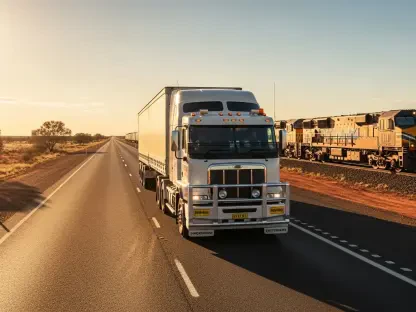
To protect margins when container shipping costs jump 40% year-on-year, we have to look toward extreme efficiency in inventory placement and autonomous decision-making. Since manufacturing output in advanced economies is at its weakest since 2009, we cannot rely on high-volume production to mask inefficiencies; instead, we use automation to improve data quality and reduce waste. We balance immediate costs by investing in cloud platforms that allow us to pivot logistics routes in real time, avoiding high-risk areas like the Red Sea before delays become expensive. This isn’t just about cutting spend; it’s about spending smarter on technologies like AI-driven insights that turn a 40% cost hike from a crisis into a manageable variable. By viewing resilience as a growth driver rather than a cost center, we ensure that our infrastructure remains flexible enough to handle the next inevitable spike in fuel or freight prices.
Most executives now view resilience as a primary growth driver rather than just a cost center. How are you integrating predictive analytics into daily workflows, and what challenges arise when trying to move from isolated data silos to a fully connected, real-time ecosystem?
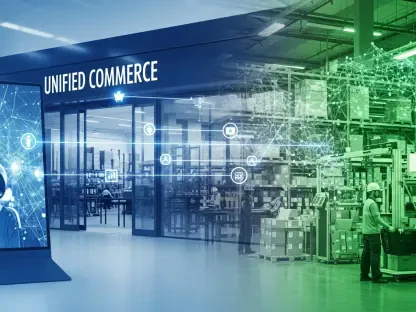
Integrating predictive analytics means moving away from a “what happened” mindset to a “what will happen” daily workflow. About 74% of senior executives now recognize that being able to anticipate a disruption is what allows for market share gains during a crisis. The biggest hurdle is breaking down the walls between suppliers, manufacturers, and partners to share data in real-time, which often uncovers uncomfortable truths about production bottlenecks. We tackle this by implementing connected networks where every stakeholder has a single version of the truth, moving away from isolated legacy systems. It’s a sensory shift for many teams—moving from the comfort of their own spreadsheets to a live, breathing ecosystem that demands constant adjustment and transparency.
Traceability and product authentication are now baseline requirements due to rising pressure from counterfeiting and new regulations. How can organizations utilize smart packaging to meet these demands, and what specific data points should be shared across the network to improve customer trust?
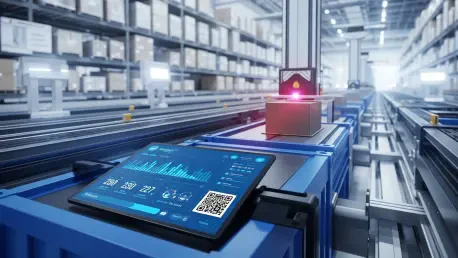
Smart packaging has evolved from a simple protective layer into a sophisticated digital tool for authenticity and consumer engagement. By embedding unique identifiers and smart labels, we provide a digital breadcrumb trail that allows customers to verify the origin and journey of their purchase with a simple scan. We prioritize sharing data points such as manufacturing timestamps, country-specific compliance markers, and real-time transit milestones across the network. This level of transparency effectively fights counterfeiting while also streamlining the process for potential product recalls. When a customer can see the entire history of their item, it transforms a standard transaction into a relationship built on verified trust and safety.
Disruptive events are now viewed as inevitable, shifting the focus toward constant foresight and ecosystem coordination. How has the role of C-suite leadership evolved to support these initiatives, and what does a successful scenario-planning exercise look like for a complex global operation?
The C-suite has transitioned from being reactive overseers to becoming the primary architects of organizational agility. It is no longer enough for a CEO to focus on quarterly earnings; they must now champion “digital foresight” and provide the capital needed for supply chain visibility platforms. A successful scenario-planning exercise involves running “war games” for events like Middle East conflicts, sudden wide-scale tariffs, or labor strikes to see exactly where the supply chain breaks. We bring together internal teams and external partners to simulate these disruptions, ensuring that everyone knows their role when the “what if” becomes “when.” This level of preparation ensures that the executive team is not caught off guard, allowing the company to react with precision rather than panic.
What is your forecast for supply chain volatility?
I believe that volatility is no longer an occasional storm to weather, but the permanent climate in which we must all operate. We are moving into an era of “structural volatility” where trade rules and geopolitical impacts will continue to change at a blistering pace, making the $400 billion trade shifts of last year look like just the beginning. Companies that fail to adopt autonomous supply chains and connected networks will likely struggle as manufacturing growth remains sluggish and logistics costs fluctuate wildly. However, those who embrace AI-driven insights and invest in deep traceability will find that this constant state of change actually offers a massive opportunity to outpace less-agile competitors. The future belongs to the orchestrators who can harmonize their global networks in real time, turning every disruption into a chance to refine their operations.