
A single steel box, indistinguishable from the millions afloat on the world’s oceans, holds a secret that could disrupt economies, compromise national security, or unleash an environmental disaster. This isn’t a hypothetical exercise; it is the high-stakes reality of modern global shipping, an industry where the integrity of one container among millions can have cascading consequences. The traditional model, built on competition and isolated data, has created critical blind spots for security, safety, and efficiency. As global trade becomes increasingly complex and interconnected, a fundamental question emerges: is an age-old competitive framework equipped to handle the systemic risks of today? The answer, materializing across boardrooms and regulatory bodies, points toward a transformative shift from rivalry to shared responsibility.
The Ticking Clock Inside the Box: When a Single Container Threatens Global Trade
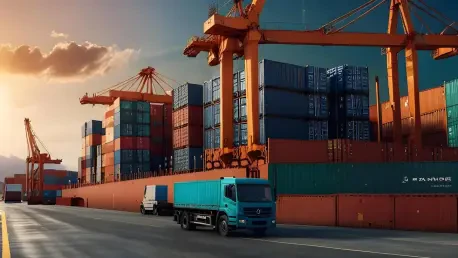
The scenario is as simple as it is terrifying: a container’s integrity is compromised mid-journey, its contents tampered with or replaced, and no one is aware until it is far too late. Whether it contains illicit narcotics, undeclared hazardous materials, or contraband that funds global instability, the compromised box represents a failure of visibility. In a system moving over 250 million containers annually, the inability to verify the status of a single unit in real-time is not a minor inconvenience; it is a profound vulnerability that threatens the entire network.
This vulnerability is a direct consequence of fragmented information. Historically, each participant in the supply chain—from the shipper and carrier to the port operator and customs agency—has maintained its own separate, often incompatible, set of records. This creates a digital fog where critical events, such as an unauthorized door opening or a sudden temperature deviation, go unnoticed or are reported too late to be actionable. The physical security of the container is undermined by the insecurity of its data trail.
Consequently, the global shipping industry is at an inflection point. The risks associated with these information gaps have grown too large to ignore, prompting stakeholders to question the sustainability of a model that prioritizes proprietary data over collective security. The reliance on a competitive structure, where visibility is treated as a closely guarded asset, is increasingly viewed as an anachronism in an era that demands transparency, predictability, and resilience.
From Guarded Secrets to Shared Responsibility: The Obsolescence of Data Silos
The old paradigm of container logistics was defined by a “stove-piped” approach to information. Tracking data was a proprietary tool, a competitive asset used by individual companies to optimize their own slice of the supply chain. This ecosystem was characterized by fragmented visibility, where shippers, ports, and government agencies operated with incompatible systems, each with a limited and often delayed view of a container’s journey. The focus was almost exclusively on simple asset tracking, answering the basic question: “Where is my box?”
However, mounting global pressures are rendering this isolated model obsolete. The imperative to combat sophisticated illicit trade, from drug trafficking to illegal shipments of sanctioned goods, has created a powerful incentive for greater transparency. Concurrently, the economic demand for more efficient and predictable supply chains has intensified. Businesses and consumers alike now expect a level of reliability that the old, fragmented system cannot consistently deliver, making resilience a key competitive differentiator. These dual forces of security and efficiency are forcing a strategic pivot toward a more integrated and collaborative framework.
The Anatomy of a Connected Supply Chain: Three Foundational Shifts
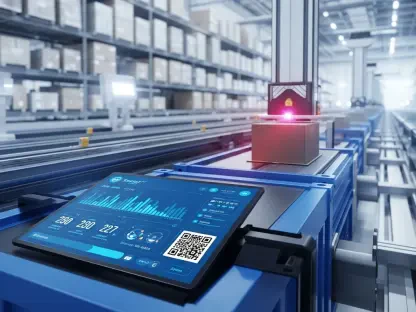
The first foundational shift is the evolution from isolated location pings to a shared intelligence network. The industry is moving beyond simply tracking a container’s location to cultivating “contextual intelligence.” This new standard involves answering complex, critical questions about cargo integrity, data synchronization, and regulatory compliance. For example, rather than just knowing a container is in the middle of the ocean, stakeholders can now verify its seal integrity in real-time, cross-referencing data from the shipper, carrier, and port authorities to ensure no unauthorized access has occurred. This transforms raw data into actionable intelligence.
A second major development is the elevation of telematics from a day-to-day operational tool to a C-suite strategic asset. Smart container technology is no longer the sole concern of logistics managers. Instead, the data it generates informs high-level decisions related to risk management, regulatory compliance, and corporate policy. This strategic repositioning connects telematics directly to overarching goals, such as bolstering national security by providing verifiable data to border agencies, facilitating smoother international trade by reducing inspection times, and reinforcing the resilience of critical infrastructure against disruptions.
Finally, public-private partnerships are emerging as the new industry standard. The collaboration extends beyond corporate alliances to include deep engagement between industry players, such as the Smart Container Alliance, and public bodies like regulators, border agencies, and international organizations like the EU. This model is built on an alignment of goals, where shared data is used to meet both commercial efficiency targets and public safety mandates. By establishing common protocols and data standards, these partnerships are transforming tracking from a tool for private benefit into a shared utility for smarter collective decision-making.
Evidence from the Front Lines: Forging Trust Between Competitors and Governments
This transition from theory to practice is exemplified by the proactive efforts of organizations like the Smart Container Alliance (SCA). Comprising industry leaders in telematics and container technology, the SCA demonstrates how direct competitors are setting aside rivalries to build a common framework for the future. Their work focuses on standardizing data and creating interoperable systems, acknowledging that the value of a connected supply chain can only be realized through collective action.
The significance of this movement was underscored at recent summits in Brussels, where industry representatives engaged directly with regulatory bodies and government agencies. These high-level discussions were not about technology pitches but about establishing common protocols for data sharing and defining mutual responsibilities. The agenda centered on creating a trusted environment where information from smart containers could be used to facilitate legitimate trade while flagging anomalies that warrant investigation, thereby aligning commercial and governmental objectives.
An overwhelming expert consensus has formed around this collaborative approach. Leaders across the shipping and technology sectors agree that cooperation is essential to accelerate the adoption of smart technology and build a foundation of trust across the entire supply chain. Early market entrants have recognized that, as with many emerging technologies, standardization and a unified approach are necessary to overcome fragmentation and unlock the full potential of a globally connected logistics network.
A Strategic Framework for a Collaborative Future: Building the New Ecosystem
The first principle in constructing this new ecosystem is to establish interoperability as a non-negotiable standard. This requires developing common data protocols and robust systems that permit the seamless and secure flow of information between different corporate platforms and national regulatory bodies. Without this technical foundation, any collaborative effort would remain fragmented, preventing the creation of a single, verifiable source of truth for a container’s journey.
Building on that foundation, the second principle is to redefine value by shifting focus from mere location to rich context. Investment and innovation must be directed toward technologies that provide a complete, verifiable history of a container’s journey, not just its current position on a map. This contextual intelligence—encompassing data on seal status, temperature, humidity, and shock events—is what transforms a smart container from a tracking gadget into a vital instrument for security and quality assurance.
Ultimately, the entire framework rests on a third principle: making trust the core commodity. By implementing transparent, shared data platforms, all stakeholders can rely on the same verifiable information. This shared reality fosters confidence, reduces disputes, and creates more dependable and resilient trade relationships. When trust is embedded in the system, the friction that has long defined global shipping begins to dissolve, replaced by efficiency and collective assurance.
The global shipping industry stood at a crossroads, where the legacy of competitive isolation clashed with the demands of an interconnected world. The adoption of a collaborative model, underpinned by shared intelligence and public-private partnerships, was not merely a technological upgrade but a fundamental reorientation of the industry’s operational philosophy. By moving beyond an era of guarded secrets, stakeholders collectively built a foundation of trust that enhanced security, improved efficiency, and fortified the resilience of global trade. This transformation proved that the future of shipping was not about owning data, but about sharing it responsibly.