
Zainab Hussain is a distinguished e-commerce strategist and operations management expert who has spent years at the intersection of retail technology and consumer engagement. With a career focused on how massive enterprises scale digital solutions, she offers a unique perspective on the complexities of modern food service fulfillment. Today, we sit down with her to explore how major restaurant brands are leveraging intelligent dispatch systems to bridge the gap between in-house operations and third-party delivery partners, ensuring that the promise of a hot meal arrives exactly when expected.
The conversation covers the evolution of the restaurant technology stack, specifically focusing on the shift toward unified delivery orchestration hubs that integrate with existing point-of-sale systems. We discuss the logic behind machine-learning dispatch, the logistical hurdles of national rollouts across thousands of locations, and the critical role of data visibility in protecting brand reputation.
Large-scale restaurant chains are moving toward unified delivery hubs to manage in-house and third-party drivers simultaneously. How does this central control change daily kitchen workflows, and what specific technical hurdles arise when syncing third-party fleet data with an existing point-of-sale system?
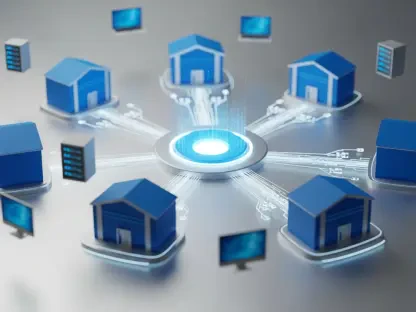
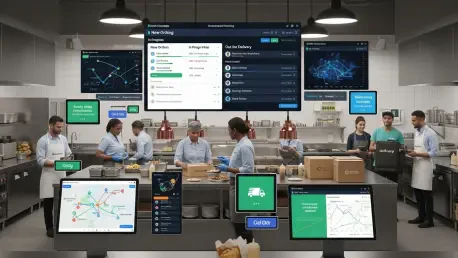
Transitioning to a unified delivery orchestration hub completely reimagines the kitchen’s pace because it removes the mental load of managing multiple tablets and fragmented screens. Instead of staff constantly pivoting between separate interfaces for in-house drivers and third-party aggregators, every order flows into a single, intelligent system that treats all fulfillment channels as one. The real technical hurdle lies in the “API-first” integration, where you must process millions of daily calls—sometimes upwards of 30 million—to ensure the point-of-sale system communicates flawlessly with external fleets. If the handshake between the store’s POS and the driver’s app lags by even a minute, it disrupts the entire batching sequence and leads to cold food or crowded pickup areas.
Intelligent routing systems now use machine learning to choose between internal staff or external delivery partners based on real-time conditions. Can you walk through the logic of these automated dispatch decisions and explain how this shift reduces manual errors for the in-store team?
The logic behind these automated decisions is driven by real-time variables like driver proximity, order volume, and current store capacity. For example, the system might automatically assign a high-priority order to an in-house driver who is two minutes away, or intelligently pivot to a third-party fleet if the local team is overwhelmed by a sudden surge. This machine-learning approach eliminates the “human guesswork” that often leads to manual errors, such as assigning a delivery to a driver who just left the premises or failing to batch orders that are headed to the same neighborhood. By removing these unnecessary manual handoffs, the in-store team can stay focused on food quality rather than logistics, while the system ensures the most efficient route is selected every single time.
Live visibility into driver locations and performance metrics is becoming a standard expectation for both managers and customers. What are the practical steps to ensuring these ETAs remain accurate across different delivery models, and how does this data influence long-term business decisions?
To keep ETAs accurate, you have to establish a continuous loop of data that bridges the customer, the in-store team, and the driver through a centralized interface. Managers need to see live driver locations and assignment statuses in real-time to adjust their prep times, ensuring that a pizza isn’t sitting under a heat lamp for fifteen minutes before a driver arrives. This level of visibility transforms from a tactical tool into a strategic asset because it allows leadership to analyze delivery performance metrics across thousands of locations. By looking at this data, an enterprise can identify which regions struggle with delivery times and decide where to invest in more in-house staff or where to lean more heavily on third-party partners to maintain brand standards.
Upgrading a national fulfillment stack often involves a multi-year, phased rollout across thousands of locations. What strategies are most effective for managing such a transition without disrupting current service, and what metrics should leadership prioritize to gauge the success of a new technology integration?
When you are modernizing a fulfillment stack across a massive U.S. footprint, a phased implementation—like the one being executed through 2027—is essential to mitigate operational risks. The most effective strategy involves starting with pilot locations to refine the certified integrations before pushing the software to the wider network, ensuring that the transition doesn’t stop the flow of revenue. Leadership must prioritize metrics such as “order-to-delivery” cycle times and the rate of “recovered lost revenue” to determine if the new tech is actually making the business more agile. If the system is working, you should see a measurable increase in operational efficiency and a decrease in the time orders spend waiting for a driver assignment.
Maintaining a consistent guest experience is difficult when delivery is split between first-party and third-party services. How do centralized platforms bridge the communication gap between the customer and the driver, and what role does API integration play in protecting brand reputation?
A centralized platform acts as the “connective tissue” that ensures a customer gets the same high-quality experience regardless of who is actually driving the car. By using a platform with over 1,000 certified integrations, a brand can push real-time status updates directly to the customer’s phone, keeping them informed from the moment the dough is tossed to the moment the doorbell rings. This transparency is vital for protecting brand reputation because it prevents the “black hole” of information that often occurs when an order is handed off to an external fleet. Without robust API integration, the brand loses control over the narrative; with it, they maintain ownership of the guest relationship and can proactively address delays before they result in a negative review.
What is your forecast for AI-powered delivery management?
I believe AI-powered delivery management will soon shift from reactive routing to predictive fulfillment, where systems anticipate demand spikes before they even happen. We are moving toward a future where more than 1 billion orders will be processed through these intelligent hubs, allowing restaurants to pre-position drivers and optimize kitchen prep based on localized historical data. This evolution will make delivery so seamless that the distinction between an in-house driver and a third-party partner will become invisible to the consumer. Ultimately, AI will allow national chains to operate with the agility of a small local shop while maintaining the massive scale required to serve millions of customers daily.