The Pocket-Sized Revolution in Retail
The traditional cash register, long the steadfast and bulky symbol of commerce, is facing an undeniable and comprehensive challenge from a device already in nearly every consumer’s pocket: the smartphone. The prevailing question is no longer if a phone can replace the cash register, but rather how completely and swiftly it will transform the entire landscape of retail and service industries. This article explores the inexorable rise of Mobile Point-of-Sale (mPOS) systems—sophisticated technology that turns ubiquitous smartphones and tablets into powerful, secure, and intelligent transaction hubs. Fueled by a global market projected to surge from an estimated $1.12 billion in 2024 to an impressive $2.75 billion by 2033, this remarkable shift signifies a fundamental and irreversible change in how businesses of all scales operate, compete, and grow. We will delve into the powerful macroeconomic forces driving this transformation, meticulously analyze the core capabilities making it not just possible but preferable, and look ahead to the imminent future of a truly mobile-first commercial world.
The rapid adoption of mPOS technology is not merely a trend; it is a direct response to a changed world. The ecosystem has become an indispensable tool, leveraging the processing power and connectivity of common consumer devices and converting them into sophisticated command centers for financial transactions, inventory management, and customer engagement. This evolution democratizes access to advanced commercial tools, allowing a level of operational agility that was once the exclusive domain of large corporations with substantial IT budgets. As businesses navigate the complexities of a digitally integrated economy, the mPOS platform stands out as a critical enabler of resilience, offering the flexibility to conduct sales in any environment—from a permanent storefront to a temporary pop-up shop, a bustling market stall, or a client’s own home. This adaptability is the cornerstone of the pocket-sized revolution, empowering merchants to create value and capture revenue wherever opportunity arises.
From Clunky Tills to Cloud-Connected Terminals: The Evolution of Point-of-Sale
To fully understand the significance of the mPOS revolution, one must first appreciate the severe limitations of the systems that came before it. For decades, commerce was physically and operationally tethered to bulky, expensive, and often complex cash registers and stationary point-of-sale terminals. These legacy systems created significant barriers to entry for small and mobile businesses, such as independent food trucks, craft market vendors, freelance service providers, and independent contractors, effectively locking them out of the formal digital economy. The initial setup costs were prohibitive, maintenance required specialized knowledge, and the hardware itself occupied valuable physical space, constraining the very nature of how and where business could be conducted. The current mPOS revolution, therefore, is propelled by a powerful convergence of global trends that directly address these historical shortcomings.
This profound industry-wide transition is driven by a confluence of interconnected forces. At the consumer level, there has been a decisive and widespread shift away from physical cash toward a diverse array of digital and cashless payment methods. Simultaneously, the explosive and unabated growth of e-commerce has conditioned customers to expect seamless, fast, and secure transactions in all their commercial interactions. This has created a strategic necessity for businesses of every size to offer a fluid omnichannel experience, where the lines between physical and online shopping are blurred. In this dynamic and highly competitive environment, mPOS solutions provide the essential agility, scalability, and cost-efficiency that modern businesses need not only to survive but to thrive. By unchaining the point of sale from a fixed location, these systems empower merchants to meet their customers wherever they are, turning every interaction into a potential transaction and every location into a possible storefront.
The Core Capabilities Driving the mPOS Transformation
Seamless and Swift: The Rise of Tap-to-Pay and Mobile Wallets
At the forefront of the mPOS movement is the modern consumer’s growing and non-negotiable demand for entirely frictionless transactions. The preference for contactless payment methods, which range from tap-to-pay credit and debit cards to sophisticated mobile wallets like Apple Pay, Google Pay, and Samsung Pay, has skyrocketed in recent years. This surge is fueled by their unparalleled speed, sheer convenience, and the enhanced hygiene they offer compared to handling cash or inserting a card. mPOS systems are perfectly engineered to meet and exceed this consumer expectation, enabling businesses of all sizes, from solo entrepreneurs to national chains, to offer a quick, secure, and seamless checkout experience that aligns with contemporary lifestyles.
This capability, however, extends far beyond simply speeding up the payment line at a traditional counter. It facilitates a powerful operational strategy known as “line busting,” where employees equipped with a mobile device can process sales anywhere on the shop floor or within a service area. During peak business hours, this dramatically improves customer flow, reduces wait times, and elevates overall satisfaction. For example, a restaurant can take payments directly at the table, a retail associate can finalize a purchase in the aisle, and an event vendor can process transactions throughout a venue. By removing the bottleneck of a fixed checkout point, mPOS technology transforms the customer experience from one of waiting and friction to one of efficiency and personalized attention, directly impacting customer loyalty and repeat business.
Empowering the Entrepreneur: Lowering Barriers for Small Businesses
Perhaps the most transformative and democratizing impact of mPOS technology is its ability to make secure and professional payment acceptance universally accessible. Historically, the high upfront capital investment and significant technical complexity associated with traditional POS systems were prohibitive for micro-merchants, sole proprietors, and nascent startups. These barriers often forced small businesses to operate on a cash-only basis, limiting their customer base and hindering their growth potential in an increasingly digital world. mPOS solutions have systematically dismantled these long-standing barriers with innovative, flexible, and astonishingly low-cost models that redefine the economics of starting and running a business.
This financial and technical liberation is achieved through several key innovations. Affordable subscription-based software models replace large, one-time license fees with manageable monthly payments. The utilization of cloud-hosted platforms entirely eliminates the need for expensive, difficult-to-maintain on-site servers, as data is securely stored and processed remotely. Furthermore, the advent of simple, user-friendly plug-and-play card readers—devices that can connect to a smartphone or tablet via Bluetooth or a headphone jack—has reduced the hardware investment to a nominal amount. This profound shift effectively levels the playing field, allowing independent artisans, mobile service professionals, and pop-up retailers to accept the full spectrum of digital payments and compete more effectively against larger, more established enterprises in an increasingly digital and competitive economy.
Beyond the Transaction: The Emergence of the Smart POS Hub
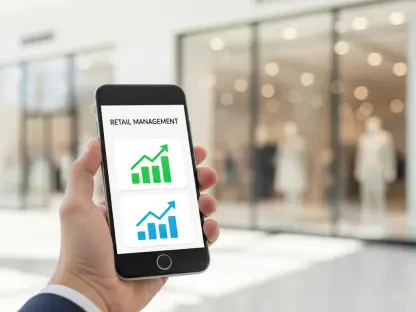
Modern mPOS platforms have evolved far beyond their original purpose as simple payment processing tools. They are now powerful, integrated business management hubs that offer a comprehensive suite of value-added services, turning the point of transaction into a point of intelligence. A critical trend in this evolution is the deep integration of Customer Relationship Management (CRM) tools, real-time inventory tracking systems, and sophisticated data analytics dashboards directly into the POS application. This convergence of functionalities provides merchants with a unified view of their entire operation, delivering actionable insights that can inform strategic decision-making and drive growth.
This transformation allows business owners to move from reactive management to proactive strategy. With integrated CRM, merchants can capture customer information at the point of sale, track purchase histories, and implement loyalty programs to foster repeat business. Real-time inventory tracking automatically updates stock levels with each sale, preventing stockouts of popular items and reducing overstocking of slow-moving products. Perhaps most powerfully, the data analytics capabilities can reveal crucial sales patterns, identify peak business hours, and highlight best-selling products. By centralizing these critical functions, mPOS systems are no longer just tools for completing a sale; they are strategic assets for optimizing operations, personalizing customer interactions, and charting a clear path toward sustainable business growth and enhanced efficiency.
The Next Wave: Innovations Shaping the Future of Mobile Commerce
The evolution of mPOS technology is not slowing down; in fact, it is accelerating, driven by relentless technological advancement and innovation. Cloud computing provides the essential backbone for this progress, enabling real-time synchronization of transaction data, inventory levels, and customer information across countless devices and locations, which ensures data consistency and immediate accessibility from anywhere. Meanwhile, security, a paramount concern for both merchants and consumers, is being continuously hardened with increasingly sophisticated features. Technologies like biometric authentication, including fingerprint and facial recognition, add a robust layer of user verification, while payment tokenization replaces sensitive credit card data with a unique, non-reusable digital token, rendering transaction data useless to potential fraudsters.
Looking forward, the integration of Artificial Intelligence (AI) and Machine Learning (ML) promises to unlock even more sophisticated and automated capabilities. These technologies will enable predictive sales forecasting based on historical data and external factors like weather or local events, as well as hyper-personalized marketing delivered directly to a customer’s device at the point of sale. Perhaps the most disruptive innovation currently on the horizon is “tap-to-phone” technology, also known as Software POS (SoftPOS). This groundbreaking development enables standard, off-the-shelf smartphones to accept contactless payments without requiring any additional hardware dongles or readers. This innovation lowers the entry barrier to virtually zero, further solidifying the phone’s central role as the ultimate, all-in-one commerce tool for businesses of any size.
Making the Switch: Strategic Considerations for Adopting mPOS
For businesses considering the transition from traditional systems to a mobile-first approach, the potential benefits are clear and compelling: enhanced mobility to sell anywhere, significantly lower operational and upfront costs, and access to powerful data for smarter decision-making. However, making the right choice in a crowded market requires careful and strategic consideration. The first and most critical step is to perform a thorough assessment of your specific business needs. This involves identifying the types of payments you need to accept (e.g., contactless, chip, magstripe, mobile wallets), the complexity of your inventory, and the level of customer management required to support your business model. A small coffee cart has vastly different needs than a multi-location boutique with an integrated e-commerce site.
Once needs are defined, key factors in selecting a provider should be carefully evaluated. The robustness of their security protocols is non-negotiable; look for PCI compliance, end-to-end encryption, and advanced fraud detection. The scalability of the platform is also vital—the right solution should be able to grow with your business, seamlessly accommodating more products, employees, and locations over time. Critically, consider its ability to integrate with other essential business software, such as accounting platforms, e-commerce storefronts, and marketing automation tools, to create a cohesive operational ecosystem. Finally, evaluating the fee structure is crucial to ensure it aligns with your sales volume and business model. Whether it is a flat rate per transaction, a tiered percentage-based fee, or a monthly subscription, understanding the total cost of ownership is essential for making a financially sound decision.
The Final Verdict: Is the Cash Register Obsolete?
The evidence is overwhelming and conclusive: the phone has not only proven that it can effectively replace the cash register but has also vastly expanded the very concept of a point of sale. It has successfully transformed a static, single-purpose countertop machine into a dynamic, intelligent, and supremely mobile commerce platform that resides in the palm of your hand. By breaking down long-standing financial and technical barriers for small businesses, streamlining complex operations for established enterprises, and perfectly aligning with modern consumer expectations for speed, convenience, and security, mPOS technology has firmly cemented its place as an indispensable tool in the modern commercial toolkit. Its impact is not just about processing payments more efficiently; it is about fundamentally re-imagining the interaction between a business and its customer.
As technology continues its relentless march forward, the humble smartphone is set to become an even more integrated and powerful hub for every facet of commerce, from marketing and sales to logistics and customer service. The ongoing integration of AI, the simplification of payment acceptance through technologies like tap-to-phone, and the deeper connection with broader digital ecosystems ensure that its role will only expand. The cash register served its purpose for over a century, but its era is definitively drawing to a close. The future of retail and service is not just mobile—it is already here, and it is in your hand.