
As an e-commerce strategist and operations expert, Zainab Hussain has spent years dissecting the vulnerabilities of global supply chains. From the high-stakes world of rare wine auctions to the everyday complexity of the grocery aisle, she understands how criminal networks exploit the gap between consumer trust and corporate oversight. In this discussion, we explore the rising tide of “economically motivated adulteration”—a $40 billion global problem—and the sophisticated technologies being deployed to reclaim integrity in everything from vintage Bordeaux to the scallops on your dinner plate.
The following conversation examines the intricate mechanics of food fraud, the failure of traditional regulatory oversight, and the specific laboratory and logistical protocols required to protect retail brands and consumer safety in an increasingly deceptive marketplace.
With organizations like Interpol suggesting that 20 percent of wine in global circulation may be counterfeit, how can high-end collectors distinguish a genuine vintage from a sophisticated fake? Could you detail the specific chemical or physical red flags to look for when inspecting corks, labels, and bottle glass?
Authentication is essentially a forensic arms race because fraudsters have turned counterfeiting into a literal art form. When inspecting high-end bottles, we look for “ghost” collections—rare vintages that may never have actually existed in the quantities being sold. You must scrutinize the physical markers: a genuine vintage cork should show natural aging and branding that matches the estate’s historical records, whereas fakes often use modern corks artificially stained with tea or wine to mimic age. On the glass, check for the correct punt depth and historical glass-blowing imperfections; sophisticated fakers often reuse genuine old bottles but fail to match the original lead capsules or specific paper weight of the labels. Given that investigators in China estimate up to 70 percent of imported Lafite Rothschild is counterfeit, collectors should also look for “carbonated” red flags, such as in the 2026 UK seizure where cheap sparkling wine was passed off as Prosecco.
Reports indicate that over 60 percent of extra virgin olive oil sold in the United States is fraudulent, often adulterated with seed oils and chlorophyll. What specific steps should a retail category manager take to verify a supplier’s claims? Please walk through the laboratory tests that effectively identify these molecular-level alterations.
A retail category manager must treat every bottle of EVOO as a potential crime scene, especially since 62.5 percent of U.S. products and up to 80 percent of Italian imports are suspect. To verify claims, you must move beyond simple taste tests and demand independent certification and harvest-date labeling, which are now essential table stakes. In the lab, we use gas chromatography and mass spectrometry to detect vegetable oils, but the most dangerous fraudsters now alter products at a molecular level to bypass standard checks. You must specifically look for the presence of chlorophyll and beta-carotene used to tint seed oils, as well as the 15 percent discrepancy rate often found in “Italian” oils that are actually low-grade pomace or EU-origin blends. The most effective protocol involves auditing the entire volume—like the 340,000 kilograms seized in Bari—to ensure the registered output matches the supplier’s actual orchard capacity.
Despite advanced testing, new syrup markers are being developed by fraudsters to bypass standard purity checks in the honey industry. How are detection technologies evolving to keep pace with these “novel” adulteration methods? What specific metrics or isotope ratios are currently considered the gold standard for verifying raw honey origin?
The honey industry is currently grappling with a “honey trap” where the violation rate for imports has reached as high as 10 percent in recent years. The gold standard for verification is Stable Carbon Isotope Ratio Analysis (SCIRA), which detects C4 sugars from corn or sugarcane that don’t belong in bee-produced honey. However, by late 2024, we began seeing “novel” syrup markers—previously unknown adulteration methods designed to be invisible to SCIRA. To counter this, detection technology is evolving toward nuclear magnetic resonance (NMR) profiling, which creates a “fingerprint” of the honey to identify if bees were fed sugar syrup outside of good beekeeping practices. This proactive testing is critical because fraudsters are constantly shifting between rice, wheat, and beet syrups to stay one step ahead of mandatory testing updates.
In the seafood industry, low-cost fish like tilapia or surimi are frequently substituted for premium items like red snapper or scallops. What are the economic and health implications of this “bait and switch” for a restaurant brand? Please share a step-by-step protocol for implementing DNA testing within a complex global supply chain.
The economic implications are staggering, with tilapia being sold as red snapper at a price markup of up to 244 percent. For a restaurant brand, the health risks are even more severe; for instance, escolar is frequently sold as “white tuna,” but it contains gempylotoxin which causes significant gastrointestinal distress. To implement DNA testing, first, you must sample at the “dock” and “processing plant” stages, as these are the primary points of deception. Second, use DNA barcoding to compare sequences against the FAO’s database of 12,000 aquatic species to catch “scallop” substitutes made of surimi or even stingray. Third, establish a “chain of custody” digital log that follows the fish from the boat to the distributor, ensuring that the 39.1 percent mislabeling rate common in the U.S. doesn’t infiltrate your specific menu.
Spices and cheeses are often padded with fillers like Sudan dye, olive leaves, or excess cellulose to increase profit margins. Beyond simple price signaling, what specific auditing techniques can prevent these substances from reaching supermarket shelves? Can you share an anecdote regarding a successful intervention in a high-risk spice supply chain?
Auditing must go beyond the balance sheet to include physical microscopy and chemical “spot checks” for illegal colorants. In the spice trade, we’ve seen successful interventions where high-risk paprika shipments were screened specifically for Sudan dye, a carcinogenic industrial colorant used to hide the presence of fillers. I recall a case where a major retailer’s proactive audit of “oregano” revealed it was heavily padded with myrtle and olive leaves, leading to a complete overhaul of their Mediterranean sourcing. Similarly, for Parmesan cheese, we now audit for cellulose filler levels; while some is allowed for anti-clumping, fraudsters often exceed regulatory limits to pad their margins. These interventions work best when retailers demand that price is treated as a signal—if your “premium” saffron is priced near the cost of corn stigmas, the audit should be automatic.
With less than one percent of seafood imports currently being tested, the regulatory gap remains a significant incentive for criminal activity. How can private-sector retailers collaborate with federal agencies to improve these oversight metrics? Please describe the logistics and costs involved in transitioning from reactive inspections to a proactive, tech-driven monitoring system.
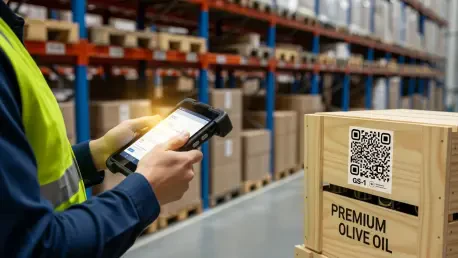
The current one percent testing rate is essentially an open invitation to criminal networks like the ‘Ndrangheta. Retailers can bridge this gap by sharing their private DNA testing data and supply chain audits with agencies like the FDA or NOAA to help create a “heatmap” of high-risk regions. The logistics of moving to a proactive system involve integrating GS-1 QR codes at the point of origin, which costs more upfront in terms of labor and hardware but reduces the “reputational damage” costs that occur during a scandal. While a reactive inspection might cost a few hundred dollars per batch after a problem is found, a tech-driven system requires an ongoing investment in blockchain-enabled traceability, which pays for itself by preventing the $40 billion annual loss currently attributed to food fraud. By voluntarily submitting products for inspection, as some do with NOAA, private companies can create a “trusted trader” status that speeds up legitimate logistics.
Emerging tools like blockchain, GS-1 QR codes, and harvest-date labeling are being touted as solutions to food fraud. How do these technologies function in a high-volume warehouse environment, and what are the practical trade-offs during implementation? Please elaborate on the data points that are most critical for ensuring absolute traceability from farm to fork.
In a high-volume warehouse, GS-1 QR codes function as a digital passport that can be scanned instantly, providing more data than a traditional 1D barcode ever could. The practical trade-off is the “speed vs. accuracy” hurdle; workers must be trained to ensure every pallet’s digital twin is updated, which can slow down throughput initially. The most critical data points for absolute traceability are the “point of harvest,” the “processing facility ID,” and the “mass balance” (ensuring the amount of product leaving a facility doesn’t exceed what entered). Blockchain acts as the immutable ledger for this data, preventing a distributor from “diluting” a shipment of wild Pacific salmon with farmed Atlantic salmon, a switch that currently costs consumers nearly $10 more per kilogram.
What is your forecast for food fraud?
My forecast is that we are entering an era of “Total Transparency” where the shadow of food fraud will be squeezed out by consumer-led demand for data. Fraudsters will continue to get more sophisticated—using synthetic biology to mimic honey isotopes or high-end chemical dyes—but the falling cost of DNA and isotope testing will eventually make deception unprofitable. Within the next five years, I expect that a lack of verifiable, farm-to-fork digital data will be viewed by consumers as a “guilty until proven innocent” signal. The companies that survive the next decade will be those that treat food integrity not as a legal compliance hurdle, but as the very foundation of their brand identity. The “detective work” will shift from the laboratory to the smartphone in every shopper’s hand.