
Radio frequency identification systems are becoming essential tools for maintaining near-perfect stock visibility and reducing instances of phantom inventory in stores. In the current retail climate of 2026, the Asia-Pacific region has emerged as a primary engine of global innovation, transforming traditional storefronts into highly efficient, data-driven hubs. This rapid evolution is not merely a response to local competition but a fundamental restructuring of the retail value chain. From the initial manufacturing stages to the final point of sale, automation is being integrated at an unprecedented scale. Recent market valuations suggest that the retail automation sector in the “Rest of Asia-Pacific” was positioned at approximately $2,653.4 million in 2024. As the market moves through 2026 and toward the end of the decade, it is projected to reach a staggering $5,070.9 million by 2029. This growth represents a robust appetite for modernization among regional businesses, driven by the need for precision in inventory management and the desire to minimize revenue leakage. The shift from manual labor to automated systems like high-speed point-of-sale terminals and interactive kiosks is providing retailers with the granular data necessary to survive in a volatile global economy. With a compound annual growth rate of 13.8%, this region is significantly outpacing the global average of 9.9%, cementing its status as the most lucrative target for international technology vendors and institutional investors seeking high-growth opportunities.
Growth Catalysts and Market Evolution
Economic Shifts: Labor Costs and Demographic Changes
The economic landscape of the Asia-Pacific region is undergoing a profound transformation as emerging economies move away from their historical reliance on low-cost manual labor. In countries where inexpensive human staff once performed repetitive tasks, rising minimum wages and a shrinking workforce have forced a pivot toward mechanical and digital solutions. Retailers are finding that automation is the only viable path to maintaining healthy profit margins while simultaneously addressing the demands for higher compensation from the remaining workforce. This economic pressure has accelerated the deployment of self-checkout systems and automated inventory scanning, which allow businesses to reallocate human talent to more complex, customer-facing roles. Furthermore, the rapid expansion of the middle class across Southeast Asia and the Indian subcontinent has created a new demographic of shoppers who prioritize speed over traditional service models. These consumers are increasingly comfortable with automated interfaces, viewing them as a means to bypass long queues and streamline their daily routines. The convergence of rising operational costs and a shifting labor demographic has made the transition to automated infrastructure a matter of survival rather than a luxury for major retail chains.
Consumer Behavior: The Demand for Seamless Omnichannel Shopping
Modern shoppers in the Asia-Pacific region have become some of the most technologically sophisticated in the world, expecting a seamless transition between their digital and physical shopping experiences. This “omnichannel” expectation requires retailers to synchronize their online storefronts with physical stock in real-time, a feat that is impossible without deep automation. Whether a customer is browsing a smartphone app or walking through a brick-and-mortar aisle, they demand consistent pricing, personalized recommendations, and immediate product availability. To meet these needs, retailers are adopting integrated digital platforms that connect front-end sales data with back-end logistics. This shift is particularly evident in densely populated urban centers where rapid urbanization has intensified the demand for convenience. Automated solutions such as smart lockers for order pickups and autonomous checkout kiosks have become staples of the metropolitan shopping experience. These technologies cater to the busy lifestyles of city dwellers who have rising disposable incomes and a low tolerance for friction in their transactions. By providing a synchronized service model, retailers are not only increasing customer loyalty but also gathering valuable behavioral data that can be used to refine marketing strategies and optimize product assortments for specific local neighborhoods.
Technological Advancements: Artificial Intelligence and Cloud Infrastructure
The widespread adoption of Artificial Intelligence and cloud computing has acted as a primary catalyst for the expansion of the retail automation market. AI-powered tools are now capable of managing stock replenishment with a level of accuracy that far exceeds human capabilities, predicting demand spikes based on weather patterns, local events, and historical sales data. These sophisticated algorithms are no longer reserved for the largest global corporations; the rise of affordable cloud-based platforms has made high-level analytics accessible to retailers of all sizes. Smart shelving systems equipped with weight sensors and cameras can now automatically alert management when a product is running low or if an item has been misplaced. This technological backbone allows for a “lean” retail operation where waste is minimized and efficiency is maximized. As cloud infrastructure continues to mature across the region, the latency of these systems has dropped significantly, enabling real-time processing of massive datasets. This ensures that the insights generated by AI are actionable in the moment, allowing store managers to make immediate adjustments to staffing or promotions. The democratization of these high-tech tools is leveling the playing field, allowing smaller regional chains to compete with global giants by optimizing their operations through digital intelligence.
Physical Systems: Robotics and Warehouse Fulfillment
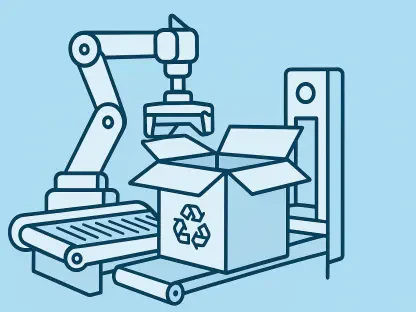
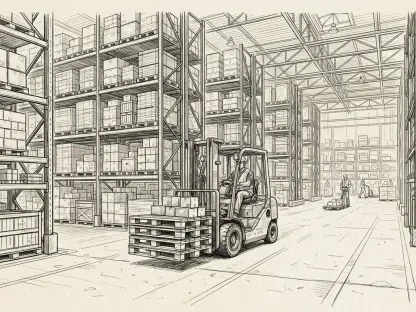
In the era of rapid e-commerce growth, robotics and autonomous systems have become essential components of the retail supply chain, particularly for high-speed warehouse fulfillment. The pressure to provide same-day or next-day delivery has rendered manual picking and packing processes obsolete in large-scale operations. Automated guided vehicles and specialized picking robots are now standard features in modern distribution centers, ensuring that orders are processed with a degree of speed and accuracy that manual systems cannot replicate. These robots are designed to navigate complex warehouse environments, identifying and retrieving items with minimal human intervention. This not only speeds up the fulfillment cycle but also significantly reduces the errors that commonly lead to costly returns and customer dissatisfaction. Beyond the warehouse, autonomous mobile robots are beginning to appear on the retail floor, assisting with inventory counts and even guiding customers to specific products. These systems are becoming increasingly collaborative, working safely alongside human employees and shoppers. The integration of these physical automated systems is critical for managing the sheer volume of transactions generated by the regional e-commerce boom. As the technology continues to advance, the cost of these robotic systems is decreasing, making them a standard investment for any retailer looking to scale their operations in 2026 and beyond.
Market Segmentation and Competitive Dynamics
Segmenting the Industry: Warehouse and In-Store Modernization
The retail automation market is currently divided by implementation type, with warehouse automation leading the sector due to the explosive growth of online shopping. However, in-store technology is rapidly catching up as traditional brick-and-mortar establishments seek to modernize their physical locations to remain competitive against digital-only players. This segment of the market includes everything from smart mirrors in apparel stores to automated deli slicers in grocery chains. The goal is to enhance the physical shopping experience while gathering the same level of data that an e-commerce site would collect. Retailers are finding that by automating the more mundane aspects of the in-store experience, they can focus on creating experiential environments that draw customers back to physical locations. The market is also segmented by retail format, with non-food retail stores—such as those specializing in electronics, apparel, and home goods—emerging as the fastest-growing adopters. These sectors are particularly well-suited for automation because their products are often high-value and require precise tracking. By implementing advanced automation, these retailers can differentiate themselves in a crowded marketplace, offering a high-tech shopping environment that appeals to the modern consumer’s desire for novelty and efficiency.
Mobile Robotics: The Evolution of Collaborative Systems
The technological ecosystem of the Asia-Pacific retail market is transitioning from passive, fixed tools to more intelligent, autonomous mobile robots and collaborative systems. These “cobots” represent the next frontier of retail efficiency, as they are designed to work in tandem with human staff rather than replacing them entirely. In a typical 2026 retail environment, a cobot might handle the heavy lifting and repetitive stocking of shelves, while a human employee focuses on providing expert product advice to a customer. This collaborative approach creates a more efficient and self-learning retail environment where the strengths of both machines and humans are utilized. These systems are equipped with advanced sensors and machine learning capabilities that allow them to adapt to changing store layouts and customer traffic patterns in real-time. As these robots collect data on every interaction, they contribute to a broader pool of intelligence that helps the retailer understand flow patterns and shelf performance. This transition to mobile, intelligent automation is particularly important for large-format stores where manual inventory management is notoriously difficult and prone to error. The shift toward these autonomous systems is a clear indicator that the industry is moving away from static automation toward a more dynamic, responsive model that can handle the complexities of modern retail operations.
Competitive Landscape: Tech Giants and Industrial Specialists
The competitive environment in the Asia-Pacific retail automation market features a strategic blend of global technology giants and specialized industrial firms. Large software companies like Microsoft and SAP provide the foundational data backbones and cloud environments necessary to run complex automation suites. These firms focus on the “software-as-a-service” model, offering retailers the tools to manage their data, predict trends, and integrate various automated systems into a single dashboard. On the other side of the spectrum, industrial specialists like Zebra Technologies and Honeywell focus on the physical hardware, providing the sensors, scanners, and robotic components that interact with the physical world. This partnership between software and hardware providers is crucial for creating a cohesive automation ecosystem. For instance, a Honeywell sensor might track a product’s movement, but it is SAP’s software that analyzes that movement to suggest a change in store layout. This synergy allows retailers to build comprehensive automation strategies that cover every aspect of their business. As the market grows, these companies are increasingly forming alliances to offer “end-to-end” solutions, making it easier for retailers to adopt a full suite of automated tools without having to manage multiple different vendors or deal with compatibility issues between different hardware and software platforms.
Local Innovation: Addressing Cultural and Regulatory Needs
In addition to the global giants, a new wave of regional innovators is emerging, offering localized solutions that address the specific cultural, linguistic, and regulatory needs of the Asia-Pacific market. These local players often focus on providing cost-effective “smart retail” infrastructure tailored for smaller, local chains that may not have the capital to invest in massive global platforms. For example, a startup in Jakarta might develop an automated payment system that integrates with local digital wallets that are unique to the Indonesian market, providing a level of localization that a global firm might overlook. These regional players are also more adept at navigating the complex regulatory environments of different Asian countries, ensuring that their automation solutions comply with local data privacy laws and labor regulations. This localized approach is particularly effective in the “Rest of Asia-Pacific” segment, where market conditions can vary wildly from one country to the next. For institutional investors and stakeholders, these regional innovators represent a high-growth opportunity, as they are often the first to capture the market in secondary cities and emerging urban centers. The presence of these local firms ensures that the retail automation market remains diverse and competitive, preventing any single global entity from dominating the entire regional landscape.
Future Outlook and Strategic Research
Methodology: Ensuring Data Integrity and Real-World Accuracy
The projections for the Asia-Pacific retail automation market reaching $5 billion by 2029 are grounded in a rigorous research process designed to eliminate bias and ensure accuracy. This methodology combines extensive secondary data from annual corporate reports and government trade statistics with primary research involving direct communication with industry insiders. By conducting interviews with C-level executives and operations managers at major retail firms, analysts have been able to capture the real-world challenges and opportunities that do not always appear in financial statements. This primary data provides a qualitative layer to the quantitative forecasts, allowing for a deeper understanding of why certain technologies are being adopted faster than others. The research also involves a detailed analysis of the supply chain for automation components, ensuring that the growth projections are supported by the manufacturing capacity of hardware providers. This comprehensive approach ensures that the $5 billion forecast is not just an optimistic guess but a calculated projection based on current market behavior and verified investment plans. By triangulating data from multiple independent sources, the research provides a balanced view of the 2024–2029 period, offering stakeholders a reliable roadmap for their long-term strategic planning.
Analytical Approaches: Top-Down and Bottom-Up Forecasting
To maintain the highest level of accuracy in the $5 billion market forecast, analysts utilized both top-down and bottom-up research approaches. The top-down approach involved analyzing the total economic output of the retail sector in the Asia-Pacific region and estimating the percentage of that revenue that will be reinvested into automation technology. This provided a macro-level view of the market’s potential ceiling and identified the overarching economic trends driving investment. Conversely, the bottom-up approach focused on individual companies and specific technology segments, aggregating their reported revenues and growth targets to build a picture of the market from the ground up. By comparing these two distinct methodologies, analysts were able to identify discrepancies and refine their models to account for nuances in different regional markets. This dual-lens perspective is essential for capturing the complexity of a market as diverse as the Asia-Pacific, where a high-tech hub like Singapore might have very different investment patterns than an emerging market like Vietnam. The resulting data set offers a granular look at the market, allowing investors to see not only the total valuation but also which specific technologies and countries are expected to contribute most to the final $5 billion figure by 2029.
Market Barriers: Cost Constraints and the Rise of Service Models
Despite the overwhelmingly positive outlook for retail automation, significant barriers remain, particularly for smaller retailers who face high initial capital requirements. The cost of implementing advanced robotics or a full-scale AI inventory system can be prohibitive for independent businesses or smaller regional chains. However, this challenge has led to the emergence of “Automation-as-a-Service” (AaaS), a business model that is democratizing access to high-end technology. Under this model, retailers can lease robotic systems or subscribe to AI platforms with a monthly fee, rather than paying a massive upfront cost. This shift in the financial structure of the market is allowing smaller players to modernize their operations and stay competitive with larger entities. Additionally, the integration of legacy systems remains a technical hurdle for many established retailers. Many companies are still using older point-of-sale software that does not easily communicate with modern AI tools. To overcome this, there is a growing market for “middleware” solutions that act as a bridge between old and new technologies. As these service models and integration tools become more sophisticated, the barriers to entry are steadily falling, leading to a broader and more inclusive adoption of automation across the entire retail spectrum in the Asia-Pacific region.
Future Directions: Dark Stores and Hyper-Personalization
Looking toward the conclusion of the decade, the industry expects a surge in the development of “dark stores” and a move toward hyper-personalized shopping experiences. Dark stores are retail locations that are closed to the public and dedicated solely to fulfilling online orders. These facilities are designed from the ground up for maximum automation, with robots handling nearly all picking and packing tasks. This model allows retailers to place fulfillment centers closer to urban customers, significantly reducing delivery times. Meanwhile, on the customer-facing side, AI is moving toward a level of hyper-personalization that was previously impossible. By analyzing a customer’s real-time movements and historical preferences, AI systems will soon be able to send personalized offers directly to a shopper’s smartphone as they walk past a specific product on the shelf. This “proximity marketing” represents the ultimate convergence of data and physical retail, creating a highly tailored experience that maximizes the probability of a sale. The development of these trends suggests that the retail environment of 2029 will be vastly different from the one seen at the start of the decade, with automation serving as the foundational requirement for any business that hopes to remain relevant in a hyper-competitive, tech-driven marketplace.
Strategic Pathways for Long-Term Implementation
The transition toward a $5 billion market by 2029 was built on the strategic decisions made by regional leaders to prioritize digital infrastructure over traditional expansion. Successful retailers recognized early on that the primary challenge was not just acquiring technology, but integrating it into a cohesive operational strategy that balanced efficiency with customer experience. They moved away from piecemeal automation projects and instead adopted comprehensive platforms that unified their supply chains, inventory management, and customer relations. This holistic approach allowed businesses to achieve a return on investment much faster than those that implemented isolated solutions. By the time the market reached its current state in 2026, the most effective organizations had already established robust data governance policies and invested in training their workforce to operate alongside sophisticated robotic systems. These firms successfully navigated the complexities of labor shifts and rising costs by viewing automation as a tool for empowerment rather than just a cost-cutting measure.
For retailers currently looking to capitalize on the remaining growth through 2029, the focus must shift toward scalability and regional adaptability. It was proven that the most successful implementations were those that allowed for localized adjustments, catering to the specific payment preferences and shopping habits of different Asian cultures. Moving forward, stakeholders should prioritize investments in interoperable systems that can easily adapt to new AI developments and sensor technologies. The era of static retail is over; the future belongs to those who developed agile, automated ecosystems capable of responding to market shifts in real-time. By focusing on Automation-as-a-Service models to lower entry barriers and adopting “dark store” strategies for urban logistics, businesses positioned themselves to dominate the regional landscape. The lessons learned during this period of rapid expansion provided a clear blueprint for success: prioritize data integrity, embrace collaborative robotics, and always maintain a focus on the evolving needs of the tech-savvy consumer. These actions ensured that the region did not just hit its $5 billion target but set a new global standard for the future of the retail industry.