
The dream of a frictionless global marketplace has long been hindered by the staggering reality of high operational overhead and the daunting complexity of navigating foreign consumer behaviors. While traditional expansion required massive teams and local expertise, the emergence of integrated AI platforms like mliveo has fundamentally shifted the paradigm toward an automated, borderless economy. This evolution marks a transition from simple digital storefronts to autonomous ecosystems that manage everything from cultural nuances to complex supply chain logistics without human intervention.
Unlike earlier iterations of automation that focused solely on back-end efficiency, this modern approach leverages generative intelligence to bridge the human gap in international sales. By shifting the industry toward a seamless, 24/7 environment, technology providers are removing the “scaling tax” that once prevented smaller enterprises from competing on a global stage. The result is a dynamic market where software-driven agility replaces the slow, manual processes of the past.
Foundational Technological Modules of AI-Powered Platforms
AI LiveHost: Real-Time Multilingual Interaction
The AI LiveHost module represents a departure from static video content by deploying virtual hosts that generate compliant, culturally relevant scripts in real-time. This technology does more than just translate; it adapts the tone, slang, and promotional style to fit specific regional demographics, ensuring that the interaction feels authentic rather than mechanical. This capability is critical for maintaining engagement in high-velocity markets where consumer trust is built through constant, live communication.
By lowering the barrier to entry for live commerce, these virtual avatars allow brands to maintain a 24-hour presence without the logistical nightmare of hiring multilingual staff or managing various shifts. The system processes audience inquiries and provides instant feedback, creating a conversational loop that mirrors the efficacy of a human salesperson. This level of responsiveness is what differentiates these platforms from traditional e-commerce, as it actively converts passive viewers into active buyers.
B2B Insight Graph: Predictive Sourcing Engines
Modern global trade success depends less on gut feeling and more on the B2B Insight Graph, a data-driven engine that analyzes global consumption patterns to forecast demand. This module aggregates vast amounts of market intelligence to identify which products are likely to trend before they peak, allowing sellers to optimize their inventory selection. Instead of a “spray and pray” approach, businesses use these predictive metrics to allocate resources toward high-conversion items, significantly reducing the risks of overstocking or missing a market window.
The real power of this engine lies in its ability to synthesize fragmented data points into actionable strategies. For instance, it can detect a surge in demand for specific electronics in one region and suggest a supply chain pivot before competitors even notice the shift. This intelligence layer acts as a strategic advisor, transforming raw market data into a roadmap for international expansion that prioritizes profitability over mere presence.
Integrated Global Fulfillment: Logistics Transparency
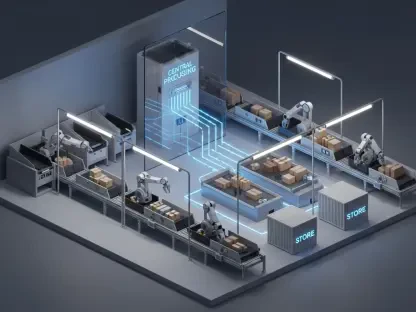
The Trusted Drop Network serves as the physical backbone of these AI ecosystems, providing a fulfillment infrastructure that matches the speed of the digital sales engine. By integrating real-time data tracking, the network ensures that the supply chain remains transparent from the warehouse to the customer’s doorstep. This reliability is vital in cross-border trade, where shipping delays and opaque logistics have historically been the primary causes of customer dissatisfaction and lost revenue.
Furthermore, this integrated approach synchronizes sales data directly with fulfillment centers, automating the entire order-to-delivery pipeline. When a virtual host completes a sale, the logistics module immediately triggers the shipping process, selecting the most efficient route based on current global shipping conditions. This synergy between AI-driven sales and physical distribution creates a closed-loop system that minimizes human error and maximizes operational throughput.
Emerging Trends in Automated International Sales
The industry is currently witnessing a decisive move away from manual hosting toward 24/7 automated livestreaming, a shift that effectively eliminates the traditional “trial-and-error” costs for sellers. Previously, entering a new market required a significant upfront investment in market research and localized talent; however, AI now allows for rapid market validation through automated experimentation. Sellers can test multiple product categories and messaging styles simultaneously across different time zones to see what resonates.
Moreover, the rise of co-creation initiatives and Beta programs has enabled brands to refine their offerings based on real-world data before a full-scale launch. These programs foster a collaborative environment where AI systems learn from initial market reactions, adjusting their strategies in real-time. This iterative process ensures that by the time a product reaches mass distribution, its market fit has already been mathematically validated, drastically increasing the likelihood of success.
Practical Applications and Industry Adoption
In the current landscape, industries such as consumer electronics, beauty, and home goods have become the primary testing grounds for these autonomous systems. These sectors benefit from high visual appeal and frequent product updates, making them ideal for AI-driven livestreaming. For example, a consumer electronics brand can use virtual hosts to demonstrate technical features in five different languages simultaneously, reaching a diverse global audience without any additional overhead for each new region.
Small and medium enterprises (SMEs) are leveraging this automation to maintain a global digital presence that was previously reserved for multinational corporations. By utilizing 24/7 automated sales environments, a small boutique can effectively compete in different time zones, capturing revenue while the physical team is offline. This democratization of global trade tools means that the size of a company’s staff no longer dictates the size of its international footprint.
Overcoming Barriers to Widespread Adoption
Despite the rapid advancements, the technology faces significant hurdles, particularly regarding international regulatory compliance and fragmented global supply chains. Navigating the varying legal requirements for digital content and data privacy across multiple jurisdictions remains a technical challenge that requires constant updates to the AI’s core logic. Additionally, the initial hosting and integration fees, while lower than traditional costs, still represent a hurdle for the smallest players who are hesitant to commit to unproven automated systems.
To mitigate these entry barriers, initiatives like the 60-day co-creation programs offered by firms such as mliveo are becoming standard. These programs allow sellers to “test drive” the technology with lower risk, focusing on market validation and rapid growth before committing to long-term contracts. Such efforts are essential for proving the value proposition of AI in e-commerce and for convincing skeptical stakeholders that automation can handle the nuances of human-centric commerce.
The Future of Fully Automated B2B E-Commerce
The trajectory of this technology points toward a state of total automation, where AI serves as the primary driver for every operational decision. We are moving toward a future where businesses function more like software platforms—deploying code that autonomously identifies markets, sources products, and manages global sales. This shift will likely lead to breakthroughs in AI-driven logistics, where the system can predict geopolitical or weather-related disruptions and reroute global inventory before a bottleneck occurs.
As physical borders become increasingly irrelevant to digital commerce, the long-term impact will be a more efficient and competitive global economy. Companies will no longer scale by adding more people, but by increasing the processing power of their AI ecosystems. This transition suggests that the competitive advantage of the future will not be who has the most resources, but who has the most sophisticated automated infrastructure.
Strategic Assessment and Final Thoughts
The review of current AI-powered cross-border solutions revealed that the traditional barriers to international trade were largely informational and logistical, both of which are now being solved through integrated intelligence. The shift toward autonomous sales and fulfillment represents a fundamental change in how value is created and captured in the global market. While technical complexities and regulatory landscapes remained challenging, the efficiencies gained through 24/7 automation provided a clear competitive edge for those willing to adopt these systems early.
Stakeholders had to recognize that the era of manual, labor-intensive global expansion was ending, replaced by a model that prioritized data-driven agility. Moving forward, businesses should focus on integrating their existing supply chains into these automated ecosystems to avoid obsolescence. The transition demanded a rethink of organizational structure, placing a higher value on managing AI agents rather than human staff. Ultimately, the successful adoption of these technologies proved to be the deciding factor in who could truly claim a position in the globalized digital economy of 2026.