
The traditional boundaries of global commerce have dissolved as a single retail entity transforms its internal fulfillment engine into a universal utility for the entire manufacturing and shipping industry. This monumental shift marks the arrival of Amazon Supply Chain Services, an initiative that has fundamentally altered how goods move from factory floors to consumer doorsteps. By decoupling its logistics capabilities from its own marketplace, the company has effectively created a physical version of its cloud computing revolution. This analysis explores the systematic dismantling of the traditional carrier model and the emergence of a new standard in global infrastructure.
The Transformation of a Retail Giant into a Logistics Utility
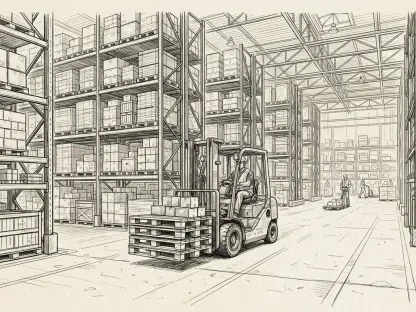
To grasp the scale of this disruption, one must consider the historical context of the massive infrastructure investments made over the previous decade. Since the inception of its proprietary delivery network, the company spent hundreds of billions of dollars constructing a dense web of fulfillment centers, sorting facilities, and a transportation fleet that rivals the world’s largest airlines. These assets were originally designed as a defensive moat to protect the promise of rapid delivery for a closed ecosystem of customers and third-party sellers. However, the current landscape reflects a pivot toward an open-market strategy where these internal tools are now offered as a service to any business.
This evolution represents a shift from being a participant in the logistics sector to becoming the very platform upon which the sector operates. In the past, the focus was solely on satisfying the demands of a single retail platform. Today, the focus has shifted toward a broader utility model where the primary goal is to monetize excess capacity and leverage massive operational scale. This move has changed the relationship between the company and its peers, turning a once-internal support system into a formidable competitor for legacy shipping giants.
Building the Integrated Logistics Stack
A Unified Ecosystem for Modern Commerce
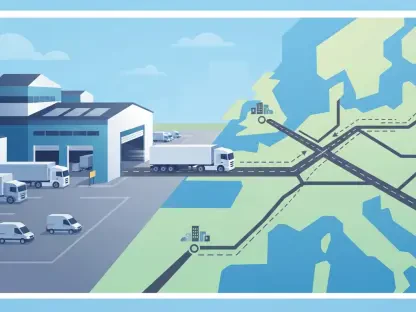
The core of this new offering lies in its ability to consolidate previously fragmented services into a single, cohesive operational stack. By integrating Fulfillment by Amazon, Amazon Freight, and Multi-Channel Fulfillment, the company has created a “plug-and-play” architecture that any business can adopt. Whether a merchant sells products through a niche online boutique, a social media shop, or an independent retail site, the infrastructure provides a seamless backend that handles everything from long-haul freight to last-mile delivery. This level of integration removes the friction typically associated with multi-vendor supply chains, offering a level of simplicity that was previously unattainable for smaller enterprises.
The Economic Asymmetry of the AWS Playbook
The financial strategy behind this expansion mirrors the playbook used to build the world’s most dominant cloud service. Because the logistics network already operates at a high level of density to handle internal retail volume, the marginal cost of transporting external packages is significantly lower than that of traditional carriers. Legacy providers like FedEx and UPS must price their services to cover a heavy fixed-cost base with every shipment. In contrast, Amazon can offer aggressive pricing while maintaining profitability because its core expenses are essentially subsidized by its primary retail operations. This structural advantage creates an environment where legacy players face intense pressure to remain competitive on cost without sacrificing their own margins.
Technological Compounding and the Role of AI
Advanced technology and machine learning serve as the critical nerves of this expansive physical network. Unlike traditional shipping companies that often struggle with legacy software, this system utilizes Artificial Intelligence for dynamic routing and predictive inventory placement. These tools allow the network to anticipate demand fluctuations and optimize fuel consumption in real-time. By automating complex processes like merchant onboarding and capacity planning, the company ensures that its logistics utility becomes more efficient as it scales. This technological lead reinforces a market dynamic where the smartest and largest network captures the vast majority of the value.
Future Indicators: Pricing Strategy and Regulatory Hurdles
As the service continues to scale, market observers are focusing on several key indicators that will define the next phase of competition. The introduction of standardized rate sheets will be a pivotal moment; should the pricing strategy involve a double-digit discount compared to market averages, it would likely accelerate the consolidation of smaller logistics firms. Furthermore, the immense influence gained by controlling the supply chains of rival retailers has already drawn significant interest from regulatory bodies. In the U.S. and Europe, authorities are examining whether this vertical integration creates an unfair advantage, potentially leading to new frameworks for oversight in the logistics sector.
The trajectory of profitability will also be a major metric for success over the next several years. Stakeholders are looking for evidence that the service can contribute significantly to the broader corporate operating income, much like the cloud division did during its growth phase. If the logistics segment achieves these high-margin targets, it will confirm that physical distribution has moved from a cost center to a primary revenue driver. This shift would likely lead to further investments in autonomous delivery vehicles and robotics, further widening the gap between the modern logistics utility and its traditional counterparts.
Strategies for Navigating the New Logistics Landscape
Businesses and logistics professionals must adapt quickly to this shifting environment to remain competitive. One effective approach involves adopting a hybrid supply chain model that utilizes the efficiency of a major utility for high-volume corridors while maintaining relationships with specialized carriers for unique or sensitive cargo. This strategy allows companies to benefit from lower costs without becoming entirely dependent on a single provider. Additionally, an emphasis on data integration is becoming essential, as the ability to sync inventory across multiple platforms is now a requirement for participating in a modern, tech-driven distribution network.
Professionals within the industry should prioritize developing expertise in automated systems and data analytics. As the human element of logistics transitions toward high-level management and oversight, those who understand how to leverage AI-driven tools will be in the best position to succeed. Furthermore, staying informed about the evolving regulatory landscape is vital for long-term planning. Changes in how data is shared or how transportation networks are governed could have direct impacts on operational costs and the choice of logistics partners.
The End of the Traditional Carrier Monopoly
The expansion of this logistics stack signaled a definitive shift in the global trade environment, effectively ending the era when a few traditional carriers held exclusive control over the movement of goods. The transition moved the industry toward a model defined by extreme efficiency and technological integration, where scale was no longer just an advantage but a necessity for survival. Businesses that embraced this new utility found themselves with improved access to global markets and lower operational overhead. Ultimately, the successful conversion of a massive physical footprint into a high-margin service proved that the physical supply chain followed the same path toward commoditization as digital infrastructure did in previous cycles.