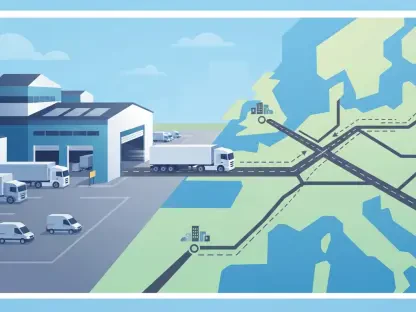

The rapid dissolution of geographic borders in the digital economy has forced a fundamental rethink of how capital moves across the globe. Traditional banking systems, once the sole gatekeepers of international commerce, are increasingly viewed as sluggish relics in a world that demands instantaneous settlement. This shift toward agile fintech ecosystems is not merely a matter of convenience; it is a structural necessity for businesses operating in a hyper-connected environment. As a result, cross-border payment providers have emerged as the primary engines of economic growth, leveraging sophisticated tools to bridge the gap between disparate financial jurisdictions.
Technological advancements have accelerated this transformation, with Application Programming Interfaces and blockchain protocols redefining the velocity of every transaction. These innovations allow for the creation of hybrid financial models that seamlessly connect fiat currencies with digital assets, ensuring that liquidity remains fluid regardless of the underlying medium. By integrating these diverse elements into a single workflow, modern payment gateways are effectively dismantling the silos that once hindered global trade.
The Evolution of Cross-Border Transactions and Market Dynamics
Emerging Trends and the Rise of Unified Payment Infrastructure
Modern commerce is moving toward a state of invisible payments where the mechanics of the transaction are completely hidden from the user experience. Frictionless interactions have become the new gold standard, as consumers and businesses alike demand real-time settlement without the traditional delays of correspondent banking. This demand is pushing the industry to adopt unified infrastructure that can handle multiple asset classes within a single framework.
Furthermore, the integration of digital asset ecosystems into mainstream merchant services is no longer a fringe development but a core strategic priority. Intelligent routing technology now plays a critical role in this transition by automatically selecting the most efficient path for a payment to travel. This capability significantly reduces transaction failure rates and ensures that global payouts are both reliable and cost-effective for enterprises of all sizes.
Growth Projections and the Expanding Reach of Fintech Gateways
Market data indicates a substantial surge in cross-border e-commerce and remittance volumes, with growth forecasts remaining aggressive through the late 2020s. This expansion is particularly evident in fintechs that have established a presence in over 200 countries, providing a truly global reach for their clients. As digital adoption continues to climb, these gateways are becoming the preferred choice for companies looking to scale beyond their domestic markets.
The projected impact of solutions like Payoro Connect, which integrates International Bank Account Numbers into digital workflows, suggests a more streamlined future for global finance. By offering localized banking capabilities on a worldwide scale, these platforms enable merchants to operate with the same ease as local businesses. This level of accessibility is expected to drive a new wave of participation in the global economy, particularly for digital-first industries.
Addressing the Complexity of High-Friction International Settlements
Navigating the legacy limitations of fragmented banking networks remains one of the most significant hurdles for international trade. Fragmented systems often lead to high costs and unpredictable delays, which can jeopardize the operational resilience of growing companies. To combat this, innovative providers are implementing strategies that mitigate currency volatility while ensuring that funds reach their final destination without unnecessary deductions.
Solving the last-mile delivery challenge requires a deep understanding of diverse global jurisdictions and their specific regulatory requirements. Technological solutions that enhance liquidity allow payment providers to pre-fund accounts or use digital assets to bridge currency gaps, ensuring that recipients receive their funds in the local currency of their choice. This approach not only lowers costs but also provides the stability needed for long-term financial planning.
Establishing Trust Through Canada’s RPAA and FINTRAC Frameworks
Payoro recently achieved a significant milestone by securing registration with the Bank of Canada under the Retail Payment Activities Act. This move places the firm under a rigorous oversight regime that demands high standards for risk management and fund protection. By operating under both the RPAA and the existing FINTRAC Money Services Business framework, the company has established a dual-layered regulatory foundation that sets a new benchmark for the fintech sector.
These mandates require the implementation of comprehensive incident reporting protocols and strict internal controls to safeguard client assets. Such standardized regulation is vital because it fosters deeper relationships with global banking partners who require high levels of transparency. For merchants, this means that their payment provider is not just a technology vendor but a fully compliant financial institution capable of maintaining long-term stability.
The Road Ahead: Innovation and the Convergence of Fiat and Digital Assets
The future of global payouts lies in the total convergence of bank transfers, card networks, and cryptocurrency. Unified APIs will serve as the backbone of this next-generation infrastructure, allowing businesses to toggle between different payment methods with a single integration. As regulatory clarity continues to improve, it will act as a powerful catalyst for responsible scaling, encouraging more traditional players to enter the digital asset space.
Looking forward, the industry must prepare for the arrival of Central Bank Digital Currencies and other market-disrupting technologies. These developments will likely further compress transaction times and reduce the need for intermediaries. Companies that have already built robust, regulated bridges between traditional and digital finance will be the best positioned to integrate these new forms of value into their existing platforms.
Consolidating Payoro’s Role in a Secure and Regulated Financial Future
The successful registration under the RPAA signaled a turning point for Payoro, moving the industry closer to a world where digital and traditional finance exist in harmony. This milestone underscored the reality that long-term viability in the fintech space is impossible without a commitment to rigorous regulatory compliance. By aligning with the Bank of Canada’s standards, the firm solidified its position as a secure gateway for high-stakes international commerce.
Market participants who sought to navigate this evolving landscape found that prioritizing regulated partners was the most effective way to ensure operational continuity. Investors and merchants turned their attention toward platforms that offered both technological agility and structural transparency. This strategic alignment ultimately suggested that the future of global payments would be defined by those who could successfully balance rapid innovation with the stringent demands of national financial authorities.