
The physical distance between a warehouse shelf and a consumer’s front door has historically been the most expensive and complex stretch of the global economy, yet it is now being conquered by algorithms that think faster than any human dispatcher. As we move through 2026, the logistics sector is no longer defined by the raw capacity of its trucks or the square footage of its warehouses, but by the intelligence of the software layers governing them. Traditional logistics models, which relied heavily on manual oversight and static distribution routes, are rapidly becoming obsolete. In their place, a new standard of intelligent fulfillment has emerged, characterized by autonomous decision-making and a seamless blend of digital and physical assets.
This transition marks the end of the labor-heavy era and the beginning of the AI-driven ecosystem. At the center of this shift is the concept of physical AI, where software does not merely suggest actions but actively executes them within a three-dimensional environment. Companies are no longer viewing shipping as a backend utility; instead, it has become a primary driver of commercial value and customer retention. The ability to move goods across borders with the same ease as a domestic shipment has become the new benchmark for success in the hyper-competitive e-commerce landscape.
Within this evolving framework, dohands and its flagship platform, Poomgo, have carved out a dominant position by treating logistics as a data problem rather than a mechanical one. By integrating high-tech infrastructure with adaptive regulatory strategies, they have enabled small and medium-sized enterprises to achieve the same delivery speeds as global conglomerates. This democratization of high-speed fulfillment is fundamentally altering market dynamics, allowing niche brands in sectors like K-beauty and pet supplies to scale globally with unprecedented agility.
The Evolution of Intelligent Fulfillment: A New Era for Global Trade
The migration from traditional warehousing to AI-driven ecosystems represents a structural pivot in how global trade functions. Historically, the industry was tethered to a hub-and-spoke model where goods moved through rigid, predetermined channels, often resulting in bottlenecks during peak seasons. Today, the rise of the physical AI hybrid model has introduced a layer of elasticity that allows supply chains to breathe and adapt in real time. This model relies on a feedback loop where physical sensors and human operational data continuously refine the underlying algorithms, creating a system that learns from its own inefficiencies.
In this new era, the Poomgo platform has emerged as a critical enabler for e-commerce scalability. By providing a plug-and-play logistics solution, it removes the capital expenditure barriers that once prevented smaller brands from entering international markets. Moreover, the significance of this shift is amplified by a changing regulatory landscape. Governments and international trade bodies are increasingly digitizing customs processes, allowing tech-forward logistics providers to bypass traditional paperwork through automated compliance checks. This synergy between high-tech infrastructure and modern shipping standards is effectively shrinking the globe.
Decoding the Technological Renaissance in Logistics
Driving the Future: Emerging Trends and AI-Centric Innovations
The industry is currently witnessing the rise of Agent AI, a sophisticated evolution beyond basic automation. Unlike previous iterations of software that required human intervention for every exception, Agent AI possesses the capacity for autonomous task execution within fulfillment centers. These agents can reroute shipments, reallocate labor, and manage inventory levels without direct oversight. This capability is essential for supporting the trend toward hyper-localized distribution, where inventory is stored closer to the end consumer to meet the burgeoning demand for tomorrow delivery.
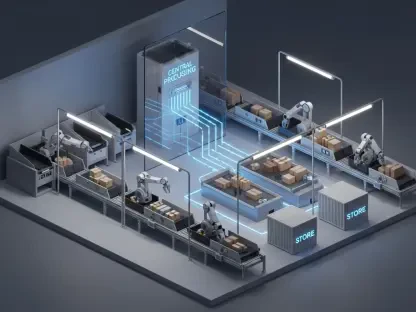
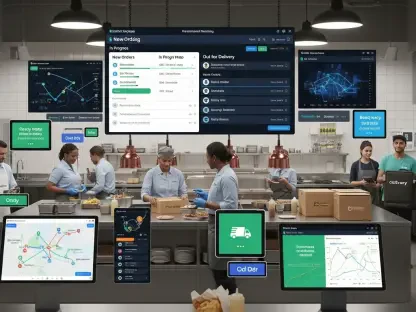
To manage this complexity, the industry is moving away from fragmented software solutions toward unified command centers. By integrating Warehouse Management Systems (WMS), Order Management Systems (OMS), and Delivery Management Systems (LMS) into a single AI WMS, companies can achieve a holistic view of the entire lifecycle of a product. This integration is particularly beneficial for specialized sectors such as the pet supply and K-beauty markets, where SKU diversity and high turnover rates require extreme precision. The ability to automate rules for promotional bundling or gift assignments directly within the WMS layer has turned logistics into a powerful marketing tool.
Measuring Success: Market Growth, Fiscal Resilience, and Performance Metrics
The financial viability of AI-integrated logistics is no longer a matter of speculation, as evidenced by the consistent growth and profitability of leaders like dohands. Reporting a 51% year-on-year increase in revenue while maintaining three consecutive years of profit, the company has set a fiscal benchmark that challenges the common narrative of tech startups burning through capital. This resilience stems from a drastic reduction in overhead, with AI-driven efficiencies cutting operational costs by nearly half. As the valuation of such providers continues to climb, the market is signaling a clear preference for intelligence over raw scale.
Operational performance metrics provide the most tangible evidence of this technological success. A statistical breakdown reveals that the implementation of smart packing and photographic proofing has driven misdelivery rates down to a staggering 0.001%. Such precision is not merely an internal victory; it is a vital component of brand trust. Furthermore, the ability to launch new fulfillment centers in under two months and reach a break-even point shortly thereafter demonstrates a level of operational agility that was previously unthinkable in the capital-intensive world of physical warehousing.
Navigating the Friction: Overcoming Structural and Variable Challenges
Despite the advancements in software, the physical reality of logistics still presents significant hurdles, particularly regarding the high fixed costs associated with land and infrastructure. The industry is solving this through the deployment of rapid-deployment centers—modular warehouse setups that can be scaled up or down based on seasonal demand. This flexibility prevents the financial drag of underutilized space while ensuring that capacity is available when a brand goes viral. This strategic approach to physical assets allows for a more sustainable growth trajectory even in volatile economic climates.
Another persistent challenge has been the black box problem, where sellers lose visibility once a product leaves their sight. Modern logistics platforms have solved this by providing real-time data transparency through comprehensive dashboards. These tools allow sellers to track every movement and anticipate potential delays before they impact the customer. Furthermore, the use of time-series demand forecasting has proven effective in mitigating variable cost spikes. By predicting order volume down to the hour, companies can optimize their staffing models and vehicle dispatches, ensuring that efficiency remains high even during unpredictable market fluctuations.
Geographical barriers, which once created massive disparities in delivery times, are also being systematically dismantled. In isolated regions such as Jeju Island, proactive inventory redistribution guided by AI has transformed the consumer experience. By moving goods to local hubs based on predicted demand rather than waiting for an order to be placed, providers have achieved next-day delivery rates in areas that were previously considered logistical dead zones. This proactive stance ensures that the quality of service is consistent, regardless of the consumer’s location.
The Regulatory and Strategic Framework of Modern Delivery
The complexity of cross-border trade has long been a deterrent for smaller brands, but the integration of digital customs processing is changing that reality. By eliminating the manual exchange of domestic and international invoices, a process known as taggal, logistics providers are facilitating a seamless flow of goods into markets like Japan and the United States. Deep integration with major e-commerce platforms like Naver, Cafe24, and eBay Japan ensures that these technical hurdles are handled automatically, allowing sellers to focus on product development rather than international trade compliance.
Strategic alliances have also played a pivotal role in establishing industry-wide benchmarks. The Naver Fulfillment Alliance (NFA) is a prime example of how collaboration between technology giants and logistics experts can create a superior delivery ecosystem. By participating in such alliances, providers can leverage shared data and infrastructure to offer express shipping services that rival the internal networks of the world’s largest retailers. This collective approach to logistics ensures that the benefits of AI are distributed across the entire seller network, rather than being consolidated by a single entity.
Security and documentation standards have reached a new level of sophistication through the use of barcode scanning and photographic proofing at every stage of the fulfillment process. This high-accuracy approach serves two purposes: it virtually eliminates human error and provides an indisputable audit trail for every package. In an era where consumer expectations for transparency are at an all-time high, these rigorous standards are no longer optional. They are the baseline for any company seeking to operate on a global scale.
The Horizon of Global Commerce: Disruptors and Future Frontiers
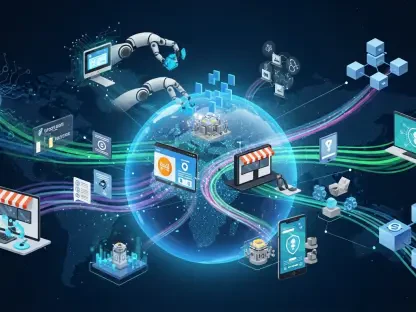
The traditional hub-and-spoke model is currently being disrupted by the concept of dynamic allocation. In this decentralized network, orders are not tied to a specific warehouse; instead, the system analyzes real-time processing capacity and inventory levels across the entire network to determine the most efficient fulfillment path. This fluid approach prevents bottlenecks and ensures that even if one center is overwhelmed, the overall system remains operational. This shift toward decentralized, intelligent networks is the defining characteristic of the next decade of global commerce.
Expansion strategies are also becoming more localized and data-driven. In the US market, for instance, the integration of influencer seeding with logistics services allows brands to manage marketing and fulfillment as a single workflow. By coordinating the delivery of samples to local influencers with the arrival of bulk inventory in regional warehouses, brands can launch products with surgical precision. Meanwhile, in regions like Japan, the use of air-sea splitting based on regional demand is further reducing lead times, making international shopping feel as fast as a local transaction.
The potential for robotics and autonomous physical AI to replace manual picking and packing is the next major frontier. As these technologies become more cost-effective, we can expect a further reduction in fulfillment costs and an increase in 24/7 operational capability. This will be particularly transformative for small-to-medium enterprises, as it will allow them to access high-efficiency logistics that were previously the exclusive domain of companies with massive capital budgets. The focus is shifting toward creating a tailored experience for SMEs, empowering them to compete on a truly global stage.
Summarizing the AI Logistics Revolution: Strategic Insights and Outlook
The transformation of logistics from a backend necessity into a central driver of commercial value has fundamentally changed the strategic calculus for global brands. The integration of artificial intelligence into the physical supply chain has created a blueprint for a more resilient and efficient economy. Companies that have successfully internalized these technologies have demonstrated that intelligence is a more potent competitive advantage than physical scale alone. The move toward autonomous fulfillment and dynamic resource allocation has not only reduced costs but has also redefined the consumer’s relationship with time and distance.
Brands looking to capitalize on these shifts should prioritize the adoption of unified software layers that offer real-time transparency and predictive capabilities. Moving forward, the focus must be on leveraging logistics as a tool for market penetration, using data to anticipate consumer needs before they are even articulated. The infrastructure for global commerce is becoming increasingly fluid, and those who can navigate this decentralized network with agility will be the ones who define the market.
Ultimately, the successful integration of AI and logistics has moved the industry past the era of mere delivery into an era of proactive fulfillment. The next phase of development will likely center on the further refinement of agent-based systems and the expansion of these high-speed networks into increasingly remote markets. As logistics continues to evolve into a primary driver of value, the distinction between a technology company and a logistics provider will continue to blur, resulting in a more integrated and responsive global trade environment. In light of these developments, businesses must view their supply chain as a living, learning entity rather than a static cost center.