
The sheer velocity of cross-border digital transactions has forced the global aviation industry to abandon its century-old reliance on heavy palletized machinery in favor of a granular, parcel-driven logistics infrastructure. This fundamental reorganization signals the end of the traditional air freight era, where seasonal business cycles dictated the flow of goods. Today, the steady stream of individual consumer orders provides a permanent structural stabilizer for the aviation industry, ensuring that aircraft belly space and dedicated freighters remain occupied regardless of broader industrial fluctuations. The role of the cargo carrier has consequently moved from being a simple link in the supply chain to becoming the primary engine of global retail.
The Transformation of Global Logistics: From Traditional Freight to E-Commerce Dominance
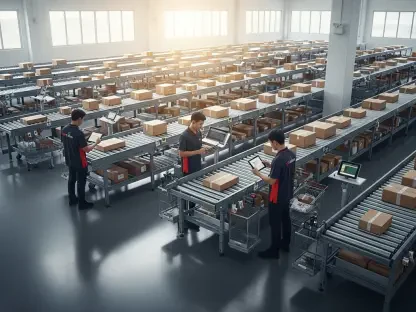
The historical shift from bulk business-to-business shipments to high-frequency, low-weight consumer parcels has redefined the operational requirements of every major airport. In the past, logistics providers prioritized the movement of large pallets containing industrial components or finished goods for retail distribution centers. However, the rise of direct-to-consumer platforms has fragmented these massive shipments into millions of unique, small-scale units. This transformation requires a level of sorting sophistication that traditional freight forwarders were not originally built to handle. Integrated carriers and strategic freight forwarders now find themselves competing to manage this complexity, often investing in high-speed automated facilities that can process thousands of individual items per hour.
As this trend matures, cross-border e-commerce has emerged as a reliable constant for the industry, shielding it from the volatility often seen in other sectors. The move toward data-driven operational models allows carriers to predict demand surges with greater accuracy, optimizing their fleets to match the rapid consumption patterns of modern shoppers. Regional hubs are also evolving; instead of serving as mere transit points, they are becoming sophisticated processing centers where data visibility is just as important as physical capacity. This evolution ensures that the aviation sector remains indispensable in an age where the consumer expects instant gratification across international borders.
Strategic Market Shifts and the New Dynamics of Global Demand
Emerging Trends in Parcel Logistics and Consumer Expectations
While the early years of the digital trade boom focused almost exclusively on delivery speed, the current market is witnessing a transition toward strategies that emphasize efficiency and long-term supply chain resilience. High transit speeds remain important, yet they are increasingly balanced against the need for cost control and environmental considerations. Modern consumers now value reliability and tracking transparency over the raw velocity of a shipment. This change in expectation has prompted a rise in hybrid fulfillment models, where sea-to-air transitions and multimodal transport routes are used to balance cost and timing. Such strategies allow logistics providers to navigate the high costs of jet fuel while still meeting reasonable delivery windows.
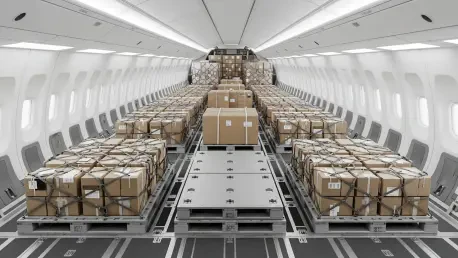
Furthermore, shifting consumer behaviors are forcing a total recalibration of how airframes are loaded and how sorting facilities operate. The light, airy nature of many e-commerce products means that aircraft often reach their volume capacity before they reach their weight limit. This phenomenon, known as “cubing out,” has led to new pricing strategies and airframe management techniques designed to maximize the utility of every cubic inch of available space. Logistics managers are now utilizing advanced software to simulate loading patterns, ensuring that the mix of heavy industrial cargo and light e-commerce parcels results in the most efficient use of aircraft performance.
Market Projections and the Fragmentation of Trade Corridors
Looking at market growth from 2026 to 2030, the traditional dominance of trans-Pacific routes is being challenged by the rapid expansion of trade lanes in South Asia and the Middle East. While the United States and Europe remain primary destination markets, the source of global production is becoming more dispersed. Load factors remain healthy across these emerging corridors, driven by a growing middle class in developing nations that is increasingly participating in the global digital economy. This dispersal of demand suggests that the future of air cargo lies in secondary gateways and new global trade lanes that bypass the traditional, often congested, mega-hubs.
As revenue streams stabilize in the post-pandemic era, performance indicators show a move toward higher-margin, specialized services. Airlines are no longer just selling space; they are selling integrated logistics solutions that include customs clearance and final-mile coordination. This fragmentation of trade corridors requires a more flexible network, where carriers can quickly pivot their operations to serve burgeoning markets. The result is a more resilient global network that is less dependent on any single trade lane, providing a safeguard against regional economic downturns or geopolitical shifts.
Operational Hurdles and Navigating Logistics Complexity
Managing millions of individual units presents a significant operational challenge compared to the traditional management of standardized pallets. Each small parcel requires its own tracking, security screening, and customs documentation, creating a massive administrative burden for logistics providers. This fragmentation complicates network optimization, as the volume of data generated by these millions of units must be processed in real-time to prevent bottlenecks. To overcome these hurdles, carriers are investing heavily in digital infrastructure that can automate the documentation process, reducing the risk of human error and speeding up the flow of goods through international borders.
Aging infrastructure in primary hubs also poses a significant threat to efficiency, as many airports were designed for a different era of logistics. Port congestion and limited sorting space can lead to delays that negate the speed advantages of air transport. Consequently, there is an increasing pressure on margins due to rising operational costs and the necessary capital expenditure for technological upgrades. To maintain profitability, industry players must find a balance between investing in the future and managing the immediate costs of a more complex, labor-intensive cargo environment.
The Regulatory Landscape: Customs Compliance and Global Policy
The regulatory environment is undergoing a major shift as governments reassess “de minimis” thresholds, which previously allowed low-value shipments to enter countries without duties or extensive inspections. As these thresholds are lowered or eliminated in major Western markets, the profitability of direct-to-consumer shipping faces new challenges. Stricter customs enforcement and the requirement for harmonized taxation mean that air cargo providers must ensure absolute transparency in their manifests. Failure to comply with these evolving rules can lead to significant delays and financial penalties, making regulatory expertise a core competency for modern logistics firms.
In response to these policy changes, many companies are adopting regionalized inventory and localized delivery strategies. By positioning stock in warehouses closer to the end-user, businesses can use bulk air freight for the initial long-haul journey and then manage the final delivery through local channels. This approach helps mitigate the impact of changing customs policies and ensures that transit times remain competitive. The necessity for regulatory transparency has never been higher, as the role of compliance has evolved from a back-office function to a critical factor in maintaining market access and consumer trust.
Future Horizons: Innovation and the Digital Trade Ecosystem
Real-time data visibility is now the bedrock of the digital trade ecosystem, allowing all participants in the supply chain to monitor the progress of goods with precision. Market disruptors, such as automated sorting systems and artificial intelligence-driven route optimization, are becoming standard features of the industry. These technologies allow for a level of agility that was previously impossible, enabling carriers to adjust their flight paths and loading schedules in response to real-time fluctuations in demand. This digital transformation is turning the air cargo industry into a highly responsive network that can adapt to the needs of a globalized, digital economy.
The future also points toward more regionalized supply chains as a strategic response to geopolitical volatility and changes in trade policy. Strategic partnerships are evolving, with traditional freight forwarders transforming into logistics consultants who provide deep insights into supply chain design. This shift ensures that the industry is not just reactive but proactive in anticipating shifts in global trade. As automated technologies and AI become more integrated into the logistics chain, the focus will continue to shift toward creating a seamless, end-to-end digital experience for both businesses and consumers.
Building a Resilient Future for Air Cargo Integration
The transition from a basic transport mechanism to a critical enabler of a digital trade ecosystem was completed through a significant commitment to technological integration. Stakeholders in the aviation sector recognized that balancing transit speed with regulatory precision and cost control was the only way to maintain long-term viability. They moved away from a reliance on legacy systems and embraced the complexity of individual parcel logistics. This era was defined by the realization that infrastructure and data were just as valuable as the aircraft themselves.
As the industry moved forward, the focus shifted toward actionable investments in operational agility. Logistics providers prioritized the development of flexible networks that could bypass congested hubs and adapt to new trade policies. These efforts ensured that the air cargo sector remained a high-stakes, consumer-driven environment that flourished under pressure. Ultimately, the successful integration of digital tools and physical infrastructure allowed the industry to thrive in a global market that demanded both high speed and absolute regulatory compliance.