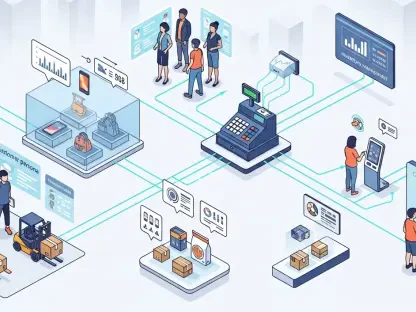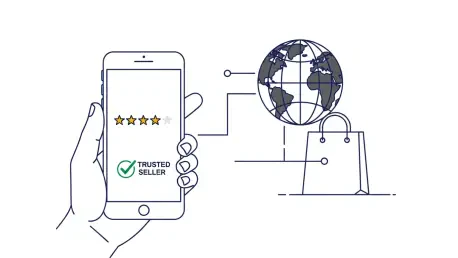

The digital marketplace has reached a critical intersection where the sheer abundance of choice has rendered traditional price-cutting strategies almost entirely obsolete in the eyes of the modern consumer. Shoppers no longer navigate the web looking merely for the lowest cost; they are searching for a sense of security and a brand that mirrors their personal values. This shift has transformed the global ecommerce landscape from a transaction-heavy environment into a reputation-based ecosystem. As digital footprints become more transparent, the ability to build and sustain a credible presence is the primary differentiator between market leaders and those struggling to gain a foothold.
Direct-to-Consumer models have flourished by cutting out the middleman, yet this growth has placed a heavy burden on brands to prove their legitimacy without the backing of traditional retail giants. Meanwhile, massive marketplaces like Amazon have established a dominance rooted in their ability to guarantee a standardized level of service, forcing independent brands to work twice as hard to earn comparable loyalty. The reliance on physical product inspections has been replaced by a heavy dependence on social proof and digital breadcrumbs, making every customer interaction a public-facing testament to a brand’s integrity.
Regulatory environments have also tightened, with data privacy and consumer protection laws now serving as the baseline for any professional relationship. In this current climate, compliance is not just a legal hurdle but a foundational component of the brand-shopper connection. Brands that treat privacy as a priority rather than an afterthought are finding that these rigorous standards actually facilitate deeper bonds with an increasingly skeptical public.
Trends and Performance Indicators Shaping the Trust Economy
Emerging Behaviors and the Demand for Radical Transparency
The rise of the Gen Z consumer has brought about a mandate for radical honesty that is reshaping how companies communicate. Statistics indicate that approximately 79% of younger shoppers now prioritize ethical alignment and brand honesty over brand name or aesthetic appeal. These buyers are looking for more than just a functional product; they are seeking a narrative that includes sustainable sourcing, fair labor practices, and transparent pricing. This shift suggests that the traditional marketing veil has been lifted, replaced by a demand for a peek behind the curtain.
As a result, the industry is moving away from purely technical search engine optimization toward what experts are calling Trust SEO. This strategy prioritizes the curation of verified feedback, authentic storytelling, and the prominent display of customer reviews over keyword stuffing. By focusing on these trust-based signals, brands can build long-term market authority that is far more resilient than the temporary gains found through algorithmic loopholes. Transparency in how a brand handles its logistics and pricing has become a powerful tool for establishing this authority.
Market Projections and the Financial Impact of Credibility
When analyzing the financial landscape of 2026 and beyond, the correlation between high review volumes and conversion rates has never been clearer. Data shows that products with a substantial number of verified reviews consistently outperform their less-documented counterparts, regardless of minor price differences. Growth forecasts suggest that brands possessing high Trust Equity are projected to significantly outperform competitors who rely on aggressive price-cutting in saturated markets. This credibility acts as a buffer, allowing brands to maintain margins even when the broader economy experiences volatility.
The impact of reputation extends deeply into the core metrics of business health, specifically influencing Customer Acquisition Cost and Lifetime Value. High levels of consumer confidence lead to more organic referrals and a higher rate of repeat purchases, which naturally lowers the cost of bringing in new business. By investing in credibility early, companies are essentially pre-paying for future growth, ensuring that each customer acquired has a much higher probability of becoming a long-term revenue source rather than a one-time transaction.
Overcoming Obstacles to Consumer Confidence and Growth
The inability to physically touch or test a product remains a significant perceived risk barrier in the online world. To overcome this, successful brands are adopting immersive strategies that go beyond static images, such as detailed video demonstrations and augmented reality tools that simulate the physical experience. Providing exhaustive product specifications and clear, plain-language return policies further mitigates the fear of a bad purchase. When the risk of “buyer’s remorse” is minimized through information, the path to conversion becomes significantly smoother.
Managing the inevitable feedback loop is another hurdle where many brands stumble. Negative reviews or service failures are often viewed as crises, but they actually offer a unique opportunity to demonstrate accountability. When a brand responds to a complaint with speed and a genuine solution, it can turn a disgruntled customer into a loyal advocate. Authenticity in these moments proves that the brand is run by people who care about the outcome, which resonates far more than a scripted corporate apology. Navigating a sea of generic competitors requires an authentic voice that remains consistent across all touchpoints.
The Regulatory and Safety Framework of Online Transactions
Modern compliance has evolved into a vital trust signal, with standards like GDPR and CCPA serving as the gold standard for data handling. Consumers are now well-aware of their digital rights and look for secure payment processing indicators before sharing sensitive information. Navigating these regulations is no longer just about avoiding fines; it is about signaling to the shopper that their personal and financial safety is a top priority. A brand that is open about its security measures often finds that shoppers are more willing to complete high-value transactions.
Combatting the plague of fraudulent reviews has also become a central focus for maintaining marketplace integrity. Platforms are increasingly using advanced detection methods to ensure that social proof remains a reliable metric for consumers. Parallel to this, transparent return policies and clear warranty disclosures fulfill both legal requirements and ethical expectations. By being upfront about what happens if a product fails, brands remove the last remaining doubts that might prevent a shopper from hitting the buy button.
The Future of Brand Trust in a Hyper-Connected Market
Looking ahead, innovations such as AI-driven personalization are set to disrupt the market once again, though they bring fresh concerns regarding privacy. The challenge for future-facing brands will be to use these tools to enhance the customer experience without crossing the line into intrusive surveillance. At the same time, global economic shifts and inflation are highlighting the importance of brand loyalty as a defensive moat. When consumers have less discretionary income, they are far more likely to spend it with a brand they already trust to deliver quality and value.
The potential for blockchain technology to provide ultimate transparency in supply chains is becoming a reality. This allows consumers to trace the journey of a product from the raw material stage to their doorstep, providing an unshakeable level of proof regarding ethical claims. Furthermore, community-led growth and micro-influencer advocacy are rising in importance. These smaller, more intimate circles of influence provide a level of peer-to-peer trust that large-scale traditional advertising simply cannot replicate in a hyper-connected society.
Summary of Growth Drivers and Strategic Investment Recommendations
The investigation into the trust economy revealed that credibility has transitioned from a soft marketing concept to a hard financial metric. Strategic leaders recognized that transparent messaging and post-purchase consistency were the two most significant drivers of organic growth. It was observed that the most resilient brands were those that actively managed their reputations rather than leaving them to chance. The shift in consumer behavior toward ethical alignment suggested that long-term viability was linked more closely to brand character than to traditional competitive advantages like shipping speed alone.
Moving forward, organizations should consider reallocating resources toward the development of transparent supply chain documentation and robust customer advocacy programs. Prioritizing the security of consumer data and the authenticity of social proof will likely yield higher returns than traditional lead generation tactics. The future belongs to retailers who view trust as their most valuable inventory item, ensuring that every digital interaction reinforces a promise of reliability. By focusing on the human element of the transaction, brands can secure a dominant position in an increasingly automated and crowded retail environment.