
The shift in European tax policy has effectively dismantled the economic foundation upon which many international e-commerce giants once built their aggressive expansion strategies. For nearly a decade, global retailers leveraged the de minimis threshold to bypass import duties on millions of individual parcels, but the introduction of a universal VAT and customs framework has fundamentally altered the financial viability of direct-to-consumer air shipments. This seismic shift is not merely an administrative adjustment; it represents a total reconfiguration of how goods move across the globe, forcing companies to move away from the high-frequency, low-volume model that once defined modern shopping habits. As these platforms struggle to maintain their aggressive pricing, the logistical backbone of international trade is being rebuilt to accommodate a more formal and taxable flow of goods that prioritizes consolidated shipments over the fragmented delivery systems that once dominated the digital marketplace. Speed is now often sacrificed for the sake of long-term fiscal compliance.
Structural Responses to Regulatory Changes
Implementation of Bulk-Import and Maritime Logistics
To counter the rising costs associated with individual parcel handling, major retailers like Shein and Temu are transitioning toward a business-to-business bulk-import strategy. Instead of dispatching millions of tiny boxes via expensive air freight, these companies are now utilizing massive shipping containers to move inventory by sea and rail. This method allows them to pay a single commercial duty upon entry, effectively bypassing the individual handling fees that would otherwise apply to each consumer package. By consolidating orders into larger shipments, retailers can mitigate the financial impact of the new tax laws and maintain competitive pricing for their European customer base. The move represents a significant departure from the agile, data-driven manufacturing models that previously relied on immediate air transport to fulfill demand. It requires much more robust long-term planning, as maritime shipping takes weeks compared to the few days required for air transit, yet the cost savings in the current tax environment make this transition an operational necessity for large platforms.
Expansion of Regional Warehousing Hubs
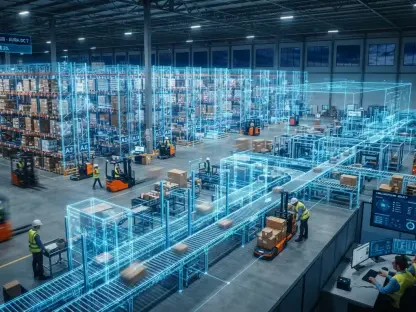
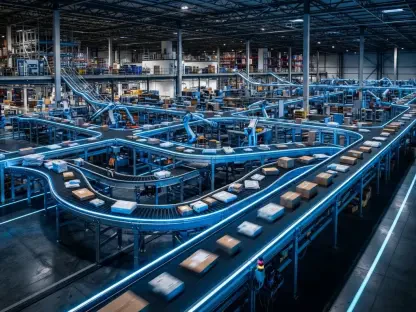
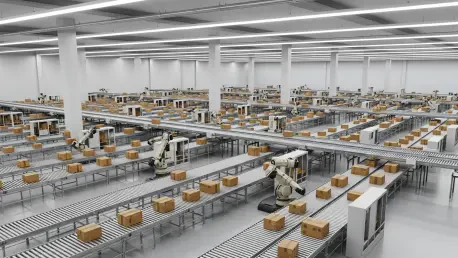
The physical footprint of international e-commerce is expanding rapidly across the European continent as companies seek to minimize the distance between products and consumers. Significant investments are being channeled into logistics hubs in Poland, Germany, and the Netherlands, where vast warehouse complexes are being leased to store bulk-imported inventory. By keeping goods within the European Union’s borders, retailers can fulfill orders locally, which not only circumvents the per-parcel import tax at the point of sale but also drastically reduces delivery times for the end user. This localized approach allows platforms to offer next-day or two-day delivery options that were previously impossible when shipping directly from overseas factories. The construction boom in these regions has turned former industrial zones into high-tech distribution centers equipped with automated sorting systems. Consequently, the strategy has transformed a regulatory hurdle into a competitive advantage, as those with the capital to invest in European infrastructure can now outperform smaller rivals.
Market Volatility and Operational Realities
Disruptions in Global Air Freight Operations
The implementation of new tax structures has sent shockwaves through the international air cargo industry, which previously thrived on the high volume of small-parcel e-commerce. In markets like France, which acted as early adopters of these fiscal reforms, the volume of individual packages arriving by air has seen a precipitous decline. Analysts observe that as the financial incentive for air shipping vanishes, the industry is bracing for a sustained period of lower demand for belly cargo and dedicated freighter space. Traditional carriers like DHL and FedEx are now recalibrating their operations to focus more on high-value industrial goods rather than the low-margin consumer parcels that once filled their planes. This shift is creating a surplus of air freight capacity, which could lead to lower rates for other sectors but represents a significant loss of revenue for logistics providers who specialized in the Asian-European corridor. The transition from air to sea is not just a change in transport mode; it is a fundamental revaluation of how time and cost are balanced in the global movement of consumer goods.
Customs Complexity and Administrative Bottlenecks
Operational challenges are mounting at European entry points, where the sudden influx of containerized freight is testing the limits of customs infrastructure. While the number of individual parcels has decreased, the volume of commercial cargo has surged, leading to administrative bottlenecks and delays. Customs authorities now require more detailed data sets for bulk imports to ensure compliance with environmental and safety standards, adding another layer of complexity to the clearing process. Logistics experts have warned that without further digitalization and automation of customs procedures, the backlog of containers could lead to significant supply chain friction. Major commercial ports are feeling the strain as they attempt to process record amounts of e-commerce inventory alongside traditional industrial imports. Furthermore, the requirement for precise documentation for every item within a container means that a single error can hold up thousands of orders at once. This heightened level of scrutiny is forcing logistics companies to adopt more sophisticated tracking and reporting technologies.
Consequences for Small and Medium Enterprises
These new regulations are creating a clear divide between industry leaders and smaller merchants who lack the capital to secure local warehouse space. Large platforms with deep pockets can easily absorb the costs of setting up European warehouses and managing complex bulk-freight logistics, whereas smaller businesses face rising costs and administrative burdens that may eventually force them out of the market. The cost of compliance, including the management of VAT and customs documentation, has become a significant barrier to entry for independent sellers. Many small-scale importers are finding that the per-item cost of shipping and taxes now exceeds their profit margins, leading to a consolidation of the market in favor of established giants. This shift is reshaping the competitive landscape, as the ability to navigate regulatory hurdles has become as important as the quality of the product itself. In the long run, this environment favors players who can leverage economies of scale to maintain their presence in the highly regulated European digital marketplace.
Strategic Pathways for Sustainable Growth
The landscape of digital trade moved toward a more consolidated and regulated future as businesses adapted to the end of tax-free cross-border shipping. Companies that proactively invested in European warehousing and bulk logistics found themselves in a much stronger position than those that delayed their structural transitions. The industry recognized that success no longer depended solely on low manufacturing costs, but on the ability to navigate a complex web of fiscal and logistical requirements. Moving forward, the most effective strategy involved the deep integration of regional distribution networks with automated customs compliance software to ensure a frictionless flow of goods. Smaller merchants were advised to explore third-party logistics providers that offered shared warehouse space, allowing them to compete with larger platforms without the need for massive capital expenditure. By focusing on sustainable logistics and local presence, retailers managed to turn a challenging regulatory shift into a more stable and predictable business model. These actions eventually paved the way for a more balanced marketplace.