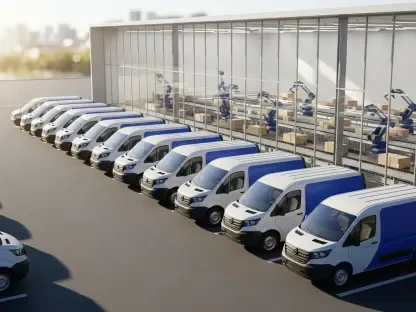

Amid a global economic landscape defined by constant flux and intricate supply chain realignments, Hong Kong’s air cargo sector has demonstrated a remarkable capacity not only to adapt but to thrive. The narrative of its recent performance is one of strategic foresight and operational excellence, proving that even in the face of significant headwinds, a well-orchestrated logistics ecosystem can achieve sustained growth. By turning market challenges into catalysts for innovation, Hong Kong is actively reinforcing its legacy as an indispensable linchpin in the world of international trade and airfreight.
The Airfreight Ecosystem Anatomy of a Global Leader
At the very heart of global supply chains, Hong Kong International Airport (HKIA) functions as more than just a transit point; it is a strategic crossroads where East meets West. Its geographical advantage, coupled with world-class infrastructure, allows it to serve as a primary gateway for goods flowing into and out of mainland China, a manufacturing powerhouse. This critical role ensures that HKIA is not merely a participant in global trade but a key enabler, facilitating the rapid movement of everything from high-tech electronics to essential pharmaceuticals, thereby underpinning the logistics strategies of countless multinational corporations.
This complex operation is powered by a network of highly specialized industry players, with Hong Kong Air Cargo Terminals Limited (HACTL) standing out as a cornerstone of the airport’s capabilities. As one of the world’s largest single-terminal operators, HACTL manages a significant portion of the cargo passing through HKIA. Its role extends beyond simple handling to providing a comprehensive suite of services that ensure efficiency, security, and reliability. The synergy between HKIA’s oversight and the operational expertise of companies like HACTL creates a seamless and robust ecosystem capable of meeting the rigorous demands of modern commerce.
The foundation of Hong Kong’s air cargo dominance is built on a legacy of technological investment and immense operational scale. HACTL’s SuperTerminal 1, with its 3,500 containerized storage positions and 10,000 bulk storage locations, represents the pinnacle of automated cargo handling. This infrastructure allows for unparalleled throughput and efficiency, minimizing turnaround times and ensuring the swift processing of goods. This technological prowess is not a recent development but a continuous evolution, allowing the hub to consistently absorb and manage growing volumes without compromising on service quality.
Furthermore, the market’s resilience has been repeatedly tested and proven against a backdrop of global economic shifts and fluctuating trade policies. In recent years, the industry has navigated the turbulence of tariff implementations, front-loading activities, and geopolitical tensions. Despite these pressures, Hong Kong’s airfreight sector has maintained its momentum. This steadfastness is a testament to its deep-rooted institutional knowledge, flexible operational models, and its ability to pivot strategically in response to external shocks, solidifying its reputation as a stable and dependable partner in an often-unpredictable world.
Riding the Waves of Change Market Dynamics and Performance
The Twin Engines of Growth E-Commerce and Evolving Trade Routes
The explosive and seemingly irreversible growth of cross-border e-commerce has fundamentally reshaped the air cargo landscape, acting as a powerful engine for demand. This boom is no longer a fringe trend but a dominant market force, generating a continuous flow of parcels that require the speed and reliability that only airfreight can provide. Hong Kong is perfectly positioned to capitalize on this phenomenon, serving as a primary consolidation and distribution hub for e-commerce giants funneling products from Chinese manufacturers to consumers across the globe. The nature of these shipments, often time-sensitive and high-value, aligns perfectly with the core competencies of the city’s logistics providers.
Concurrently, the “China plus one” manufacturing strategy, which sees companies diversifying their production bases to mitigate geopolitical risks, has had a more nuanced effect than initially anticipated. Rather than diminishing Hong Kong’s throughput, the trend has highlighted the enduring competitiveness of Chinese manufacturing in both price and quality. While some production may shift, the immense global appetite for Chinese goods, particularly those sold through e-commerce channels, remains exceptionally strong. As a result, Hong Kong continues to handle a massive volume of exports originating from the mainland, demonstrating that production diversification does not necessarily equate to a decline in its strategic importance.
Beyond these two major trends, shifting consumer spending patterns and new regional trade agreements have emerged as primary market drivers. A partial recovery in global trade, coupled with resilient consumer demand for electronics and other high-value goods, has provided a stable foundation for growth. Trade pacts within the Asia-Pacific region are also helping to streamline customs processes and reduce barriers, further facilitating the flow of goods through established hubs like Hong Kong. This confluence of factors creates a dynamic but supportive environment for the airfreight sector’s continued expansion.
Data-Driven Outlook Measuring Momentum and Forecasting the Future
The tangible results of this market dynamism are evident in the latest performance indicators. For the first nine months of the year, HKIA reported a 2.2 percent year-on-year increase in cargo throughput, a significant achievement in a global climate marked by economic uncertainty. This steady growth underscores the sector’s ability to successfully convert prevailing market trends, such as the e-commerce surge, into measurable gains. It serves as clear evidence that the strategies employed by the hub’s key players are effectively navigating the complex global trade environment.
When benchmarked against global performance, Hong Kong’s cargo volume trends reinforce its leading position. While other major hubs have experienced volatility, Hong Kong has demonstrated a consistent upward trajectory, solidifying its market share in the highly competitive Asia-Pacific region. This outperformance is not accidental but the result of a concerted effort to enhance capacity, improve efficiency, and cater to specialized cargo segments that are experiencing high growth, such as pharmaceuticals and temperature-sensitive goods.
Looking ahead, future demand is projected to remain robust, buoyed by both organic market growth and strategic industry initiatives. The continued expansion of e-commerce, coupled with investments in multi-modal connectivity and specialized infrastructure, creates a powerful formula for sustained growth. By proactively anticipating the needs of the market and investing in the necessary capabilities, Hong Kong’s air cargo industry is not just reacting to current trends but is actively shaping its future, ensuring its continued relevance and leadership for years to come.
Navigating Headwinds Challenges in a Complex Global Market
Despite its strong performance, the sector is not immune to the challenges posed by a complex global market. Fluctuating trade policies and the looming threat of tariff uncertainty create a volatile environment for logistics planning. The phenomenon of front-loading, where shippers rush to move goods ahead of anticipated tariffs, can cause temporary surges in volume that strain capacity, followed by unpredictable lulls. Navigating this stop-and-go dynamic requires exceptional agility and sophisticated forecasting to maintain operational stability and service levels.
The composition of air cargo is also becoming increasingly complex, presenting new handling challenges. The proliferation of consumer electronics has led to a massive increase in shipments containing lithium batteries, which are classified as dangerous goods and require stringent safety protocols. Similarly, the growing global demand for pharmaceuticals and other perishable goods necessitates specialized, temperature-controlled supply chains. Meeting the rigorous handling requirements for this specialized and high-risk cargo demands continuous investment in training, technology, and certified facilities.
In this context, mitigating geopolitical risks and maintaining a competitive edge are paramount. As manufacturing landscapes diversify, Hong Kong must reinforce its value proposition beyond simply being a gateway to China. The strategy involves strengthening its role as a comprehensive logistics hub for the entire Greater Bay Area and Southeast Asia. By offering superior connectivity, unparalleled efficiency, and expertise in handling complex cargo, Hong Kong can ensure it remains the preferred hub for high-value supply chains, regardless of minor shifts in production locations.
The Regulatory Framework Upholding Excellence Through Compliance
In the high-stakes world of airfreight, safety and security are not merely regulatory obligations; they are foundational pillars of operational strategy. For Hong Kong’s cargo handlers, a deep-seated commitment to these principles is what underpins their global reputation. Every process, from cargo acceptance to final delivery, is governed by rigorous protocols designed to protect the integrity of the supply chain, the safety of personnel, and the security of the aircraft. This unwavering focus is a key differentiator that builds long-term trust with shippers and airlines alike.
This commitment to excellence is further demonstrated through strict adherence to international standards and the pursuit of prestigious accreditations. For instance, achieving CIV accreditation for specialized cargo facilities, such as those designed for pharmaceuticals or lithium batteries, signals to the global market that Hong Kong operates at the highest level of quality and compliance. These certifications are not just badges of honor; they are essential for handling the high-value, sensitive goods that increasingly dominate air cargo traffic, providing customers with verifiable assurance of service quality.
Ultimately, a robust compliance and security posture does more than just mitigate risk; it actively reinforces Hong Kong’s reputation as a trusted global logistics hub. In an era where supply chain vulnerabilities are a major concern for businesses, the ability to offer a secure and reliable corridor for goods is a powerful competitive advantage. This culture of compliance, embedded throughout the airfreight ecosystem, is a critical component of Hong Kong’s enduring success and its appeal to the world’s most demanding shippers.
Blueprint for the Future Proactive Investment and Innovation
To secure its future leadership, Hong Kong’s air cargo sector is making strategic investments in specialized infrastructure. Recognizing the growth in sensitive and high-value shipments, operators are expanding their capabilities with state-of-the-art facilities. This includes the development of new cool chain complexes to handle the surge in pharmaceuticals and fresh produce, as well as dedicated, safety-enhanced zones for storing and managing lithium batteries. These proactive investments ensure the hub is well-equipped to handle the evolving composition of global airfreight.
The vision for dominance extends beyond the airport’s perimeter, with a clear focus on enhancing regional connectivity. The development of integrated logistics hubs in mainland China, such as in Dongguan, creates a seamless multi-modal network that links air, sea, and land transport. Innovative systems, like a fresh-food air-land trailer system, allow perishable goods to be efficiently distributed across the Greater Bay Area, effectively expanding Hong Kong’s catchment area and strengthening its role as the central logistics nexus for one of the world’s most dynamic economic regions.
Parallel to physical expansion is a relentless push toward greater automation and digitalization. Building on a long history of technological leadership, operators are deploying autonomous electric tractors and advanced digital platforms to drive efficiency and boost throughput. Digitalization is viewed as an irreversible force, essential for meeting modern consumer expectations for speed and transparency. This commitment to innovation not only optimizes current operations but also positions the hub to seamlessly integrate with the increasingly digitized global supply chains of the future.
Furthermore, sustainability has been elevated to a core operational pillar, integrated deeply into the sector’s long-term strategy. A core policy of electrification is driving the transition to electric vehicles and the installation of solar panels to reduce the carbon footprint. Comprehensive recycling programs are also in place for materials like wood and plastic. In a uniquely engaging initiative, old staff uniforms are repurposed into new products, fostering a culture of sustainability that extends to the entire community. This holistic approach ensures that growth is not just profitable but also responsible.
Final Verdict A Resilient Hub Poised for Sustained Growth
Hong Kong’s airfreight sector had successfully navigated a period of intense global uncertainty through a potent combination of resilience and strategic adaptation. The industry had demonstrated an impressive ability to absorb external shocks, from trade policy fluctuations to shifting manufacturing trends, while simultaneously capitalizing on powerful growth drivers like the e-commerce boom. This agility was not a matter of chance but the result of a deeply ingrained culture of foresight and responsiveness.
The key to this success was a synthesis of proactive investment and relentless innovation. By channeling resources into specialized infrastructure for high-value cargo, expanding multi-modal connectivity throughout the Greater Bay Area, and embracing digitalization, the hub had actively fortified its competitive advantages. Furthermore, its deep commitment to the foundational pillars of safety, security, and sustainability had reinforced its reputation as a trusted and responsible global partner, making it the preferred choice for the world’s most demanding supply chains.
Ultimately, Hong Kong had solidified its position as an indispensable and forward-looking global airfreight leader. It was no longer just a gateway to China but a comprehensive, high-tech logistics hub for the entire Asia-Pacific region. Through its calculated blend of operational excellence, strategic investment, and a clear vision for the future, the city had cemented its status not just as a survivor in a turbulent market, but as a key architect of the future of global air cargo.