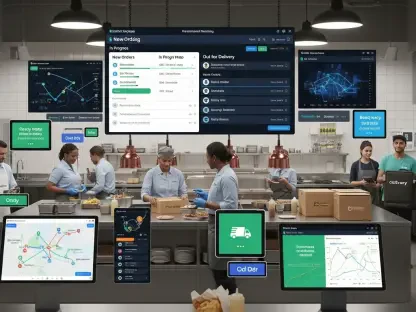

The logistics industry has long grappled with the inherent inefficiencies of fragmented software systems that fail to communicate, yet Vesta Freight managed to shatter these traditional boundaries by achieving a staggering eighteen-fold increase in monthly shipment volume. This exponential growth did not occur by accident or through simple market fluctuations; rather, it was the result of a deliberate strategic shift toward a unified digital infrastructure. By moving away from a patchwork of disconnected tools, the Tennessee-based third-party logistics provider established a robust foundation for national expansion. The primary challenge faced by many scaling firms is the administrative bottleneck that occurs when manual processes cannot keep pace with increasing demand. Vesta Freight bypassed this hurdle by integrating a comprehensive suite of transportation management technologies that synchronized every stage of the shipping lifecycle. This transformation highlights a critical shift in the 3PL sector where digital maturity is the leading indicator of success.
Operational Excellence: The Impact of Integrated Automation
The adoption of the Descartes 3G TMS served as the cornerstone for this operational overhaul, providing the necessary automation to handle complex mechanical brokerage tasks without a proportional increase in headcount. Traditional logistics workflows often involve a high degree of manual data entry, which is not only slow but also prone to human error that can erode profit margins over time. By automating the planning, rating, and invoicing processes, the system allowed the operations team to manage significantly higher load volumes with precision. This shift toward automated execution ensured that as the business grew, the cost per shipment remained controlled, allowing the company to reinvest capital into further market expansion. The software acts as a centralized brain for the organization, offering a clear view of the entire supply chain and enabling more informed decision-making. Consequently, the team could focus on strategic initiatives and customer service rather than being bogged down by repetitive administrative burdens that typically stall growth.
Building on the foundation of core automation, the integration of Agentic AI capabilities has redefined how the company interacts with its network of drivers and carriers. Unlike standard automated notifications that often go ignored, these advanced AI tools proactively manage engagement by confirming arrivals and departures and collecting proof-of-delivery documentation autonomously. This shift toward exception-based management means that staff members are only alerted when a genuine problem arises that requires human intervention. By removing the need for routine check calls, the technology creates a more seamless experience for both the broker and the carrier, fostering stronger long-term partnerships. The ability to collect vital documentation in real-time accelerates the financial settlement process, improving cash flow and providing a competitive advantage in a fast-paced market. This level of proactive communication ensures that every stakeholder remains informed, reducing the friction that often characterizes high-volume freight movements and allowing for a much more scalable business model.
Risk Management: Securing the Digital Logistics Ecosystem
In an era where cargo theft and identity fraud represent significant threats to the integrity of global supply chains, the implementation of Descartes MacroPoint and FraudGuard provided a vital layer of security. These tools go far beyond basic real-time visibility by utilizing historical data and automated monitoring to detect suspicious patterns before they escalate into costly losses. By vetting carriers through a rigorous, automated process, the organization ensured that only verified and high-quality partners were allowed into their logistics network. This proactive stance on security is essential for building trust with shippers who demand maximum transparency and risk mitigation in their transportation providers. The system’s ability to flag potential fraud in real-time allows the team to take immediate action, protecting the company’s reputation and financial health. In a market where digital vulnerabilities are constantly being exploited, having a sophisticated defense mechanism integrated directly into the transportation management suite is no longer a luxury but a fundamental necessity for sustainable growth and operational stability.
The introduction of Descartes MyCarrierPortal streamlined the carrier onboarding process, which is often a significant friction point in the logistics industry. By providing a user-friendly interface for carriers to submit documentation and complete vetting requirements, the company significantly reduced the time it takes to activate new partners. This efficiency is crucial for maintaining a diverse and responsive carrier base that can meet the fluctuating demands of a nationwide customer footprint. The portal’s automated nature ensures that compliance is maintained without the need for constant manual oversight, as the system tracks insurance expirations and safety ratings in real-time. This focus on the carrier experience not only attracts higher-quality transportation providers but also encourages them to prioritize the company’s freight over other opportunities. When carriers find it easy to work with a broker, they are more likely to offer consistent capacity and better rates, creating a virtuous cycle of reliability and growth. This strategic emphasis on ease-of-use and rigorous verification has been a key factor in the company’s ability to scale operations rapidly.
The partnership between Vesta Freight and Descartes Systems Group demonstrated that the consolidation of disparate logistics workflows into a single, high-performance technology stack was the primary driver of institutional success. Organizations seeking to replicate this trajectory must prioritize the elimination of data silos by adopting unified platforms that bridge the gap between back-office execution and real-time visibility. Investing in robust fraud prevention and automated carrier vetting was established as a non-negotiable requirement for protecting brand integrity in an increasingly volatile digital landscape. Furthermore, the strategic implementation of Agentic AI proved that moving toward exception-based management allowed human talent to focus on high-value relationship building rather than routine tasks. Future leaders in the logistics sector focused on shifting their operational philosophy from reactive problem-solving to proactive, data-driven orchestration. By leveraging integrated suites that synchronize every aspect of the shipment lifecycle, companies positioned themselves to navigate the complexities of modern freight while maintaining the agility needed for exponential expansion.