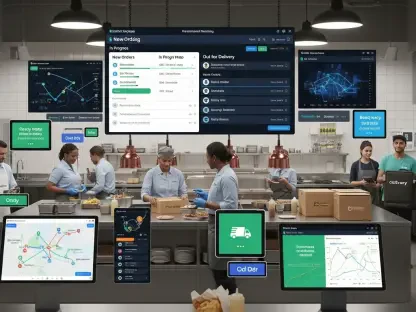

The long-standing assumption that a single digital titan could permanently capture the American consumer’s wallet is finally crumbling under the weight of a multi-front retail resurgence. For years, the narrative of the entrenched monopolist suggested that Amazon’s lead in logistics and data was insurmountable, yet the current landscape reveals a much more contestable market. The multi-trillion dollar U.S. retail sector has entered a phase of deep convergence, where the lines between a physical storefront and a digital marketplace have almost entirely vanished. This shift has forced a re-evaluation of market power, as traditional giants leverage their massive physical footprints to challenge the digital status quo.
The strategic positions of Amazon, Walmart, and Target are no longer defined by a simple binary of online versus offline. Instead, the focus has shifted toward consumer loyalty through integrated omnichannel technology. By merging digital platforms with physical assets, these retailers are creating a seamless shopping experience that prioritizes convenience and speed. The significance of this transition cannot be overstated, as it represents a fundamental restructuring of how goods move through the American economy, proving that scale alone is not a permanent shield against innovative competition.
The Shifting Tides of the Modern American Retail Landscape
The erosion of the digital monolith is largely driven by the realization that physical proximity remains a decisive competitive advantage. While the digital-only model once seemed destined to dominate, the resurgence of traditional brick-and-mortar giants suggests that a hybrid approach is more resilient. Walmart and Target have spent the last few years aggressively upgrading their digital interfaces to match the user experience of their tech-native rivals, effectively neutralizing the software advantage that once defined the e-commerce sector.
This industry-wide convergence has turned the U.S. retail market into a fluid battlefield where legacy retailers are no longer playing defense. The strategic focus has moved toward capturing the full lifecycle of a purchase, from initial discovery on a mobile app to final delivery or in-store pickup. By utilizing every square foot of their retail space as a potential distribution center, these companies have managed to scale their digital operations without the massive capital expenditures traditionally required for greenfield warehouse construction.
Emerging Trends and the Data-Driven Shift in Market Share
Evolution of Consumer Behavior and Seller Dynamics
One of the most significant shifts in the current economy is the multi-homing phenomenon among third-party sellers. In the past, many sellers felt compelled to remain exclusive to a single dominant platform due to the complexity of managing multiple inventories. However, the rise of more user-friendly merchant tools has allowed these sellers to diversify their presence. This movement away from platform exclusivity has directly benefited Walmart Marketplace, which has seen an influx of high-quality vendors looking to mitigate the risks associated with a single-channel strategy.
Platform agnosticism has also taken hold among consumers, who are increasingly price-sensitive and less tethered to specific brand ecosystems. The widespread use of automated comparison tools means that loyalty is often secondary to value and availability. This behavior has created a “race to the top” for service quality, where retailers must constantly prove their worth. As sellers follow the eyeballs across different platforms, the diversity of products available on traditional retail sites has expanded, further challenging the idea that any single company can own the digital marketplace.
Market Projections and Performance Indicators
The growth velocity observed during the most recent cycles indicates a tightening race for dominance. While Amazon maintains a massive baseline of Gross Merchandise Volume, the percentage growth rates for Walmart and Target have frequently outpaced the incumbent. This shift is particularly evident in the grocery sector, where Walmart’s established supply chain has allowed it to capture nearly 27% of the online grocery market. Grocery serves as a vital gateway, as consumers who visit a platform for their weekly essentials are statistically more likely to purchase high-margin general merchandise during the same session.
Future projections suggest that this trend will continue as traditional retailers further refine their digital infrastructure. The ability to maintain high adoption rates for their proprietary apps has given these companies a direct line to consumer data, which was once a primary advantage for digital-only retailers. As these physical giants scale their marketplaces, they are essentially building a digital version of their physical aisles, creating a virtuous cycle of growth that makes the retail environment more competitive than it has been in decades.
Overcoming the Infrastructure and Logistics Moat
The “store-as-a-hub” strategy has become the definitive answer to the logistical challenges of modern e-commerce. By leveraging physical locations situated within 10 miles of 90% of the U.S. population, Walmart and Target have effectively neutralized the lead that specialized fulfillment centers once provided. These stores serve as forward-deployed warehouses, allowing for rapid fulfillment that often exceeds the speed of traditional hub-and-spoke models. This geographic advantage has transformed the nature of the last mile, turning it into a battle of proximity rather than just a battle of trucking capacity.
Moreover, the commoditization of last-mile delivery has turned high-speed shipping into a baseline expectation rather than a luxury service. Target’s expansion of same-day services and the maturation of Walmart Fulfillment Services have ensured that speed is no longer a differentiator but a standard. This development has forced all players to focus on capital efficiency, balancing the immense costs of digital transformation with the ongoing maintenance of physical storefronts. The result is a more robust logistics network that is less vulnerable to single points of failure.
Solving the friction of returns has also provided a significant boost to traditional retailers. For digital-only companies, the return process is often a costly and frustrating experience for both the seller and the buyer. In contrast, the ability to drop off a return at a local store provides a level of convenience that digital-native platforms struggle to replicate. This physical touchpoint removes a major psychological barrier for consumers, encouraging them to make more frequent digital purchases knowing that any issues can be resolved in person.
The Regulatory Environment and the Impact of Fair Competition
The ongoing debate over antitrust narratives versus market realities has taken a surprising turn as market forces appear to be correcting monopolistic tendencies more effectively than government intervention. While regulators have focused on historical dominance, the actual market has shifted toward a more pluralistic model. The success of legacy retailers in the digital space suggests that the barriers to entry were not as high as once feared, provided that a competitor has the resources and the strategic will to pivot.
Navigating the complex world of data privacy and consumer protection has also become a priority for all major marketplaces. As traditional retailers collect more sensitive consumer data, they must adhere to rigorous regulatory standards that vary across different jurisdictions. Maintaining transparency and ensuring fair marketplace standards are essential for building trust with both third-party sellers and end consumers. This compliance-heavy environment actually favors established players who have the legal infrastructure to manage these complex requirements.
Disruptors and the Future of Retail Ecosystems
The rise of Retail Media Networks has introduced a high-margin revenue stream that is fundamentally changing the economics of the industry. Walmart Connect and Target’s advertising arms are now substantial profit centers, allowing these companies to subsidize logistics costs and engage in aggressive price wars. By selling ad space to brands that want to reach consumers at the point of purchase, these retailers have created a self-sustaining ecosystem that fuels their digital expansion. This shift has turned traditional retail into a hybrid of commerce and media.
Innovation in artificial intelligence is further accelerating this transformation by personalizing the shopping experience and optimizing supply chain efficiency. AI is now used to predict localized demand, ensuring that the right products are in the right stores before the consumer even places an order. Additionally, the convergence of social commerce is beginning to disrupt the established triad of Amazon, Walmart, and Target. Emerging platforms that integrate shopping directly into social media feeds are creating new entry points for consumers, forcing the big three to adapt their strategies once again.
Strategic Outlook for a Competitive Digital Economy
The competitive landscape of the digital economy proved to be much more fluid than many analysts originally predicted. The emergence of a contestable market was not merely a result of luck but was the direct consequence of strategic investments in the logistics bridge model. Traditional retailers demonstrated that physical assets, when combined with sophisticated digital platforms, could create a formidable defense against digital-only incumbents. The market eventually rewarded those who could offer a seamless transition between the screen and the storefront, prioritizing the consumer’s need for both speed and reliability.
Investment and growth prospects remained strongest in sectors where the physical and digital worlds overlapped, such as groceries and household essentials. The successful integration of high-margin advertising revenue allowed these retailers to maintain their comparative advantage while expanding their third-party marketplaces. This diversification of income streams provided the necessary resilience to navigate global economic fluctuations and changing consumer sentiments. The digital monopoly that once seemed inevitable was ultimately checked by the very companies that many had dismissed as relics of a previous era.
Final recommendations for stakeholders centered on the necessity of maintaining a diversified platform presence to ensure long-term stability. The future of retail belonged to those who mastered the logistics of the last mile and successfully mitigated the friction of the returns process. As the boundaries between various retail ecosystems continued to blur, the importance of technological agility became the defining factor for success. The retail industry moved toward a more balanced equilibrium, ensuring that competition remained the primary driver of innovation and value for the American consumer.