
The dream of launching a successful online business often collides with the harsh reality of juggling dozens of disconnected tasks, from designing a storefront and sourcing products to deciphering analytics and running marketing campaigns. This fragmentation forces entrepreneurs to become jacks-of-all-trades, spending more time on operational minutiae than on the strategic vision that inspired their venture in the first place. The e-commerce landscape is littered with powerful but siloed tools, each demanding a steep learning curve and constant manual intervention. As a result, many promising businesses falter not from a lack of a great idea, but from the sheer weight of the operational grind. Now, a fundamental shift is underway, proposing a new model where the entrepreneur acts as a creative director while a dedicated team of autonomous AI agents handles the complex, time-consuming work of building and running the business. This evolution promises to move beyond simple AI-powered features and into an era of fully integrated, AI-native commerce platforms that function less like software and more like a tireless, expert workforce.
The Dawn of AI-Native Commerce
A New Architecture for Online Retail
A new generation of e-commerce platforms is emerging, built from the ground up with artificial intelligence at its core, fundamentally changing the relationship between the merchant and the technology. One such pioneer, Genstore, has introduced a full-stack, AI-native system that operates as an “always-on execution layer” rather than another complex dashboard requiring constant management. This approach starkly contrasts with legacy platforms that have merely bolted on isolated AI features, such as a product description generator or a simple chatbot. Instead of offering fragmented tools, this AI-native architecture deploys a coordinated team of autonomous agents that collaborate to manage the entire operational lifecycle of an online store. For the founder, this translates into a dramatically simplified experience; through a brief, prompt-based conversational workflow, the system can generate a complete, ready-to-sell online store in approximately two minutes, automating a process that traditionally takes weeks or even months of painstaking manual configuration and integration.
The true innovation lies in how these specialized AI agents work in concert to perform complex, domain-specific functions that mirror a human operational team. For instance, a dedicated Design Agent takes control of the store’s entire visual identity, managing everything from the layout and branding elements to sophisticated motion design, ensuring a professional and engaging user experience. Simultaneously, a Product Agent handles the laborious task of creating compelling product listings, which includes writing persuasive descriptions and generating high-quality, relevant imagery. Once the foundational elements are in place, a Launch Agent prepares the store for its public debut. This agent meticulously manages search engine optimization (SEO) to ensure visibility, confirms all compliance requirements are met, and verifies that every aspect of the store is operationally ready for the first customer. This division of labor among autonomous specialists ensures that each component of the business is handled with an expert focus, far beyond the capabilities of a single human founder trying to master multiple disciplines at once.
From Co-Pilot to Autopilot
The evolution of these AI-driven e-commerce platforms is often compared to the progression of autonomous driving technology, a useful analogy for understanding their current capabilities and future potential. At present, the system operates at a level similar to advanced driver-assistance, where AI agents serve as a powerful co-pilot. In this stage, the AI handles the heavy lifting of initial setup and product sourcing with minimal human input, freeing the entrepreneur from the most tedious and time-consuming tasks. The platform automates what Genstore co-founder and president Junwei Huang calls the “operational grind,” the very set of repetitive duties that so often leads to burnout and business failure. While the AI manages the complex groundwork, the merchant remains in the driver’s seat, providing high-level direction and making key strategic decisions. This co-pilot model already represents a significant leap forward, allowing founders to focus their energy on brand building, customer relationships, and long-term strategy rather than getting bogged down in the technical weeds of web design or data entry.
The long-term vision for this technology extends far beyond assistance and into the realm of full autonomy, where the platform can manage end-to-end e-commerce operations with minimal human oversight. In this future state, the AI team would not only build and launch the store but also run it dynamically, executing sophisticated, cross-channel marketing campaigns, managing inventory, and optimizing pricing in real time based on market trends and customer behavior. This would effectively elevate the merchant from an operator to a high-level strategist or an executive chairman. Their role would shift to setting the overarching vision, defining brand values, and approving major strategic pivots proposed by the AI. This transition to a fully autonomous model promises to democratize entrepreneurship even further, making it possible for individuals with a strong brand concept but limited technical or operational expertise to build and scale a successful online business on a global stage.
A Unified System for Smarter Decisions
Eliminating Data Silos
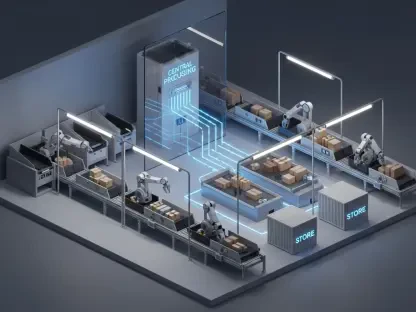
A critical enabler of this autonomous vision is the full-stack AI approach, which integrates all business data into a central “brain.” This unified system architecture is a radical departure from the conventional e-commerce setup, which typically relies on a patchwork of separate plug-in tools for everything from email marketing and inventory management to customer analytics and social media advertising. In such a fragmented ecosystem, valuable data becomes trapped in isolated silos, making it nearly impossible to gain a holistic, real-time understanding of the business. An AI-native platform eliminates these inefficiencies by design. Since all operational data—from website traffic and conversion rates to inventory levels and marketing campaign performance—flows into a single, cohesive system, the AI can see the entire operation in real time. This comprehensive visibility allows the platform to make far more intelligent and optimized decisions that consider the interplay between different business functions, a feat that is exceedingly difficult for a human to achieve when manually piecing together reports from disparate sources.
The practical benefits of this integrated data model are profound, as the AI can execute strategies that are both sophisticated and context-aware. For example, the system can correlate a spike in social media engagement with inventory levels and automatically adjust an advertising campaign’s budget to prevent stockouts or, conversely, to clear out slow-moving products. It can analyze customer browsing patterns to dynamically personalize the storefront for each visitor, a level of customization that is impossible to scale manually. By breaking down the walls between different business functions, the unified “brain” can identify opportunities and threats that would otherwise go unnoticed. This allows the AI to propose optimal, data-driven actions—such as launching a flash sale for a product trending on social media or reallocating marketing spend to the most profitable channel—which the merchant can then simply review and approve. This symbiotic relationship transforms the merchant’s role from a hands-on tactician into a strategic overseer, empowered by a constant stream of intelligent, actionable insights.
The Trajectory of AI-Powered Commerce
The significant early momentum seen in the AI-native commerce space, including a #1 Product of the Day ranking on Product Hunt and a $10 million seed funding round for Genstore, signaled strong investor confidence in this transformative approach. This early success was not just an endorsement of a single company but an acknowledgment of a broader market shift toward more intelligent and automated business solutions. The enthusiasm from both users and investors underscored a deep-seated need among entrepreneurs for tools that genuinely reduce complexity rather than adding to it. The rapid adoption and positive reception indicated that the value proposition of trading operational burdens for strategic focus resonated powerfully within the e-commerce community. It demonstrated a clear appetite for a future where technology serves as a true partner in business creation, not merely as a set of complicated instruments.
This initial validation established a powerful precedent for the future of online retail, where the competitive advantage would increasingly be defined by the sophistication of a business’s underlying AI infrastructure. The early achievements of platforms built on an AI-native foundation moved the industry conversation beyond theoretical possibilities and into tangible results. As these systems continued to evolve, they promised to further lower the barrier to entry for aspiring entrepreneurs while simultaneously equipping established merchants with unprecedented capabilities for growth and optimization. The trajectory that was set suggested a rapid acceleration toward a new standard in which an autonomous AI team became an essential component of any successful e-commerce venture, reshaping the very definition of what it meant to run an online business.