
The once-distant dream of receiving an online order before the ice in a soda has melted is now the standard by which the entire global retail ecosystem is currently being measured and judged. This shifting paradigm from traditional e-commerce to the on-demand “immediacy economy” has forced a massive realignment of corporate resources and infrastructure. While Amazon built its initial empire on a digital-first framework designed for cross-country efficiency, it now faces a distinct challenge from Walmart’s expansive physical store network. The two retail giants are locked in a high-stakes struggle where the “last mile” is no longer just a final logistical step but the primary battlefield for long-term retail market share.
The global pandemic served as a massive catalyst, compressing a decade of consumer behavior shifts into a few frantic years. Shoppers who once tolerated two-day shipping now demand fulfillment within sixty minutes, a psychological shift that treats online shopping like a local errand. Amazon has responded by aggressively decentralizing its operations, moving away from the sprawling rural warehouses of the past toward a high-density urban model. This transition reflects a deeper corporate understanding that the speed of a delivery is often the deciding factor in brand loyalty, frequently outweighing price or even product variety in many high-frequency categories.
Walmart maintains a significant geographical advantage with thousands of physical stores located within minutes of nearly ninety percent of the American population. By utilizing these locations as dual-purpose retail and fulfillment centers, Walmart has successfully bridged the gap between physical and digital commerce without the need for an entirely new warehouse network. Amazon’s expansion of its one-hour service is a direct counter-offensive to this proximity, attempting to replicate the convenience of a local store through a network of specialized urban hubs. This competition is effectively erasing the boundary between e-commerce and brick-and-mortar retail, creating a hybrid environment where physical presence is only as valuable as the speed at which it can serve the digital order.
Transforming the Retail Standard Through Ultra-Fast Fulfillment
Emerging Trends in Micro-Fulfillment and Consumer Behavior
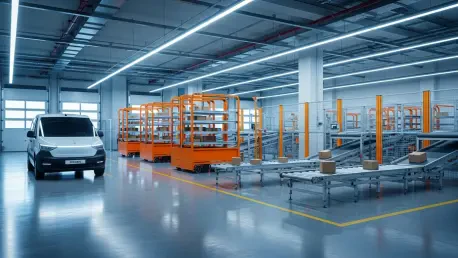
The move toward ultra-fast fulfillment is largely driven by the rise of micro-fulfillment centers, which are compact, highly automated facilities located in the heart of metropolitan areas. These hubs, often integrated with Amazon Fresh stations, allow for the rapid picking and packing of essential goods, from daily groceries to household electronics. This infrastructure supports a new “just-in-time” shopping habit, where consumers no longer plan large weekly grocery trips but instead place multiple, smaller orders as needs arise. This shift toward impulse-based, high-frequency ordering is particularly prevalent among younger demographics who prioritize personal time over the traditional savings found in bulk purchasing.
Furthermore, the integration of these rapid delivery options into the Prime ecosystem creates a powerful tool for customer retention and recurring revenue. When a consumer knows that a replacement charger or a missing dinner ingredient will arrive within the hour, the incentive to look elsewhere for that product essentially vanishes. This “stickiness” generates the necessary capital to fuel further logistical investments, creating a self-reinforcing cycle of market dominance. The focus has moved from merely having an item in stock to having it within a five-mile radius of the buyer at all times, making inventory management a game of extreme localized precision.
Growth Projections and Data-Driven Performance Indicators
Analytical data suggests a direct and powerful correlation between the reduction in delivery times and a surge in incremental sales volume. As the window of delivery shrinks, the frequency of transactions per customer tends to rise, suggesting that speed unlocks latent demand that slower shipping methods simply could not capture. Projections for the coming years indicate a massive expansion in urban delivery fleets, with a heavy emphasis on the electrification of the last mile to manage both noise and local emissions. This logistical densification acts as a competitive moat, as the capital required to build such a granular network is prohibitively high for smaller retailers.
Market share analysis indicates that the ability to offer one-hour delivery is becoming the primary differentiator in the battle for the household budget. Capital expenditure trends among top-tier retailers are increasingly skewed toward high-density urban logistics infrastructure rather than massive regional distribution centers. For investors, these indicators suggest that the winners in the retail space will be those who can most efficiently manage the high costs of urban real estate and labor. The speed that consumers now expect as a matter of course is transforming the financial profile of retail from a margin-based business into a technology-driven logistics operation.
Navigating the Operational and Ethical Hurdles of Speed
Maintaining a one-hour delivery window in densely populated urban centers presents a logistical nightmare of high real estate costs and extreme traffic congestion. Unlike the cheap, expansive land of rural fulfillment zones, urban hubs require significant investment for relatively small square footage. This necessitates vertical storage solutions and highly efficient robotics to maximize every inch of available space. Moreover, the operational margins are razor-thin, as the cost of a single-item delivery can often exceed the profit margin of the item itself unless delivery density is perfectly optimized.
Beyond the financial costs, the “packaging paradox” remains a significant ethical and logistical hurdle for the industry. Delivering a single bottle of detergent in an hour involves a higher ratio of packaging waste and fuel consumption per item compared to traditional consolidated shipping. This environmental footprint is under increasing scrutiny from both regulators and eco-conscious consumers. Additionally, the psychological and physical pressure on the workforce in these high-speed environments is a point of constant friction. Managing productivity without compromising driver safety or warehouse worker well-being is a delicate balance that requires sophisticated management and, increasingly, automated assistance.
The Regulatory Environment and Sustainable Infrastructure Standards
Urban zoning laws and congestion regulations are beginning to catch up with the rapid delivery model, as city planners worry about the impact of thousands of delivery vans on local traffic. Compliance with emerging environmental standards, particularly carbon-neutral commitments, is forcing retailers to pivot toward electric bikes, drones, and small electric vans. Government oversight is also intensifying in the realm of labor practices, with new safety protocols being drafted to protect delivery personnel from the rigors of extreme-speed fulfillment. The regulatory landscape is becoming just as complex as the logistical one, requiring companies to be as agile in the courtroom as they are on the road.
Data privacy and security also enter the conversation as predictive logistics become more integrated into the shopping experience. To achieve one-hour delivery, companies must anticipate what a customer wants before they even click the purchase button, a process that relies on deep mining of consumer habits. Regulators are increasingly looking at how this data is stored and utilized, especially as AI-driven systems become the primary decision-makers in inventory routing. Ensuring that the convenience of speed does not come at the cost of consumer privacy or public safety is becoming a central theme in the legislative discourse surrounding modern retail expansion.
Predictive Intelligence and the Future of Automated Retail
The future of rapid retail is being written in the language of artificial intelligence and machine learning. These systems are no longer just tools for efficiency; they are the brains behind anticipatory shipping, where items are moved to local hubs based on probability rather than actual orders. Robotics and autonomous systems are being deployed to shave every possible second off internal processing, from the moment an order is placed to the moment it leaves the hub. This level of automation is essential for maintaining the one-hour standard without incurring unsustainable labor costs that would otherwise erode the company’s bottom line.
Potential disruptors like drone delivery and autonomous sidewalk robots are moving from the experimental phase into practical application, especially in suburban markets. These technologies promise to further lower the cost of the last mile while increasing speed and reducing human error. However, global economic shifts and fluctuating energy costs continue to influence the long-term viability of such energy-intensive shipping models. The goal is to create a seamless, invisible logistics layer that functions so efficiently that the consumer forgets the complexity involved in moving a product from a warehouse to their doorstep in under sixty minutes.
The Long-Term Outlook for the Amazon-Walmart Rivalry
The rivalry between Amazon and Walmart has transitioned into a new era where physical and digital advantages are being traded and replicated at a rapid pace. Amazon is building more physical touchpoints, while Walmart is perfecting its digital interface and logistics software. The financial trade-offs required to maintain this level of service are immense, and the market is likely to see a period of consolidation where only the most well-capitalized players can survive. For stakeholders, the focus should remain on the intersection of logistics technology and urban infrastructure as the primary driver of future value.
The transition to an one-hour delivery standard proved to be a permanent structural change in the global economy. Investors who monitored the aggressive capital expenditure into micro-fulfillment realized that these investments secured a market dominance that was difficult for newcomers to penetrate. The strategic shift moved beyond mere retail competition and became a race to control the very infrastructure of urban life. Ultimately, the successful integration of AI-driven forecasting and sustainable delivery fleets allowed these giants to overcome initial operational hurdles. The retail sector emerged from this period with a completely redefined set of consumer expectations, ensuring that the convenience of speed remained the ultimate metric of success.