
The traditional boundaries between state-mandated service and corporate efficiency vanished the moment the nation’s largest retailer and its oldest postal institution signed a pact that redefined the price of access to the American doorstep. This accord marks a departure from the days of predictable, subsidized delivery and ushers in a landscape where every parcel is a data point in a broader struggle for fiscal sustainability. As the logistics industry matures, the friction between public utility and private scale has forced a fundamental recalculation of what it costs to maintain a truly universal delivery network in a digital-first economy.
The Evolution of the American Last-Mile Delivery Ecosystem
The transition of the United States Postal Service from a taxpayer-backed utility to a competitive logistical powerhouse has reached a critical tipping point. This shift was not merely an administrative choice but a necessity born from the collapse of traditional mail volumes and the explosive growth of package delivery. By repositioning itself as a market-driven infrastructure provider, the agency has effectively moved away from the perception of a slow-moving government branch. It now competes directly for high-volume contracts, leveraging its unique ability to reach every mailbox in the country to maintain its relevance in an increasingly privatized sector.
Maintaining the stability of the national supply chain now rests on the delicate balance of the Amazon-USPS partnership. This relationship is no longer a simple vendor-client arrangement; it is the backbone of the entire e-commerce logistics ecosystem. The sheer scale of operations involves moving millions of items daily, requiring a level of coordination that blurs the lines between government operations and private-sector logistics. This partnership ensures that even as consumer expectations for speed increase, the underlying physical network remains resilient enough to handle the massive weight of the American retail machine.
Modern delivery is now defined by a complex integration of technology and diverse market players. While Amazon Logistics continues to expand its proprietary fleet of vans and planes, the USPS and private carriers like FedEx and UPS provide the essential density required to make the system work. Each player occupies a specific niche, yet their operations are increasingly intertwined through shared data and sorting facilities. This technological integration allows for real-time tracking and routing adjustments that were unimaginable a decade ago, creating a highly responsive but capital-intensive delivery landscape.
Geographic density remains the most significant hurdle for any logistics provider, and the universal service obligation of the USPS is the only thing keeping rural America connected to the digital economy. While urban centers enjoy high delivery efficiency due to the concentration of households, reaching remote addresses involves costs that often exceed the value of the shipment. The agreement ensures that the logistical “last mile” does not become a luxury reserved for city dwellers, preserving the social and economic fabric of low-density regions by mandating equal access to shipping services.
Strategic Shifts and the Marketization of Public Services
Emerging Trends in National Parcel Distribution
The “Deliver for America” initiative has fundamentally altered how the Postal Service approaches its commercial relationships, most notably through the introduction of a market-priced bidding framework. This strategy replaced the old system of fixed-rate subsidies with a competitive reverse auction model that forces retailers to pay for the true value of the network they utilize. This move toward marketization reflects a broader trend of public agencies seeking financial independence by monetizing their physical assets and operational reach. Consequently, the price of shipping is no longer a static government fee but a fluctuating market value determined by demand and capacity.
Amazon has responded to these changes by adopting a dual-track strategy that balances proprietary expansion with operational insurance. By “cream-skimming” high-density urban routes for its own logistics network, the company maximizes its internal efficiency while retaining the USPS for high-cost, difficult-to-reach deliveries. This approach allows Amazon to maintain its delivery promises without overextending its own capital in areas where it cannot achieve profitability. It creates a symbiotic relationship where the retailer handles what it can do best, while the public infrastructure manages the logistical outliers.
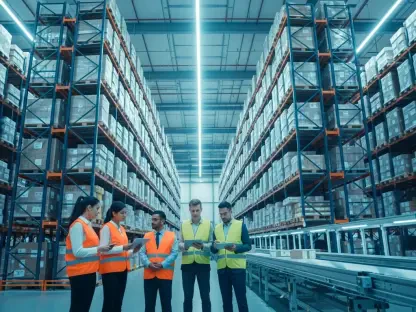
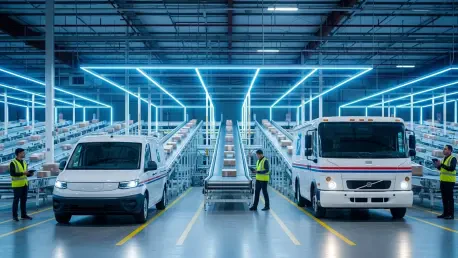
Furthermore, the modernization of fleet and infrastructure is moving toward a more sustainable and specialized future. The transition to all-electric delivery vehicles is not just an environmental goal but a strategic shift to reduce long-term maintenance and fuel costs. Specialized Sorting and Delivery Centers are being deployed to streamline the handoff between major retailers and the local carriers. These facilities are designed to process packages with unprecedented speed, serving as the physical nodes where the massive volume of e-commerce meets the precision of the last-mile network.
Growth Projections and Fiscal Stability Metrics
The financial implications of this deal are monumental, providing the USPS with a critical $6 billion annual revenue stream that serves as a primary safeguard for its operating budget. This influx of capital is essential for funding the ongoing technological upgrades and infrastructure projects required to compete in the modern market. Analysts believe that without this guaranteed revenue, the agency would struggle to maintain its current service levels. The agreement provides a degree of fiscal certainty that allows the Postal Service to plan its multi-year investments with greater confidence.
While Amazon is aiming for a 20% reduction in its total postal volume, the remaining 1 billion annual packages still provide a massive foundation for the agency’s operations. This volume retention forecast suggests that even as Amazon grows its own network, the physical impossibility of total independence in the near term keeps the USPS relevant. The agency is effectively managing a controlled decline in its reliance on a single customer while ensuring that the volume it does keep remains profitable under the new pricing terms.
This agreement is also a vital component in reducing national deficit projections by preventing the need for massive federal bailouts. By securing a deal that covers its own costs and contributes to its overhead, the USPS is moving toward a self-sustaining financial model. A potential $9 billion deficit was averted through this negotiation, demonstrating that the marketization of public services can lead to significant fiscal relief for the government. This shift ensures that the cost of e-commerce delivery is borne by the retailers and consumers who use it rather than the general taxpaying public.
Navigating the Complexities of a Logistics Divorce
The $4 billion attempt by Amazon to bypass the Postal Service’s network highlighted the sheer capital complexity of rural expansion. Even for a company with vast resources, the cost of duplicating a network that visits every home daily proved to be an immense challenge. The obstacles encountered in building out independent infrastructure in low-density areas underscored why the USPS remains an essential partner. This realization forced a return to the negotiating table, as the reality of the physical geography outweighed the desire for total corporate autonomy.
Maintaining the “Prime” delivery guarantee is a high-stakes endeavor that requires a reliable backstop for surges and remote deliveries. As the costs of independent infrastructure continue to rise, the USPS provides a more economical way to meet these promises without sacrificing service quality. The retailer must balance its desire for proprietary control against the practical need for a network that can absorb the variability of the shipping cycle. This balance is critical for maintaining consumer trust in a market where speed and reliability are the primary drivers of brand loyalty.
The Postal Service also acts as a vital safety valve to mitigate peak season volatility. During periods of high demand, such as the holiday season, even the most robust private networks can become overwhelmed. Utilizing the USPS to handle the overflow allows private carriers to manage their capacity more effectively and avoid catastrophic service failures. This strategic utilization of public infrastructure as a flex-resource ensures that the entire national logistics network can scale up during periods of extreme volume without breaking down.
The Regulatory Landscape and the New Competitive Framework
The Postal Regulatory Commission has taken an active role in overseeing commercial contracts to ensure that market pricing remains fair and transparent. This regulatory oversight prevents the agency from offering predatory rates that would undermine private competition while ensuring that major retailers pay their fair share. By monitoring these high-volume agreements, the commission maintains a level playing field where both public and private entities can thrive. This transparency is crucial for maintaining public confidence in how national infrastructure is being utilized by private corporations.
The agreement also aligns strictly with the mandate of universal service obligations, ensuring that the USPS serves every address regardless of profitability. The revenue generated from commercial contracts helps subsidize the cost of maintaining this nationwide reach, allowing the agency to fulfill its public duty without requiring additional government funding. This framework demonstrates how commercial success and public service can be intertwined, with the profit from competitive products supporting the universal mission of the institution.
There is a clear shift in the standards applied to tech giants who have historically benefited from preferential treatment in the logistics sector. The end of the era of deep discounts for high-volume retailers signals a new competitive reality where everyone must pay for the infrastructure they use. This change forces companies to become more efficient in their own operations and to reevaluate the true cost of the “free shipping” model that has dominated the market. It represents a maturation of the industry where the value of the network is finally being recognized in its pricing.
The Future of the Last Mile: Automation and Autonomous Reach
Disruptive technologies like drone delivery and autonomous ground vehicles are starting to challenge the monopoly on rural access held by the USPS. While these technologies are still in the early stages of wide-scale deployment, they offer a glimpse into a future where the cost of reaching remote areas could be significantly reduced. As these systems become more reliable and legally compliant, the reliance on human-driven networks may begin to wane. This potential for technological bypass remains a significant factor in all long-term logistics planning and contract negotiations.
Amazon continues to pursue vertical integration as a long-term goal, with an 18-month trajectory aimed at further reducing its reliance on outside carriers. The ultimate objective is to control as much of the delivery experience as possible to maximize efficiency and capture more of the value chain. Future renegotiations will likely be even more intense as the retailer’s internal capabilities grow. This persistent drive toward independence keeps the pressure on the Postal Service to continue innovating and lowering its own operational costs to remain a viable partner.
The maturation of public-private partnerships is forecasting a future that is more transactional and fiscally transparent. The relationship between government agencies and corporations is evolving from one of mutual convenience to one of strategic necessity based on clear economic metrics. This trend suggests that the boundaries between public service and private enterprise will continue to blur, requiring new frameworks for cooperation. The 2026 accord serves as a blueprint for how these complex entities can coexist while pursuing their separate but overlapping objectives.
Strategic Synthesis and the Outlook for the American Supply Chain
The 2026 accord established a necessary fiscal bridge toward an automated logistical future. It was a strategic synthesis of the competing needs of a government agency striving for solvency and a corporate giant seeking operational stability. The agreement successfully averted a breakdown in the national delivery network, ensuring that the supply chain remained functional during a period of intense economic transition. Analysts observed that the deal provided the breathing room needed for both entities to invest in the next generation of logistics technology while maintaining current service levels.
This landmark pact signaled the end of subsidized growth for the e-commerce sector. By forcing the internalization of delivery costs, the agreement prompted retailers to reevaluate their shipping models and fee structures. While the USPS secured its immediate financial future, Amazon was compelled to absorb higher logistics expenses, which eventually influenced market trends toward higher shipping thresholds. The partnership proved that even the most powerful tech firms were still tethered to the physical reality of the nation’s infrastructure, requiring a collaborative approach to solve the last-mile challenge.
Ultimately, the resolution of this logistics standoff provided a blueprint for future public-private interactions. It demonstrated that market-priced access to public resources could sustain essential services without traditional government funding. As automation and independent networks continue to expand, the lessons learned from this negotiation will likely guide the next decade of American logistics. The deal did not just deliver packages; it delivered a new model for how the nation’s infrastructure could be maintained and modernized through strategic commercial cooperation.